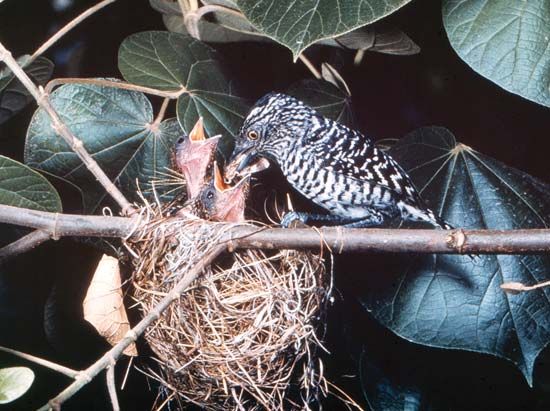
Antpipit
The term "Antpipit" refers to either of two species of South American birds belonging to the genus Corythopis. These birds are characterized by their…
What is Antpipit?
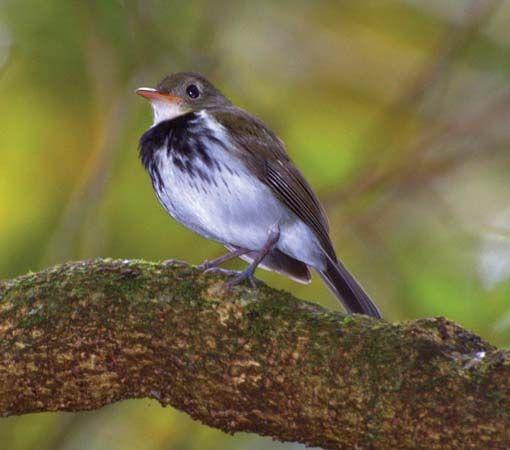
The term “Antpipit” refers to either of two species of South American birds belonging to the genus Corythopis. These birds are characterized by their resemblance to pipits—a group of small, slender-bodied ground birds—in terms of their size, shape, and coloration.12
It is important to note that the name “antpipit” is sometimes incorrectly applied to gnateaters, which were previously grouped with antpipits in the family Conopophagidae. Currently, the genus Corythopis is typically classified within the family Tyrannidae, alongside the tyrant flycatchers.1
What are tyrant flycatchers?
A tyrant flycatcher is any of approximately 400 species of aggressive, insect-eating birds belonging to the family Tyrannidae within the order Passeriformes. These birds are native to the New World, with the highest diversity found in Central and South America, though about 30 species breed in North America.34
Characteristics and Behavior
- Physical Appearance: Tyrant flycatchers range from 7.5 to 40.5 cm (3 to 16 inches) in length. Most are plainly colored in shades of gray, brown, or olive, though some exhibit striking black-and-white patterns. Many species possess a patch of red or yellow on the crown that is often concealed but can be erected.3
- Feeding Habits: Many species are “fly-catchers” that dart from a perch to seize insects in mid-air. These birds typically have broad, flattened bills with bristles at the base to aid in capturing prey. While most are strictly insectivorous, some species, such as the shrike-tyrants, may consume small vertebrates like mice or frogs, and others, such as the elaenias, feed extensively on fruit.354
- Temperament: As their name suggests, these birds are known for their aggressive, territorial behavior, particularly during the breeding season. They are frequently observed harassing much larger birds, such as hawks or crows, that enter their territory.3
How do antpipits differ from true pipits?
While antpipits and true pipits share similarities in size, shape, and coloration, they are fundamentally different birds belonging to distinct biological families.
- Classification: Antpipits (Corythopis) are members of the family Tyrannidae, which places them among the tyrant flycatchers within the order Passeriformes. In contrast, true pipits belong to the family Motacillidae.
- Taxonomic History: The confusion between these groups is often compounded by the fact that the name “antpipit” has been improperly applied to gnateaters, which were once grouped with them in the family Conopophagidae before being reclassified.
Because they belong to different families, antpipits exhibit the behavioral and physical traits characteristic of the tyrant flycatcher lineage, whereas true pipits possess the distinct evolutionary adaptations associated with the Motacillidae family.
What are gnateaters and where do they live?
A gnateater is any of eight species of small, plump-bodied birds belonging to the genus Conopophaga within the family Conopophagidae.78
These birds are native to South American forests, where they typically forage for insects in the understory. While they were formerly classified alongside antbirds and, at one time, grouped with the genus Corythopis (known as antpipits) in the family Conopophagidae, the current classification restricts the family to the eight species of Conopophaga.782
It is important to note that the term “antpipit” is sometimes incorrectly applied to gnateaters; however, Corythopis is now generally classified within the family Tyrannidae, making them distinct from the true gnateaters.2
Sources
- Pipit — Encyclopædia Britannica
- Antpipit — Encyclopædia Britannica
- tyrant flycatcher — Encyclopædia Britannica
- tyrant flycatcher — Merriam-Webster
- Tyrannidae — Merriam-Webster
- tyrannosaur - Classification — Encyclopædia Britannica
- Gnateater — Encyclopædia Britannica
- Conopophagidae — Encyclopædia Britannica
- Conopophagidae — Merriam-Webster
Published on · 2 min read