Antbird
Scientists have studied several antbird species to understand their complex social hierarchies and foraging behaviors. These birds are well-known for…
Are there any notable examples of antbird species studied by scientists?
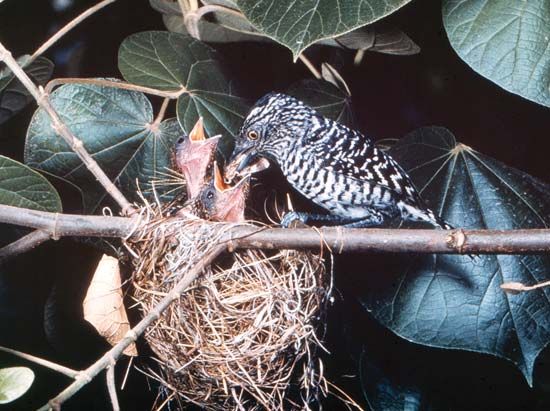
Scientists have studied several antbird species to understand their complex social hierarchies and foraging behaviors. These birds are well-known for following swarms of army ants to capture insects flushed from the forest floor.1
Notable examples studied in this context include:
- Ocellated antbird (Phaenostictus mcleannani): A large, dominant species that typically occupies the central zone of an ant swarm, where the availability of prey is highest.1
- Bicoloured antbird (Gymnopithys leucaspis): A subordinate species that is often displaced from the prime central foraging areas by larger birds.1
- White-plumed antbird (Pithys albifrons): A smaller species that is frequently chased away by the bicoloured antbird, forcing it to forage in less productive zones.1
These interactions illustrate how antbird species organize themselves around food sources in the American tropics. While these birds are famous for “ant-following,” it is important to note that they do not typically eat the ants themselves; rather, they exploit the disturbance the ants create.1
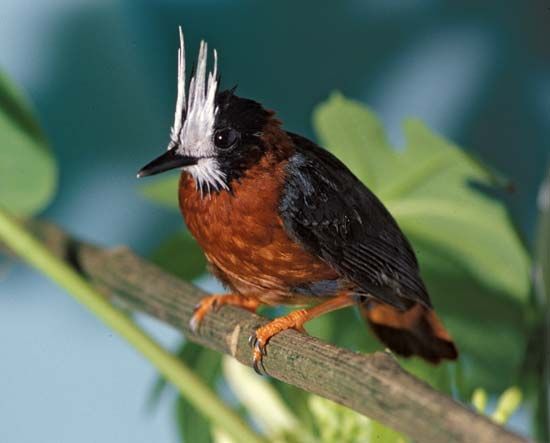
Where are antbirds primarily found in the world?
Antbirds (family Thamnophilidae) are primarily found in the American tropics. They inhabit the forest regions of this area, where they are known for their diverse and insectivorous nature.13
These birds are particularly abundant in regions such as the Amazon, where as many as 50 different species can be found within a single small area.1
What is the typical diet of antbirds besides ants?
Antbirds are primarily insectivorous, meaning their diet consists almost entirely of insects and other small invertebrates. When these birds follow columns of army ants, they do not typically consume the ants themselves. Instead, they exploit the disturbance created by the ants, which flushes out a variety of prey from the forest floor.13
The diet of an ant-following bird includes a wide range of small animals that are forced to flee from the path of the ant swarm, such as:
By seizing these fleeing creatures, antbirds capitalize on the “insect bonanza” provided by the raiding parties of army ants.13
How do antbirds get their name, and what is their relationship with ants?
Antbirds (family Thamnophilidae) derive their name from the historical belief that they feed primarily on ants. However, this is a common misconception regarding their actual behavior.1
Relationship with Ants
Antbirds are famous for their habit of following nomadic army ants as they swarm across the forest floor in the American tropics. Their relationship with these ants is one of opportunistic commensalism rather than predation:47
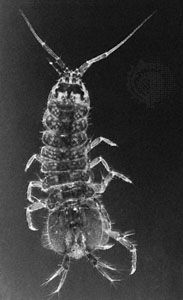
- The “Insect Bonanza”: As army ants march, they devour small animal life in their path. This activity flushes out a variety of prey—including spiders, millipedes, isopods, small frogs, and lizards—that attempt to flee the swarm.7
- Feeding Strategy: Antbirds follow these raiding parties specifically to capture the insects and other small creatures fleeing the ants. They generally do not eat the ants themselves.47
- Dependence: Many antbird species are considered entirely dependent on these ant swarms to locate food, and they often compete for the most productive zones of the swarm based on their dominance hierarchy.47
Sources
- Antbird — Encyclopædia Britannica
- Passeriform - Anting — Encyclopædia Britannica
- antbird — Merriam-Webster
- Passeriform - Ant-following — Encyclopædia Britannica
- Bird - Feeding habits — Encyclopædia Britannica
- seed dispersal - Ants — Encyclopædia Britannica
- Eciton army ant — Encyclopædia Britannica
Published on · 2 min read