Aphid
Aphids serve as primary vectors for numerous plant viruses, particularly those causing mosaic diseases. As sap-sucking insects, aphids acquire viruses while…
How do aphids transmit plant viruses and what impact does this have on crop production?
Aphids serve as primary vectors for numerous plant viruses, particularly those causing mosaic diseases. As sap-sucking insects, aphids acquire viruses while feeding on infected plant tissues and subsequently transmit them to healthy plants during their feeding process. The duration of this transmission varies; some viruses persist within the aphid for weeks or months, while others are carried for less than an hour.123
The impact on crop production is significant and economically damaging. Beyond direct damage from feeding—such as stunted growth, leaf curling, and the deformation of buds, flowers, and fruit—the transmission of viral diseases can lead to severe yield losses or the total destruction of crops. For instance, the pea aphid transmits yellow bean mosaic virus, which can kill pea plants, while the potato aphid carries viruses that destroy potato vines and blossoms. Once a plant is infected, it typically remains diseased for its entire life.31
What is the evolutionary history of aphids and how long have they existed on Earth?
The provided search results do not contain specific information regarding the evolutionary timeline or the precise date of origin for aphids. While the insect fossil record documents the presence of various insect orders from the Carboniferous and Permian periods, it does not explicitly detail the evolutionary history or the duration of existence for the superfamily Aphidoidea.
Because the available data lacks information on the specific evolutionary origins of these insects, I cannot provide an accurate answer to your question.
What natural predators and control methods are used to manage aphid populations?
To manage aphid populations, agricultural practices rely on a combination of natural predation and integrated pest management strategies.
Natural Predators and Parasites
Aphids are targeted by a variety of beneficial insects that serve as natural control agents:
- Predators: Ladybird beetles are highly effective; a single larva can consume hundreds of aphids during its development, while adults may devour thousands over their lifespan. Other significant predators include aphidlions (lacewing larvae), which suck fluids from their prey, as well as the larvae of flower flies (syrphids), gall midges, and certain species of aphidflies.
- Parasites: Many wasps, particularly encyrtid wasps, act as parasites by developing within or on the bodies of aphids, effectively reducing their populations.
Integrated Pest Management (IPM)
Because reliance on chemical insecticides can lead to ecological issues and the destruction of beneficial species, modern agriculture emphasizes integrated control. This approach coordinates multiple methods to minimize chemical use:
- Resistant Varieties: Developing and planting crop varieties that are naturally resistant to aphid attack is considered an ideal, though long-term, solution.
- Biological Controls: This involves the strategic release of predators, parasites, and microbial agents (such as specific viruses or fungi) that target aphids while remaining harmless to humans and domestic animals.
- Reproductive Disruption: Techniques such as the release of sterilized male insects or the use of sex attractants (pheromones) in traps can help suppress population growth.
- Cultural Practices: Proper management of postharvest residues and the use of crop rotation or specific planting techniques can inhibit pest proliferation.
- Chemical Use: Insecticides are increasingly used only as a last resort, often in a targeted manner that leaves natural predators and parasites unharmed.
What types of plants do aphids commonly infest and how do they feed?
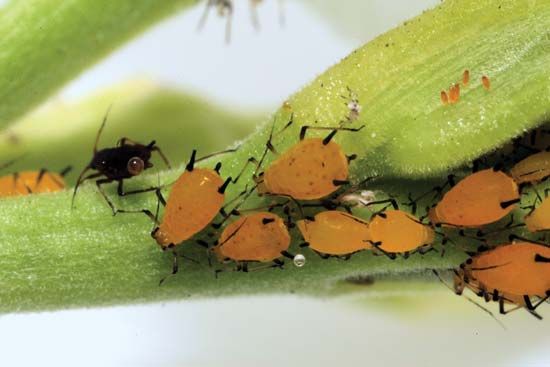
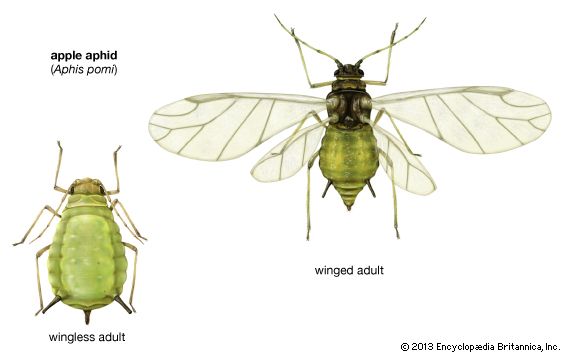
Aphids are small, soft-bodied insects belonging to the superfamily Aphidoidea that survive by feeding on the juices of plants.84
Feeding Habits
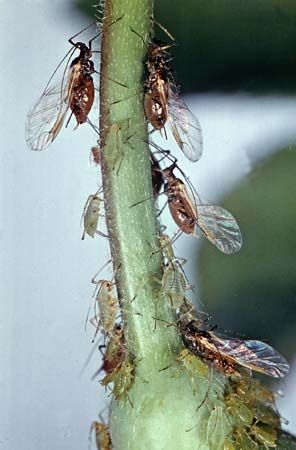
Aphids are sap-sucking insects that extract vital fluids from their host plants. By piercing plant tissues, they consume nutrients, which can lead to stunted growth, the deformation of leaves, buds, and flowers, and the production of plant galls. Additionally, many aphids excrete a sweet, sugary substance known as honeydew, which is often harvested by ants in exchange for protection. Some species are also subterranean, feeding directly on the roots of plants.843
Common Host Plants
With over 4,000 described species, aphids infest a wide range of agricultural and ornamental plants. Common examples include:4
- Fruit and Nut Trees: Apple, pear, hawthorn, and mountain ash trees are frequent hosts for species like the apple aphid and the rosy apple aphid.4
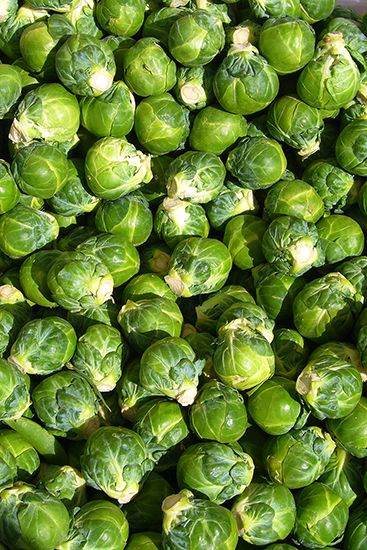
- Vegetables: Cabbage, cauliflower, Brussels sprouts, radishes, melons, cotton, cucumbers, and potatoes are commonly targeted.4
- Grains: Crops such as wheat and oats are susceptible to pests like the greenbug.4
- Ornamentals: Cultivated roses and various spruce and Douglas fir trees are also common hosts.4
Sources
- Plant disease - Transmission — Encyclopædia Britannica
- plant virus — Encyclopædia Britannica
- aphid — Encyclopædia Britannica
- homopteran - Associations with other insects — Encyclopædia Britannica
- Aphidoidea — Merriam-Webster
- Aphididae — Merriam-Webster
- insect - Insect fossil record — Encyclopædia Britannica
- aphid — Merriam-Webster
- homopteran - Aphids — Encyclopædia Britannica
- Agricultural technology - Biological controls — Encyclopædia Britannica
- Pest — Encyclopædia Britannica
Published on · 4 min read