Apuseni Mountains
The provided search results do not contain information regarding the biodiversity of the Apuseni Mountains. The available data focuses on the geography…
What is the significance of the Apuseni Mountains in terms of biodiversity?
The provided search results do not contain information regarding the biodiversity of the Apuseni Mountains. The available data focuses on the geography, elevation, and geological features of the range, including the Bihor Massif and its river systems.12
How has tourism developed in the Apuseni Mountains region?
The Apuseni Mountains are a significant subgroup of the Carpathian Mountains, a region noted for its long-standing traditions, ancient folklore, and folk costumes. While the broader Romanian tourism sector has seen growth through the development of winter sports, health spas, and ecological interest, specific information regarding the formal development of tourism infrastructure within the Apuseni range is not detailed in the provided search results.31
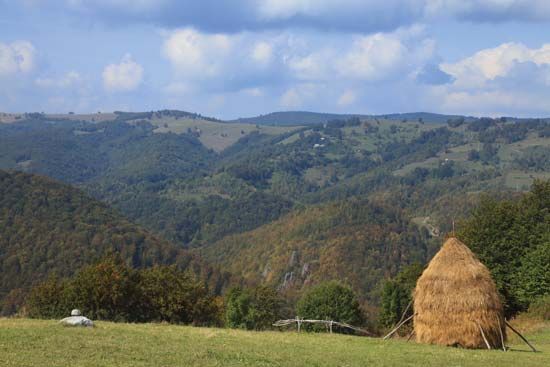
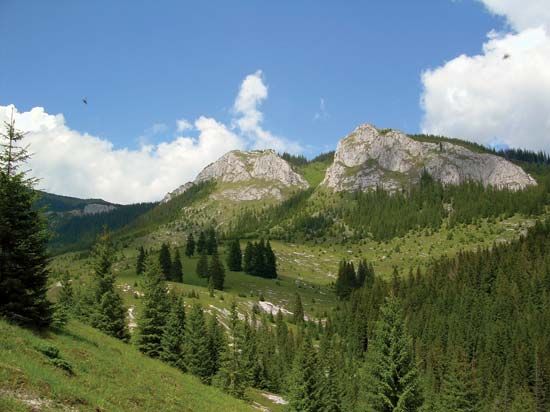
The region is characterized by its unique geography, featuring rounded crests, deep river valleys, and extensive limestone formations that create spectacular scenery. These natural features, along with the scattered pasturelands and settlements found throughout the massif, contribute to the area’s distinct character. The Bihor Massif, which serves as the highest point of the Apuseni, is known for its smooth summits and striking gorges, such as those formed by the Someșu Cald river.12
What major rivers originate in the Apuseni Mountains?
The Apuseni Mountains serve as a vital source for several important river systems in western Romania. The drainage patterns of the region are primarily defined by the Bihor Massif, which acts as a central hub for these waterways.12
Key rivers and systems originating in or draining from the Apuseni Mountains include:
- Crișul River System: Located to the west, this system drains the Bihor Massif toward the Great Alfold plain.1
- Crișul Repede: This river originates in the Vlădeasa volcanic range, a northern extension of the Bihor Massif.2
- Someșu Cald: Also spawning from the Vlădeasa range, this river is noted for carving out a striking gorge.2
- Mureș River Tributaries: Streams flowing off the southern mountain groups within the Apuseni range feed into the Mureș River.1
While the broader Carpathian Mountains are the source of major European rivers like the Vistula, Dniester, and various Danube tributaries, the rivers originating specifically within the Apuseni group are essential to the local hydrology of the Transylvanian region.14
Are there any protected areas or national parks within the Apuseni Mountains?
The provided search results do not contain information regarding specific protected areas or national parks located within the Apuseni Mountains. While the documents mention Retezat National Park as Romania’s first established national park, it is situated within the Southern Carpathians rather than the Apuseni range.
The Apuseni region is noted for its karst topography, particularly in areas like the Cetățile Ponorului limestone tableland, which features rugged scenery shaped by water erosion. However, the current knowledge base does not provide details on the formal conservation status of these sites.
Sources
- Apuseni Mountains — Encyclopædia Britannica
- Bihor Massif — Encyclopædia Britannica
- Romania - Services — Encyclopædia Britannica
- Carpathian Mountains - Drainage of the Carpathian Mountains — Encyclopædia Britannica
- Olt River — Encyclopædia Britannica
- Romania - Relief — Encyclopædia Britannica
Published on · 2 min read