Assam Himalayas
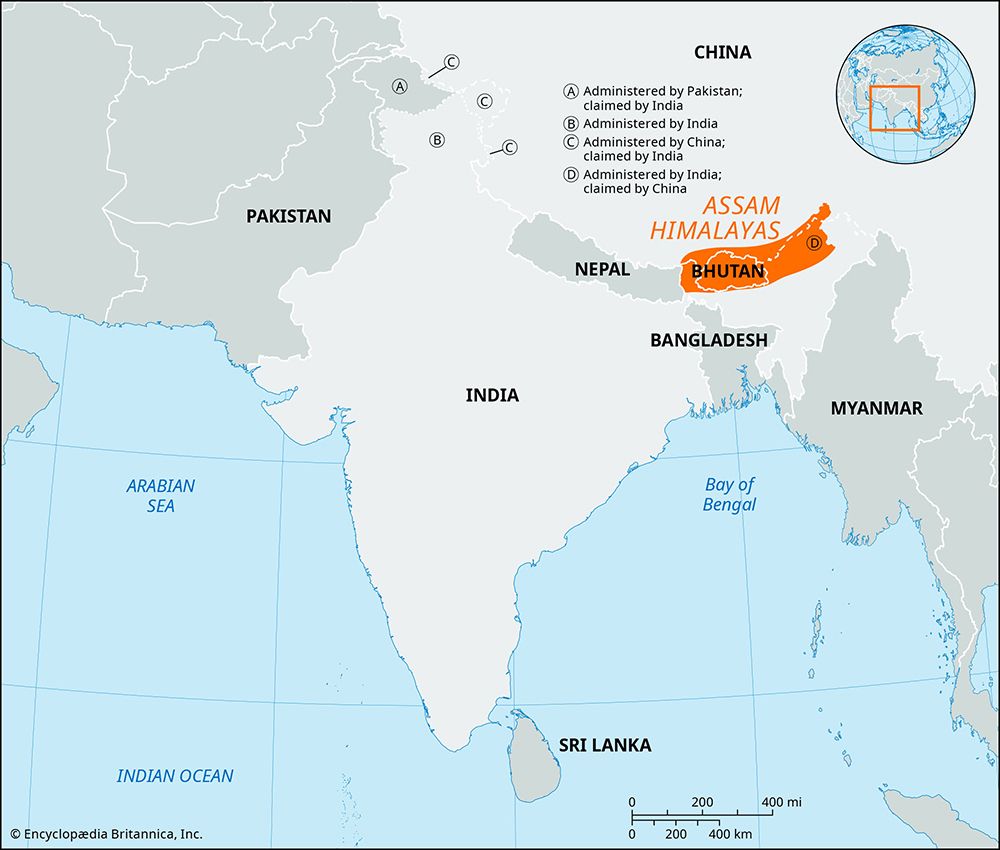
The Assam Himalayas represent the eastern section of the Great Himalayas. They extend eastward for approximately 450 miles (720 km), stretching from the…
Where are the Assam Himalayas located, and what countries do they span?
The Assam Himalayas represent the eastern section of the Great Himalayas. They extend eastward for approximately 450 miles (720 km), stretching from the upper Tista River in the west to the southward bend of the Brahmaputra River in the east.1
Geographically, this mountain range spans across the following regions and countries:
- India: The range extends through the states of Sikkim, Assam, and Arunachal Pradesh.1
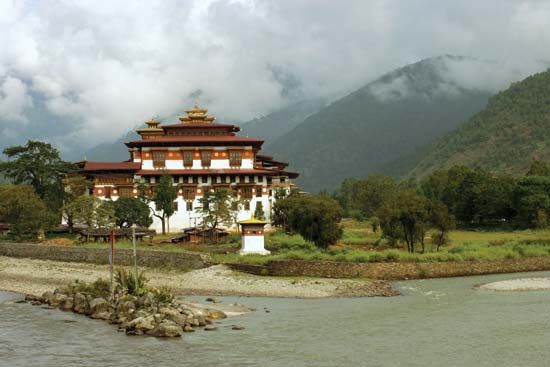
- Bhutan: The mountains run across the territory of Bhutan.1
- China: The range follows the border with the Tibet Autonomous Region.1
The region is characterized by significant peaks, such as Namjagbarwa, and serves as the source for several major rivers, including the Subansiri, Manas, and Sankosh, which flow southward to join the Brahmaputra.1
What are some of the unique flora and fauna species found in the Assam Himalayas?
The Assam Himalayas and their surrounding foothills are characterized by exceptional biodiversity, supported by high rainfall and varied elevations.
Flora
The region features a rich mix of tropical, temperate, and alpine vegetation.
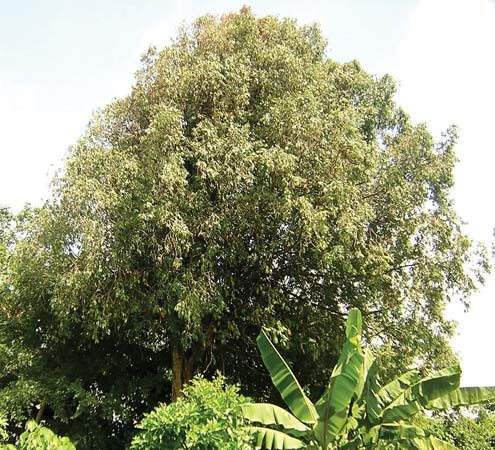
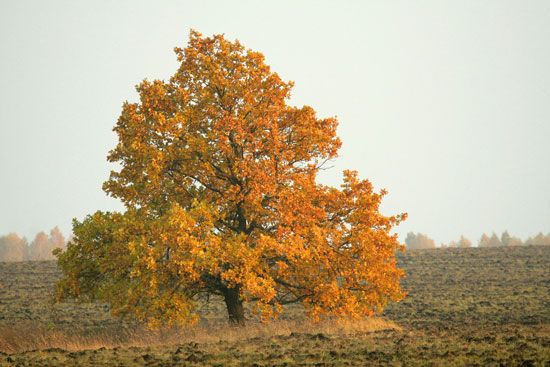
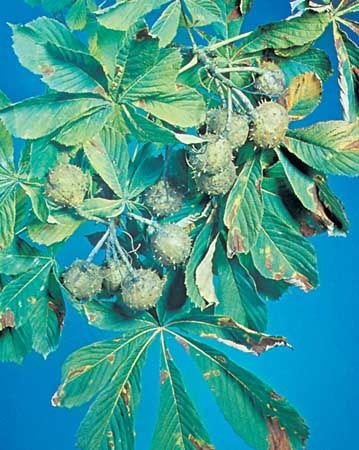
- Trees: Hardwoods like sal (Shorea robusta) and hollong are prominent. Other notable species include Ceylon ironwood, oaks, and Indian horse chestnuts.23
- Understory: The region is famous for its abundance of bamboos, ferns, and orchids, including the foxtail orchid (kopou phul), which is the state flower of Assam.2
- Alpine Zone: At higher elevations, rhododendrons are particularly abundant in the wetter eastern Himalayas, growing in forms ranging from trees to low shrubs.3
Fauna
The area serves as a critical refuge for several rare and endangered species.
- Mammals: The Indian one-horned rhinoceros is a flagship species of the region. Other notable inhabitants include elephants, tigers, clouded leopards, gaurs, and hoolock gibbons.245
- Endemic and Rare Species: The region is home to unique animals such as the golden langur, hispid hare, and the pygmy hog. The elusive red panda has also been spotted at higher altitudes.5
- Birds and Reptiles: The area is an Important Bird Area, known for hornbills, peacocks, and the critically endangered Bengal florican. Reptilian life includes various turtles, such as the Assam roofed turtle, and numerous snakes.25
What are the major peaks and ranges within the Assam Himalayas?
The Assam Himalayas are the eastern segment of the Great Himalayas, stretching approximately 450 miles (720 km) from the upper Tista River to the southward bend of the Brahmaputra River.1
Major Peaks
While the region contains several significant summits, the most notable include:
- Namjagbarwa (Namcha Barwa): Located in Tibet, this is the highest peak in the range, reaching an elevation of 25,445 feet (7,756 meters).1
- Kula: A prominent peak within the range.1
- Chomo: A notable mountain summit in the region.1
- Kangto: Another significant peak identified in the Assam Himalayas.1
Mountain Passes
The rugged terrain of the Assam Himalayas is traversed by several important mountain passes that have historically facilitated movement across the range, including:
- Natu Pass
- Jelep Pass
- Tang Pass1
What are some of the important rivers that originate in the Assam Himalayas?
The Assam Himalayas serve as the headwaters for several significant rivers that flow southward to join the Brahmaputra River. These waterways are essential to the region’s hydrology and landscape.9
Important rivers originating in or flowing from these mountains include:
- Subansiri: A major tributary that is notable for being the only one to cross the main Himalayan ranges west of the Brahmaputra.101
- Manas: A significant river that rises in the mountains and flows south to join the Brahmaputra.9
- Sankosh: Another key river originating in the range.9
- Raidak: A river that flows southward from the mountains.9
- Jaldhaka: A mountain-fed river that contributes to the Brahmaputra system.9
- Kameng: This river rises on the southern flanks of the mountains and is a vital tributary in the region.101
Additionally, the Brahmaputra itself—known as the Tsangpo in Tibet and the Dihang or Siang in Arunachal Pradesh—cuts through the eastern extremity of the Himalayas before entering the plains of Assam.101
Sources
- Assam Himalayas — Encyclopædia Britannica
- Assam - Plant and animal life — Encyclopædia Britannica
- Manas National Park — Encyclopædia Britannica
- Brahmaputra River - Plant and animal life — Encyclopædia Britannica
- Himalayas - Plant life — Encyclopædia Britannica
- Exploring 7 of Earth’s Great Mountain Ranges - Himalayas — Encyclopædia Britannica
- Nepal Himalayas — Encyclopædia Britannica
- Assam - Relief and drainage — Encyclopædia Britannica
- Arunachal Pradesh - Drainage and soils — Encyclopædia Britannica
- Brahmaputra River - Physiography — Encyclopædia Britannica
- Assam: Top Questions — Encyclopædia Britannica
Published on · 3 min read