Araucaria
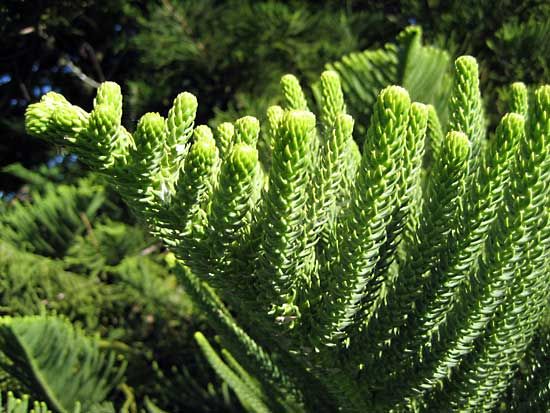
Araucaria species are a genus of pinelike coniferous plants naturally distributed across the Southern Hemisphere. Their native range includes Brazil, Chile…
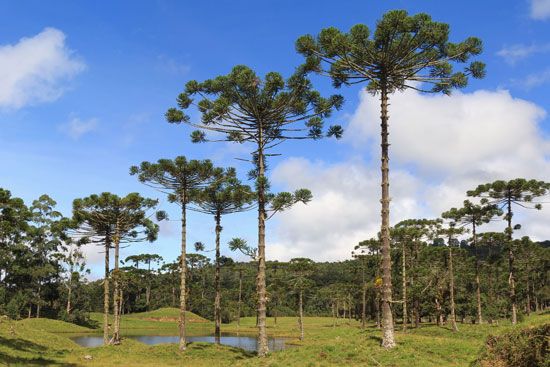
Where are Araucaria species naturally found, and what types of environments do they prefer?
Araucaria species are a genus of pinelike coniferous plants naturally distributed across the Southern Hemisphere. Their native range includes Brazil, Chile, Argentina, New Guinea, New Caledonia, Norfolk Island, and Australia.1
Regarding their preferred environments, these magnificent evergreens exhibit diverse growth habits. For example, the monkey puzzle tree (Araucaria araucana) is notably adapted to high-altitude environments, growing to heights of 50 meters within the cordilleras of Chile. While many species are now cultivated globally as ornamentals or timber trees, several members of the genus are currently listed as endangered species on the IUCN Red List, highlighting the importance of their natural habitats.1
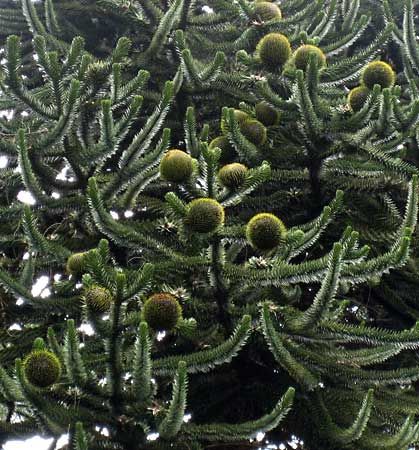
What are some cultural or historical significance of Araucaria trees in their native regions?
The cultural and historical significance of Araucaria trees is deeply intertwined with the Indigenous peoples of their native regions, particularly in South America.
- Etymological Roots: The genus name Araucaria is derived from Arauco, a district in southern Chile. This name is linked to the Araucanian people, an Indigenous group of south-central Chile and adjacent regions of Argentina. The botanical classification reflects the historical association between these trees and the local populations who lived among them.123
- Traditional Sustenance: The seeds of most Araucaria species are edible. For instance, the Araucaria araucana, often called the monkey puzzle tree, was historically significant to the Indigenous peoples of the region, who relied on its seeds as a food source. Historical records from the 18th century note that the tree, referred to as “Pehuen” by local inhabitants, grew naturally in their territory and was cultivated for its utility.142
- Historical Documentation: The connection between the trees and Indigenous culture was formalized in early botanical literature. When European botanists first described these species, they explicitly referenced the trees’ presence within the lands of the Araucanian people, documenting their role in the local landscape and economy.2
What are some common uses for Araucaria trees in horticulture and industry?
Araucaria trees are utilized in both horticultural and industrial contexts due to their distinct aesthetic qualities and the physical properties of their wood.
Horticultural Uses
- Ornamental Planting: Many species are highly valued for their unique, symmetrical growth habits, which distinguish them from most other conifers. The monkey puzzle tree, Moreton Bay pine, bunya pine, and Paraná pine are frequently cultivated as outdoor ornamentals in suitable climates, such as the Pacific coast of the United States and parts of Florida.1
- Houseplants: Due to their beauty during early development, the Norfolk Island pine and the bunya pine are commonly used as houseplants while in their sapling stage.1
Industrial Uses
- Timber Production: Several species within the genus are cultivated as timber trees. The wood of the monkey puzzle tree, for instance, is noted for being hard and durable, making it a valuable material.1
While these trees are economically significant, it is important to note that several species are currently listed as endangered species on the IUCN Red List, necessitating responsible management and conservation practices.1
How many species are there in the Araucaria genus, and which are the most well-known?
The Araucaria genus consists of 20 species of pinelike coniferous plants within the family Araucariaceae. These magnificent evergreens are native to regions including Brazil, Chile, Argentina, New Guinea, New Caledonia, Norfolk Island, and Australia.1
Several species are particularly well-known for their ornamental value or historical significance:
- Monkey puzzle tree (Araucaria araucana): Perhaps the most famous member of the genus, it is native to the Andes Mountains and is widely cultivated as an ornamental.16
- Norfolk Island pine (A. excelsa or A. heterophylla): Native to Norfolk Island and New Caledonia, it is frequently kept as a houseplant during its sapling stage.17
- Bunya pine (A. bidwillii): A large conifer from Queensland, known for its immense crown and edible seeds.18
- Moreton Bay pine (A. cunninghamii) and Paraná pine (A. angustifolia): Both are commonly utilized as outdoor ornamentals.1
Sources
- Araucaria — Encyclopædia Britannica
- araucaria — Merriam-Webster
- Araucanian — Merriam-Webster
- Paraná pine — Encyclopædia Britannica
- araucarian — Merriam-Webster
- Norfolk Island pine — Merriam-Webster
- bunya pine — Encyclopædia Britannica
- monkey puzzle tree — Encyclopædia Britannica
Published on · 3 min read