Arbutus
Arbutus refers to a genus of about 11 species of broad-leaved evergreen shrubs and trees belonging to the heath family (Ericaceae). These plants are native…
What is arbutus?
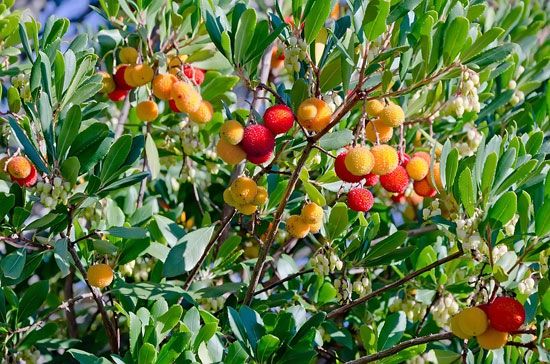
Arbutus refers to a genus of about 11 species of broad-leaved evergreen shrubs and trees belonging to the heath family (Ericaceae). These plants are native to southern Europe and western North America and are characterized by white or pink bell-shaped flowers and fleshy, many-seeded red or orange berries.12
Notable species include:
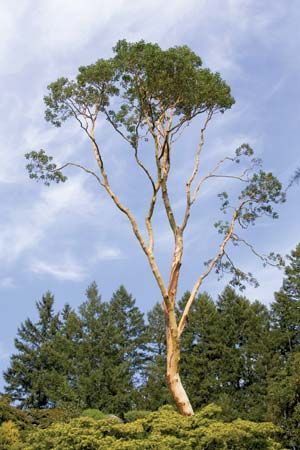
- Pacific madrona (A. menziesii): A tree native to western North America that can grow up to 23 meters tall and is known for its peeling, reddish bark.1
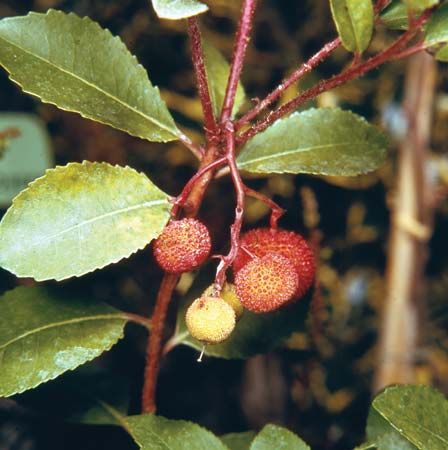
- Strawberry tree (A. unedo): Native to the Mediterranean, this species produces edible, tart fruit often used in jams and beverages.13
It is important to note that the term “arbutus” is sometimes used to refer to the trailing arbutus (Epigaea repens), a distinct creeping plant also in the Ericaceae family, which is not part of the Arbutus genus.12
What is the difference between the Pacific madrone and the strawberry tree?
The Pacific madrone (Arbutus menziesii) and the strawberry tree (Arbutus unedo) are both members of the heath family, but they differ significantly in their native ranges, size, and physical characteristics.1
Feature
Pacific Madrone (
A. menziesii
)
Strawberry Tree (
A. unedo
)
Native Range
Western North America (British Columbia to California)
Temperate coastal Mediterranean regions
Height
Up to 23 meters (75 feet)
3–9 meters (10–30 feet)
Leaves
Dark, glossy, oblong; 5–15 cm long; grayish-green beneath
Lustrous, elliptic or oblong; about 9 cm long
Bark/Branches
Peeling, reddish or cinnamon-colored bark
Sticky, hairy branches
Fruit
Fleshy, many-seeded berries
Edible, strawberry-like berries
While the Pacific madrone is a larger tree known for its distinctive peeling bark, the strawberry tree is smaller and characterized by its sticky, hairy branches and fruit that resembles a strawberry in appearance.1
How does the trailing arbutus differ from the Arbutus genus?
While both the trailing arbutus and the Arbutus genus belong to the heath family (Ericaceae), they are distinct plants with different growth habits and classifications.
The primary differences include:
- Classification: The trailing arbutus is classified as Epigaea repens, whereas the Arbutus genus consists of approximately 11 different species of shrubs and trees.41
- Growth Habit: The trailing arbutus is a low-growing, creeping plant found in sandy or boggy, acid woodlands. In contrast, members of the Arbutus genus are broad-leaved evergreen shrubs or trees, with some species reaching heights of up to 23 meters (75 feet).41
- Native Range: Trailing arbutus is native to eastern North America. The Arbutus genus is native to southern Europe and western North America.41
- Physical Features: Trailing arbutus features highly fragrant flowers in dense clusters and small, hairy leaves. Arbutus species are known for their bell-shaped flowers, fleshy berries with irregular surfaces, and often, distinctive peeling bark.41
Why is the strawberry tree considered a symbol of Italy?
The strawberry tree, known in Italy as corbezzolo, is considered a national symbol primarily because of its appearance. The plant’s bright green leaves, white flowers, and red fruits collectively mirror the colors of the Italian flag.53
Beyond its symbolic status, the tree is deeply integrated into Italian culture and local economies. For instance, Sardinian corbezzolo honey, which is produced by honeybees that visit the tree’s flowers, is highly regarded for its unique and notably bitter flavor. Additionally, the tart, strawberry-like fruits are frequently harvested to produce local jams, sorbets, and various alcoholic drinks.3
Sources
- arbutus — Encyclopædia Britannica
- arbutus — Merriam-Webster
- strawberry tree — Encyclopædia Britannica
- trailing arbutus — Encyclopædia Britannica
- strawberry tree: Top Questions — Encyclopædia Britannica
Published on · 3 min read