Archaefructus
The classification of Archaefructus has been a subject of significant debate among paleobotanists. While the team that originally described the genus…
Are there any controversies or debates surrounding the classification of Archaefructus?
The classification of Archaefructus has been a subject of significant debate among paleobotanists. While the team that originally described the genus proposed that it represented a new, major lineage reflecting the ancestral morphology and ecology of angiosperms, this interpretation has been challenged.1
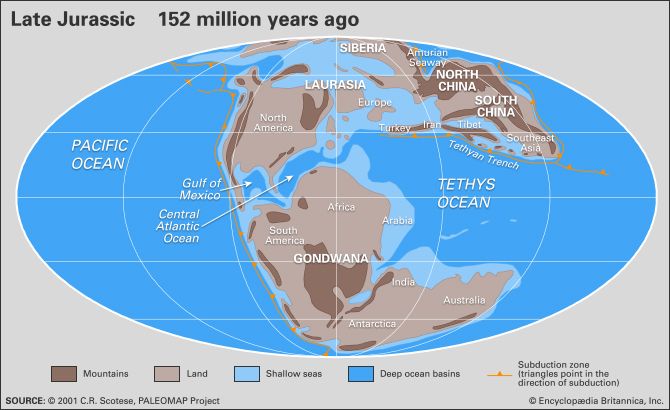
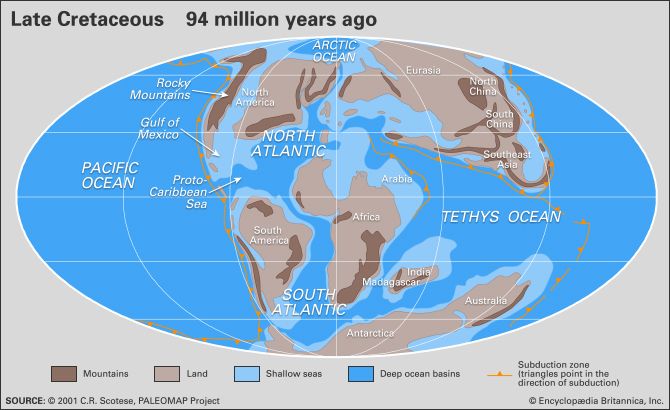
Critics of the original hypothesis suggest that Archaefructus is not a primitive ancestor of all flowering plants but is instead closely related to modern water lilies. Furthermore, its status as a candidate for the “first flower” is contested because it is an aquatic plant; researchers note that many land plant lineages have adapted to aquatic environments, but these specialized aquatic forms rarely, if ever, return to land to give rise to significant new terrestrial diversity. Additionally, while early reports once suggested the genus dated to the Jurassic Period, subsequent research corrected this, placing the fossils firmly in the Cretaceous Epoch at approximately 125 million years ago.1
What can Archaefructus tell us about the co-evolution of early flowering plants and insects?
Archaefructus provides limited direct evidence regarding the co-evolution of early flowering plants and insects because it is an aquatic genus, which many researchers now consider to be a specialized lineage rather than a representative of the ancestral stock of all angiosperms stock of all angiosperms.1
While Archaefructus is exceptionally well-preserved, showing roots, shoots, leaves, and reproductive organs, its aquatic nature makes it an unlikely candidate for the “first flower” that would have driven early terrestrial co-evolutionary relationships. The broader understanding of early plant-insect co-evolution relies on other fossil evidence and evolutionary theory:2
- Early Pollination Mechanisms: The development of showy flowers is widely considered a result of co-evolution with insects. Early Mesozoic flowering plants likely relied on “chance” pollination by beetles, which were already adapted to feeding on the spores of primitive plants.314
- Evolutionary Pressures: As plants evolved, they transitioned from relying on deceit or trapping mechanisms to offering nectar as a reward, which encouraged more reliable insect visits. This led to the development of floral “advertisements,” such as specific colors and nectar guides, to direct insect behavior.1
- Structural Adaptations: The fossil record shows a transition from small, inconspicuous, and often unisexual flowers—which may have been pollinated by wind or water—to more complex, bisexual structures that facilitate efficient pollen transfer by animals.3
While Archaefructus offers a rare, detailed look at an early Cretaceous aquatic plant, it does not serve as the primary model for the terrestrial co-evolutionary networks that defined the rise of flowering plants.2
When and where were Archaefructus fossils discovered?
Archaefructus fossils were discovered in the lacustrine deposits of the Yixian Formation in northeastern China.1
While initial reports incorrectly suggested the fossils originated during the Jurassic Period, subsequent research confirmed that they date to the Early Cretaceous Epoch, specifically to approximately 125 million years ago. These deposits are notable for also preserving a variety of other significant fossils, including feathered dinosaurs, early birds, and mammals.1
What methods are used to date and study Archaefructus fossils?
To study and date Archaefructus fossils, researchers rely on a combination of stratigraphic analysis and fossil correlation within the Yixian Formation in China.
Dating Methods
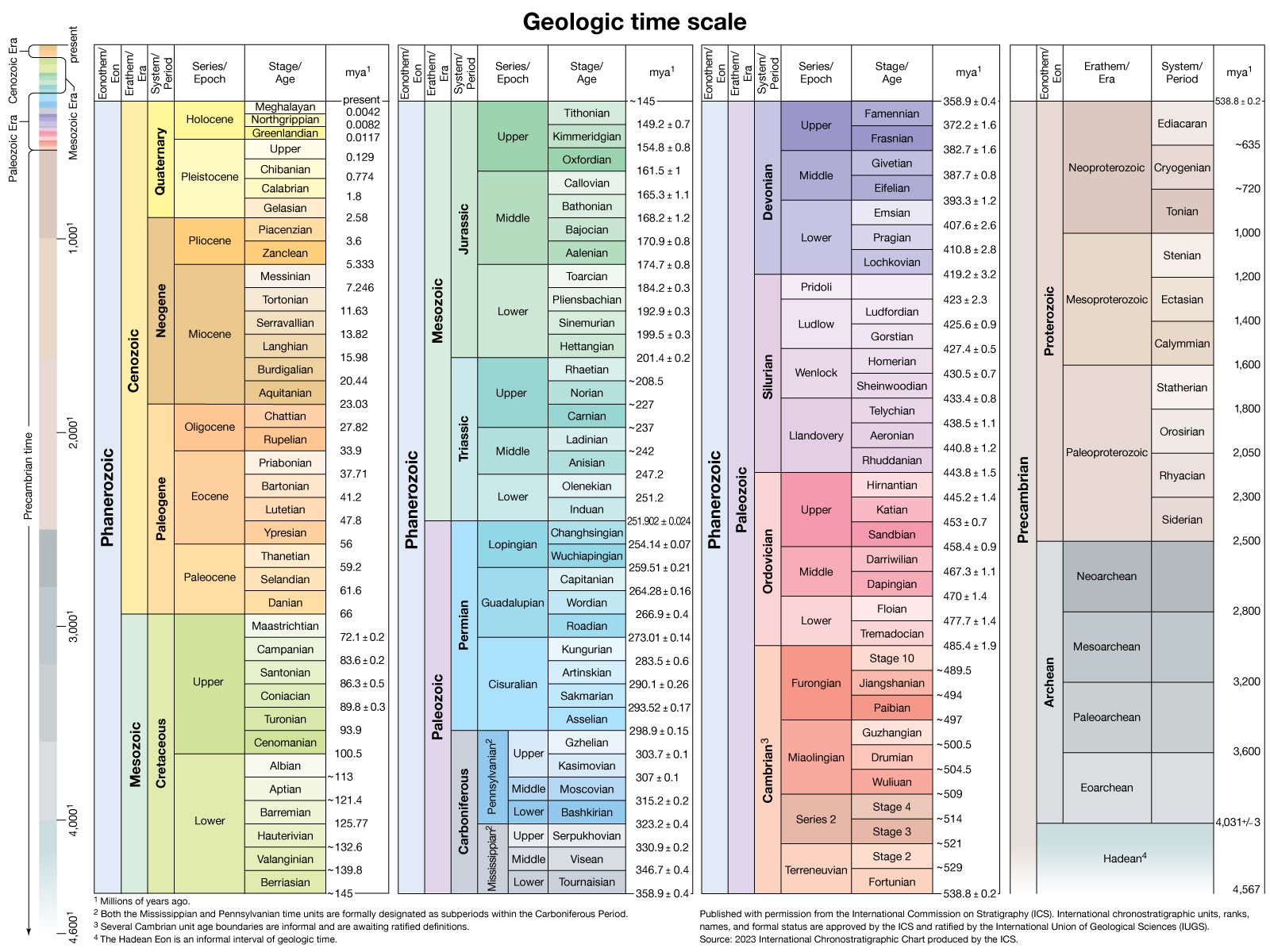
The age of Archaefructus is determined through stratigraphy, a discipline that interprets rock successions to establish a geological time scale. While initial reports incorrectly placed the genus in the Jurassic Period, subsequent investigations refined this dating to approximately 125 million years ago, placing it within the Early Cretaceous Epoch.1
Geologists often verify the age of such strata using:
- Radiometric dating: This method measures the radioactive decay of elements within rocks or fossils to determine their absolute age in millions of years.67
- Fossil Correlation: Scientists compare the presence of specific organisms within the Yixian Formation to known index fossils found in other regions to establish relative timing.86
Study Techniques
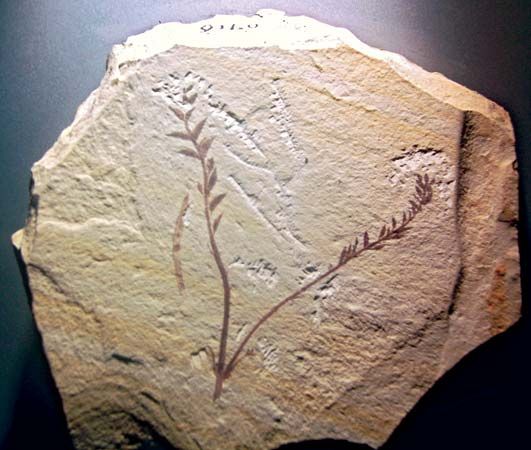
Because Archaefructus is preserved with exceptional detail—including roots, shoots, leaves, and reproductive organs—paleobotanists study the specimens to analyze their morphology and evolutionary relationships. Researchers examine these physical structures to determine whether the plant represents an ancestral lineage of angiosperms or a specialized aquatic group related to modern water lilies.1
Sources
- Archaefructus — Encyclopædia Britannica
- angiosperm - Paleobotany and evolution — Encyclopædia Britannica
- pollination - Evolution of insect pollination — Encyclopædia Britannica
- magnoliid clade - Reproductive structures — Encyclopædia Britannica
- geology - Palynology — Encyclopædia Britannica
- Cretaceous Period - Correlation — Encyclopædia Britannica
- stratigraphy — Encyclopædia Britannica
- Did you know? — Merriam-Webster
Published on · 3 min read