Archer Fish
The archer fish refers to any of seven species of Indo-Pacific fishes belonging to the family Toxotidae. These fish are best known for their remarkable…
What is archer fish?
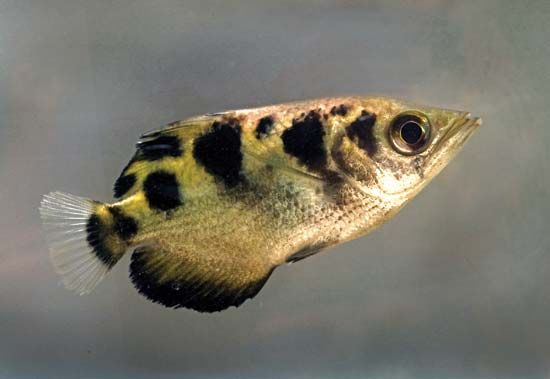
The archer fish refers to any of seven species of Indo-Pacific fishes belonging to the family Toxotidae. These fish are best known for their remarkable hunting technique: they “shoot” drops of water from their mouths to knock insect prey off overhanging vegetation, causing the insects to fall into the water where they can be consumed.12
Physically, these fish are characterized by elongated, deep bodies that are nearly flat from the dorsal fin forward. They feature pointed heads, large mouths, and dorsal and anal fins positioned toward the back of the body. Depending on the species, they may be marked with spots or vertical black bands.1
Archer fish typically inhabit both fresh and brackish salt water, usually staying near the surface. One of the most well-known species, Toxotes jaculator, reaches a length of approximately 18 centimeters (7 inches).1
How do archerfish aim their water jets so accurately?
Archerfish achieve their remarkable accuracy through a specialized modification of their mouth structure. The roof of the mouth contains a groove that, when the tongue is pressed against it, forms a temporary tube.1
By using this tube, the fish can forcefully expel a focused drop of water toward its target. This anatomical adaptation allows the archerfish to direct water with high precision at insects clinging to vegetation above the surface, causing the prey to fall into the water where it can be consumed.31
What other animals use tools or special techniques to hunt?
Beyond the archer fish, many animals exhibit sophisticated behaviors and use tools to secure food. These adaptations reflect high levels of intelligence and evolutionary specialization.
Tool Use in Animals
- Chimpanzees: These primates are well-known for their diverse tool use. They “fish” for termites and ants using probes made from grass stalks, vines, or bark. They also use stones or wood as hammers and anvils to crack open hard nuts and employ “leafy sponges” to soak up water for drinking.4
- Crows: Certain species, such as the New Caledonian crow and the Hawaiian crow, use stick-type tools to extract food from crevices and small holes.5
- Sea Otters: While floating on their backs, sea otters crack clams against stones held on their chests.6
- Birds: Herring gulls are known to break shells by dropping them onto rocks.6
Specialized Hunting Techniques
- Cooperative Hunting: Wolves hunt in groups, and white pelicans cooperate to form semicircles, driving fish into shallow water for easier capture. Similarly, crows may work together to raid food from other animals.75
- Sensory Adaptations: Bats use echolocation to navigate and locate insect prey in the dark. Owls rely on acute hearing to pinpoint the rustling sounds of small rodents.7
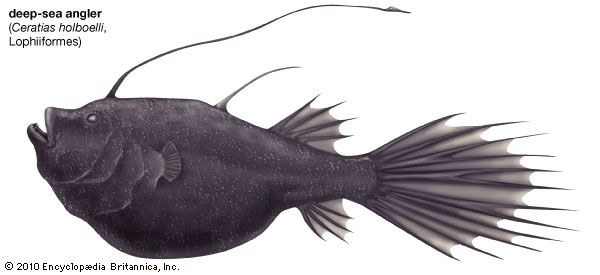
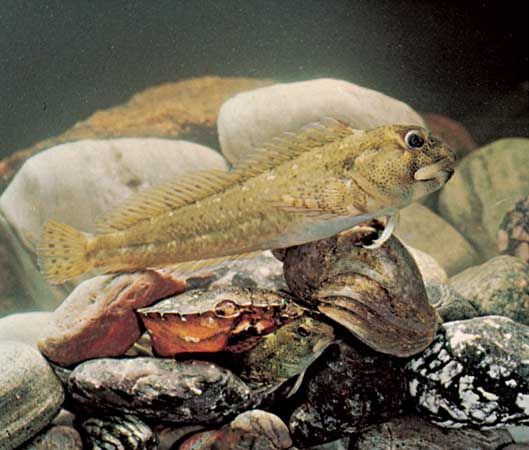
- Luring and Mimicry: Anglerfish use a luminous, baitlike appendage to lure prey toward their mouths. Some blennies mimic the “dancing” behavior of cleaner fish to get close enough to bite their victims.6
- Chemical and Mechanical Methods: The snail Natica uses sulfuric acid to dissolve clam shells, while the starfish Asterias uses its tube feet to pull shells apart before everting its stomach to digest the prey.6
How do archerfish adapt to living in both fresh and brackish water?
Archerfish are capable of living in both fresh and brackish water, an ability that requires them to manage their internal salt and water balance through a process known as osmoregulation.110
Because the salt concentration in their environment can change, these fish must maintain homeostasis—the stability of their internal environment—despite external fluctuations. Aquatic organisms that can tolerate a wide range of external ion concentrations are classified as euryhaline. To survive these transitions, archerfish rely on specialized physiological mechanisms:111213
- Gill Function: The gills play a critical role in ion exchange. Depending on the salinity of the surrounding water, specialized cells in the gills can actively transport salts either into or out of the body to maintain the necessary internal concentration.131112
- Kidney Regulation: The kidneys help manage water levels. In freshwater, fish typically excrete large amounts of dilute urine to remove excess water absorbed through osmosis. In saltier environments, they conserve water by producing smaller amounts of more concentrated urine.131110
- Behavioral Adaptation: Like other fish that migrate between different salinity levels, such as salmon, archerfish often utilize brackish water as an intermediate environment to gradually adjust their physiological processes to changing conditions.111012
Sources
- archer fish — Encyclopædia Britannica
- archerfish — Merriam-Webster
- perciform - Feeding behaviour — Encyclopædia Britannica
- hunting - Hunting methods — Encyclopædia Britannica
- Predation — Encyclopædia Britannica
- Feeding behaviour - Types of food procurement — Encyclopædia Britannica
- chimpanzee - Intelligence — Encyclopædia Britannica
- Crow — Encyclopædia Britannica
- hunting - Origins — Encyclopædia Britannica
- Biosphere - Salinity — Encyclopædia Britannica
- fish - Excretory organs — Encyclopædia Britannica
- Do fish drink water? — Encyclopædia Britannica
- Excretion - Fishes — Encyclopædia Britannica
Published on · 3 min read