Biosphere
The biosphere is the relatively thin, life-supporting stratum of Earth’s surface, extending from the deep-sea vents of the ocean to a few kilometers into the…
What is the biosphere and how does it relate to ecology?
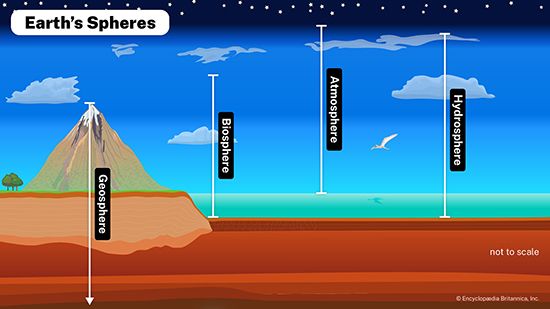
The biosphere is the relatively thin, life-supporting stratum of Earth’s surface, extending from the deep-sea vents of the ocean to a few kilometers into the atmosphere. It is the global ecosystem where all life dwells, functioning as an energy-diverting skin that utilizes Earth’s matter to sustain living organisms.123
The relationship between the biosphere and ecology is fundamental: while the biosphere represents the physical and biological “zone of life,” ecology is the scientific study of the interrelationships between organisms and their environment within that zone. Ecology examines how living components (biota) and nonliving (abiotic) factors interact to form ecosystems, which are the smaller, functional units of the biosphere.24
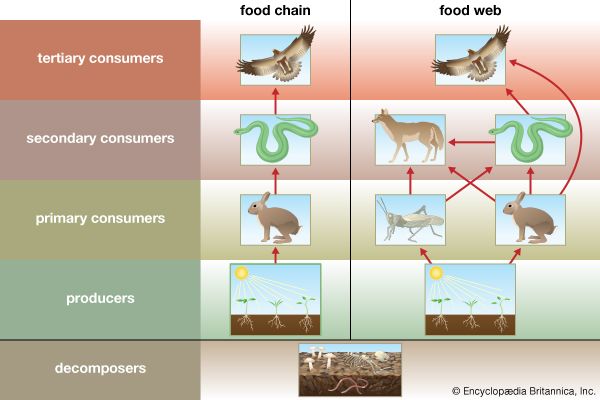
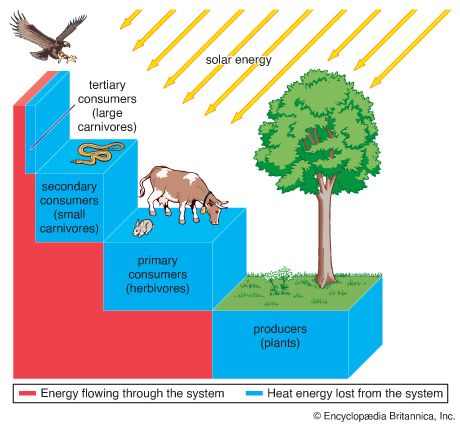
Ecological study helps us understand the complex processes—such as energy flow, nutrient cycling, and the roles of producers, consumers, and decomposers—that maintain the stability of the biosphere. Because human activity now acts as a powerful force for irreversible change within this system, ecological research is essential for addressing global challenges like pollution and species extinction.2514
What is the concept of ecological succession and how does it shape ecosystems?
Ecological succession is the process by which the structure of a biological community evolves over time. This progression is not random; rather, it follows a partially predictable sequence as species modify their environment, making it more suitable for subsequent organisms.7
Succession is categorized into two primary types:
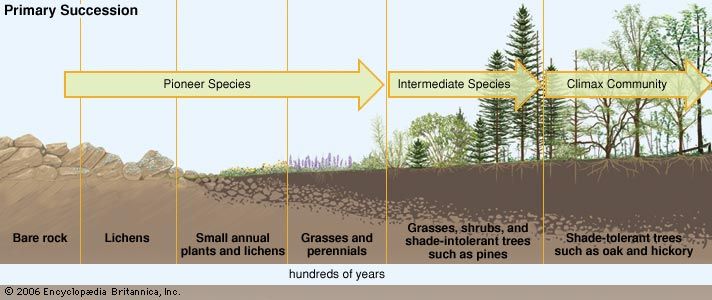
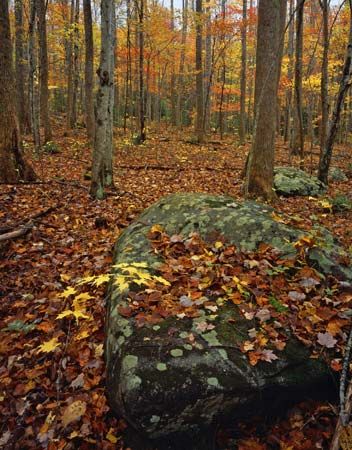
- Primary succession: Occurs in essentially lifeless areas where soil is absent, such as on lava flows or rock left by retreating glaciers. Pioneer species—like lichens and mosses—colonize these barren environments, breaking down rock and contributing to soil formation.789
- Secondary succession: Occurs in areas where a previous community was removed by a disturbance, such as a wildfire or farming, but where soil and nutrients remain or farming, but where soil and nutrients remain.78
As succession advances, pioneer species are outcompeted by intermediate species, which eventually give way to a climax community. This stable, mature state is dominated by a small number of prominent species that are well-adapted to the intricate web of interactions within the environment.7109
How do biogeochemical cycles contribute to the functioning of the biosphere?
Biogeochemical cycles are the natural pathways through which essential elements—such as carbon, nitrogen, oxygen, phosphorus, sulfur, and water—circulate between the abiotic (nonliving) and biotic (living) components of the biosphere.1112
These cycles are vital to the functioning of the biosphere because they ensure that the chemical elements required for life are continuously recycled. Unlike energy, which flows through the biosphere in a one-way path and cannot be reused, these elements are used repeatedly over eons. Organisms play a central role in this process; they not only intercept these elements as they move through the environment but often actively drive the cycles themselves.111213
By alternating between inorganic and organic states, these nutrients support the growth and life processes of all organisms. Decomposers, such as bacteria and fungi, are particularly critical, as they return elements fixed in dead organic matter back to the environment, making them available once again for other living organisms.121311
What role does biodiversity play in maintaining a healthy biosphere?
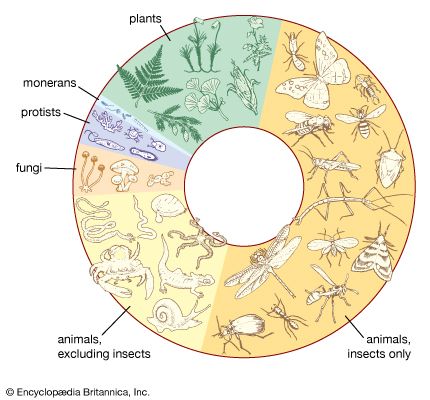
Biodiversity—the variety of genes, species, and biological communities—is fundamental to the health and stability of the biosphere. It acts as the engine that powers essential ecological processes, including nutrient cycling, energy flow, and population regulation.1516
Biodiversity maintains a healthy biosphere through several critical mechanisms:
- Ecosystem Resilience: Species-rich communities are better equipped to recover from disturbances such as drought or disease. High diversity ensures that ecosystems remain stable and productive, as various species provide redundant roles that keep the system functioning.1718
- Ecosystem Services: Diverse ecosystems provide vital services, including soil maintenance, water purification, and climate regulation. For instance, wetlands act as natural filters and carbon sinks, supporting both terrestrial and aquatic life.1918
- Complexity and Stability: The intricate web of interactions between species allows ecosystems to adapt to environmental changes. When biodiversity declines, these complex roles are lost, reducing the ecosystem’s ability to recover and increasing the risk of collapse.1518
Ultimately, the interdependence of species is what sustains life on Earth. Protecting this richness is essential, as the loss of even seemingly obscure species can have significant, negative repercussions on the global environment.1617
Sources
- plant - Ecosystems and the biosphere — Encyclopædia Britannica
- biosphere — Merriam-Webster
- life - The biosphere — Encyclopædia Britannica
- Biosphere — Encyclopædia Britannica
- trophic level — Encyclopædia Britannica
- ecology — Encyclopædia Britannica
- ecological succession — Encyclopædia Britannica
- ecological succession: Top Questions — Encyclopædia Britannica
- pioneer species — Encyclopædia Britannica
- secondary succession — Encyclopædia Britannica
- Biogeochemical cycle — Encyclopædia Britannica
- Biosphere - Links among the cycles — Encyclopædia Britannica
- ecosystem — Encyclopædia Britannica
- Biosphere - Nutrient cycling — Encyclopædia Britannica
- biodiversity loss — Encyclopædia Britannica
- Biosphere - The importance of the biosphere — Encyclopædia Britannica
- community ecology - Community equilibrium and species diversity — Encyclopædia Britannica
- Wetland - Wetland functions and ecosystem benefits — Encyclopædia Britannica
- biodiversity loss - Ecological effects — Encyclopædia Britannica
Published on · 4 min read