Archaeopteryx
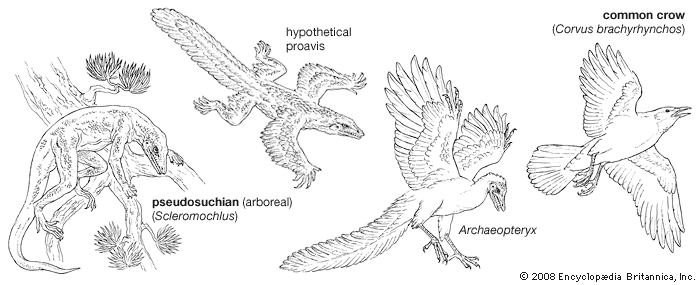
Archaeopteryx is closely related to a variety of small, carnivorous theropod dinosaurs, particularly those within the group known as Paraves. This group…
What other animals were closely related to Archaeopteryx?
Archaeopteryx is closely related to a variety of small, carnivorous theropod dinosaurs, particularly those within the group known as Paraves. This group includes birds and the deinonychosaurs, which consist of troodontids and dromaeosaurs.
Specific animals closely related to or sharing significant anatomical features with Archaeopteryx include:
- Xiaotingia zhengi: A feathered dinosaur from China that shares several birdlike characteristics and predates Archaeopteryx by approximately five million years.12
- Aurornis xui: A species that lived roughly 10 million years before Archaeopteryx and possessed similar diagnostic features such as feathers and a wishbone.1
- Caudipteryx and Protarchaeopteryx: Feathered oviraptorids that demonstrate that true feathers existed in non-avian dinosaurs before the evolution of flight.3
- Other Theropods: Archaeopteryx shares exclusive anatomical traits—such as a specific wrist joint, long arms, and a stiffened tail—with theropods like Oviraptor, Velociraptor, Deinonychus, and Troodon.3
When and where were Archaeopteryx fossils first discovered?
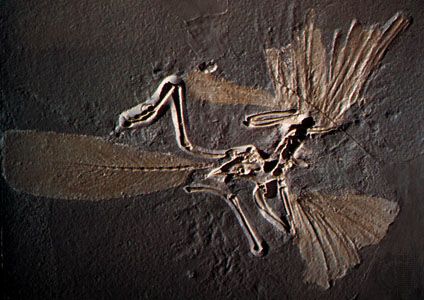
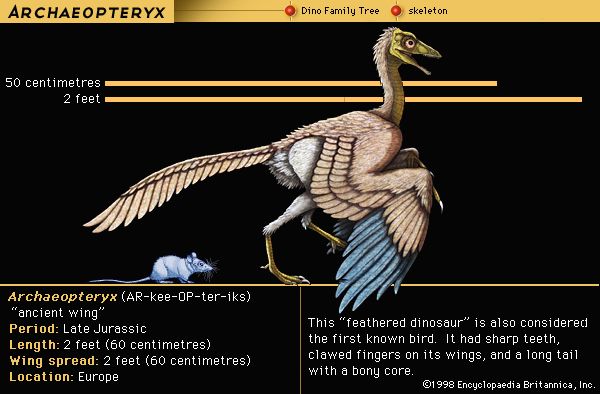
The first skeletons of Archaeopteryx were discovered in the early 1860s in the Solnhofen Limestone Formation in Bavaria, Germany1.4
These fossils, which date to the Late Jurassic Period (approximately 150 million years ago), were notable for their exceptionally well-preserved impressions of feathers, which led many early authorities to classify the genus as the earliest known fossil bird.154
How many species of Archaeopteryx have been identified so far?
The classification of Archaeopteryx species has been a subject of scientific discussion, and while the genus Archaeopteryx is widely recognized, the number of distinct species identified within it varies among paleontologists.
Historically, several specimens have been assigned to the genus, with Archaeopteryx lithographica being the most well-known and frequently cited species. Some taxonomic classifications have historically included other genera, such as Archaeornis, within the broader order of toothed birds known as Archaeopterygiformes.12
Because Archaeopteryx is often at the center of debates regarding the transition between non-avian theropod dinosaurs and birds, some researchers have proposed that different specimens might represent distinct species, while others argue that the variations observed in the fossil record may simply reflect individual growth stages or sexual dimorphism within a single species. Due to these ongoing debates in paleontology, there is no single, universally accepted number of species for the genus.6
How did Archaeopteryx’s diet differ from that of its dinosaur ancestors and modern birds?
Archaeopteryx occupied a transitional position between non-avian theropod dinosaurs and modern birds, and its diet reflects this evolutionary bridge.
Ancestral Theropod Diet
Most theropod dinosaurs were carnivores characterized by sharp, bladelike teeth often featuring serrations for tearing flesh. While some later theropods, such as oviraptorids and ornithomimids, evolved to be omnivorous or herbivorous, the ancestral lineage from which Archaeopteryx descended primarily relied on carnivorous dentition.7
Archaeopteryx Diet
Archaeopteryx retained many ancestral features, including narrow-waisted teeth, though these had reduced serrations or lacked them entirely. As a small, arboreal creature with clawed digits, its diet likely consisted of small prey, such as insects or other small vertebrates, consistent with its role as a basal member of the Paraves group.789
Modern Bird Diet
In contrast, modern birds have undergone significant dietary diversification, largely facilitated by the loss of teeth and the development of specialized [beaks]. This transition, which began during the Early Cretaceous, allowed for a wider range of feeding strategies, from seed-cracking to nectar-feeding, far exceeding the more limited carnivorous or insectivorous habits of their early ancestors.8
Sources
- Archaeopteryx — Encyclopædia Britannica
- Bird - Fossil birds — Encyclopædia Britannica
- dinosaur - Dinosaur descendants — Encyclopædia Britannica
- How Do We Know That Dinosaurs May Have Had Feathers? — Encyclopædia Britannica
- feathered dinosaur — Encyclopædia Britannica
- Archaeopterygiformes — Merriam-Webster
- Caudipteryx — Encyclopædia Britannica
- dinosaur - The plant eaters — Encyclopædia Britannica
- dinosaur - Theropoda — Encyclopædia Britannica
Published on · 3 min read