Are Chunga Palms Really Dangerous?
Chunga palms (Astrocaryum standleyanum) are real plants native to Central and South American rainforests. They are physically intimidating, featuring slender…
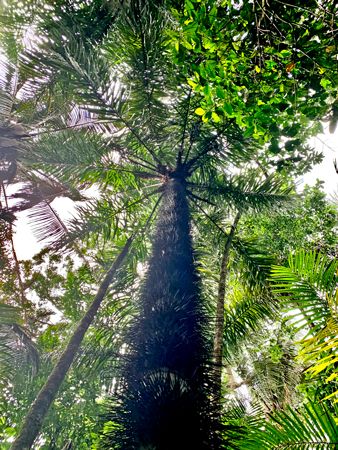
Are chunga palms really dangerous?
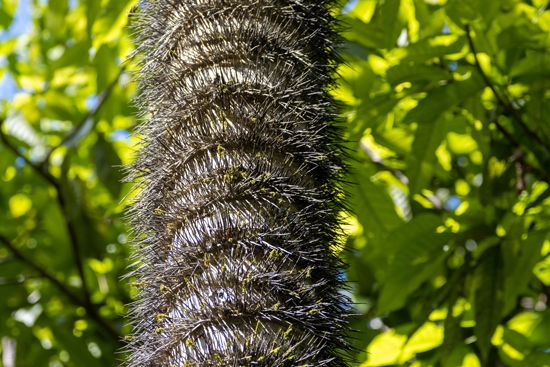
Chunga palms (Astrocaryum standleyanum) are real plants native to Central and South American rainforests. They are physically intimidating, featuring slender trunks armored with sharp, black, needlelike spines that can grow up to 20 centimeters (8 inches) long. These spines serve as a mechanical defense against herbivores.1
While there are no documented cases of fatal impalements from these palms in medical literature, the risk of infection is a legitimate concern. Like many other thorny plants, chunga palm spines can harbor harmful bacteria and fungi. Deep puncture wounds in a humid, tropical environment like the Darién Gap could potentially introduce pathogens—such as those causing gangrene or other serious infections—into the body. Therefore, while the dramatic depictions in media may be embellished, the biological reality is that these palms are capable of inflicting painful and potentially dangerous injuries.1
What other plants in the rainforest have evolved physical defenses like spines?
In the rainforest and other ecosystems, many plants have evolved structural defenses to deter herbivores, ranging from insects to large mammals. These physical adaptations serve as mechanical barriers that protect vulnerable tissues, particularly young leaves, from being consumed.3
Common examples of plants with such defenses include:
- Palms: Beyond the Astrocaryum species (like the chunga palm), many other palms utilize spines on their trunks, leaf stalks, and fruit-bearing stems as a deterrent.31
- Legumes: Members of the pea family (Fabaceae), such as Acacia and Mimosa, are well-known for their sharp thorns, which are common in various thorn forests.4
- Succulents: Cacti and certain spurges (Euphorbia) are heavily armed with spines, which help them survive in arid or semi-arid environments by protecting their water-rich tissues.4
- Shrubs: Plants like Christ’s thorn (Paliurus spina-christi) feature sturdy, hooked thorns that provide protection and are often used in hedges.5
These structures are not merely passive barriers; they can also harbor bacteria and fungi, effectively acting as biological weapons that can cause serious infections in animals that sustain puncture wounds.1
How do tropical plants use bacteria on their surfaces to protect themselves?
The premise that tropical plants use bacteria on their surfaces as a primary defensive mechanism against herbivores is not supported by the provided information. In fact, the relationship between plants and bacteria is often the opposite: many bacterial species are pathogens that cause disease, leading to a loss of vigor or death in plants.3
While plants do engage in mutualistic associations with microorganisms, these are typically focused on nutrient acquisition rather than surface defense. For example, many terrestrial plants form mycorrhizal associations with fungi to aid in nutrient uptake, and leguminous plants rely on root-nodule bacteria to fix nitrogen plants](https://www.britannica.com/science/legume) rely on root-nodule bacteria to fix nitrogen.76
Plants defend themselves against herbivores using a variety of other strategies, including:
- Chemical defenses: Producing allelochemicals like alkaloids or terpenes to sicken or deter attackers.78
- Structural defenses: Developing spines, thorns, prickles, or toughened leaves to physically prevent consumption.79
- Defensive mutualisms: Enlisting animals, such as acacia ants, to actively drive away herbivores.796
What are some of the most common dangers for travelers in the Darién Gap?
The Darién Gap is widely considered one of the most dangerous migration routes in the world, characterized by a lack of infrastructure and extreme environmental and human threats.1213
Environmental Hazards
The region is dominated by dense tropical rainforests, swamps, and steep, rugged terrain. Travelers face several critical environmental risks:1213
- Climate and Geography: The area experiences extreme heat, humidity, and heavy rainfall, which frequently triggers dangerous flooding and landslides.1213
- Water and Disease: Limited access to clean drinking water leads to waterborne illnesses. Additionally, mosquitoes in the region can transmit diseases such as dengue and malaria.13
- Wildlife: The forest is home to dangerous animals, including crocodiles and venomous snakes.13
- Physical Injuries: Dense vegetation, particularly chunga palms, features long, sharp spines that can puncture skin, causing wounds that are highly susceptible to infection.1213
Human Threats
The remoteness and lack of effective security have allowed criminal elements to entrench themselves in the region. Travelers are frequently targeted by:13
Sources
- Are Chunga Palms Really Dangerous? — Encyclopædia Britannica
- palm - Distribution — Encyclopædia Britannica
- Eating the rainforest — Encyclopædia Britannica
- Thorn forest — Encyclopædia Britannica
- Christ’s thorn — Encyclopædia Britannica
- community ecology - Specialization in grazing — Encyclopædia Britannica
- community ecology - The pervasiveness of mutualism — Encyclopædia Britannica
- Botanical Barbarity: 9 Plant Defense Mechanisms — Encyclopædia Britannica
- Plant disease - Diseases caused by bacteria — Encyclopædia Britannica
- Plant disease - General characteristics — Encyclopædia Britannica
- mutualism — Encyclopædia Britannica
- Darién Gap: Top Questions — Encyclopædia Britannica
- Darién Gap — Encyclopædia Britannica
- Darién — Encyclopædia Britannica
Published on · 3 min read