Are Porcupines Aggressive?
Porcupines are not aggressive animals; their behavior is fundamentally rooted in self-preservation rather than conflict. They are generally solitary…
Are porcupines aggressive?
Porcupines are not aggressive animals; their behavior is fundamentally rooted in self-preservation rather than conflict. They are generally solitary creatures that do not seek out confrontations or defend territories.1
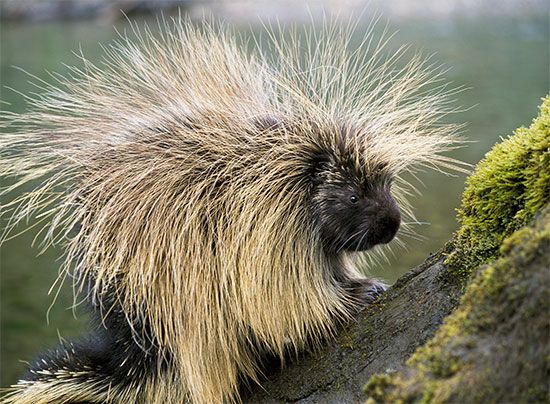
When a porcupine feels threatened, it relies on a passive defense mechanism rather than active aggression. The animal typically turns its rear toward the perceived danger, causing its quills—which are modified hairs—to stand erect. These quills, which feature tiny, backward-pointing barbs, detach easily upon contact and embed themselves into an attacker. While this can cause significant injury to a predator, it is a defensive response to being approached or attacked, not an offensive act.12
What is the difference between Old World and New World porcupines?
Old World and New World porcupines are distinct groups of rodents classified into separate families based on their evolutionary history, physical characteristics, and behaviors.2
Key Differences
Feature
New World Porcupines (Family Erethizontidae)
Old World Porcupines (Family Hystricidae)
Distribution
Found in North and South America.
Found in Asia, Africa, and Europe.
Habitat
Primarily arboreal (tree-dwelling), though the North American porcupine is also terrestrial.
Primarily terrestrial; some species are capable of climbing.
Quill Arrangement
Quills grow individually, interspersed with guard hairs, bristles, and underfur.
Quills grow in clumps.
Quill Features
Possess tiny, backward-pointing barbs that anchor them in skin.
Spines are flattened, grooved, or long and sharp; some have specialized “rattle” quills on the tail.
Social Behavior
Generally solitary.
Some species congregate to rest and feed.
Evolutionary Background
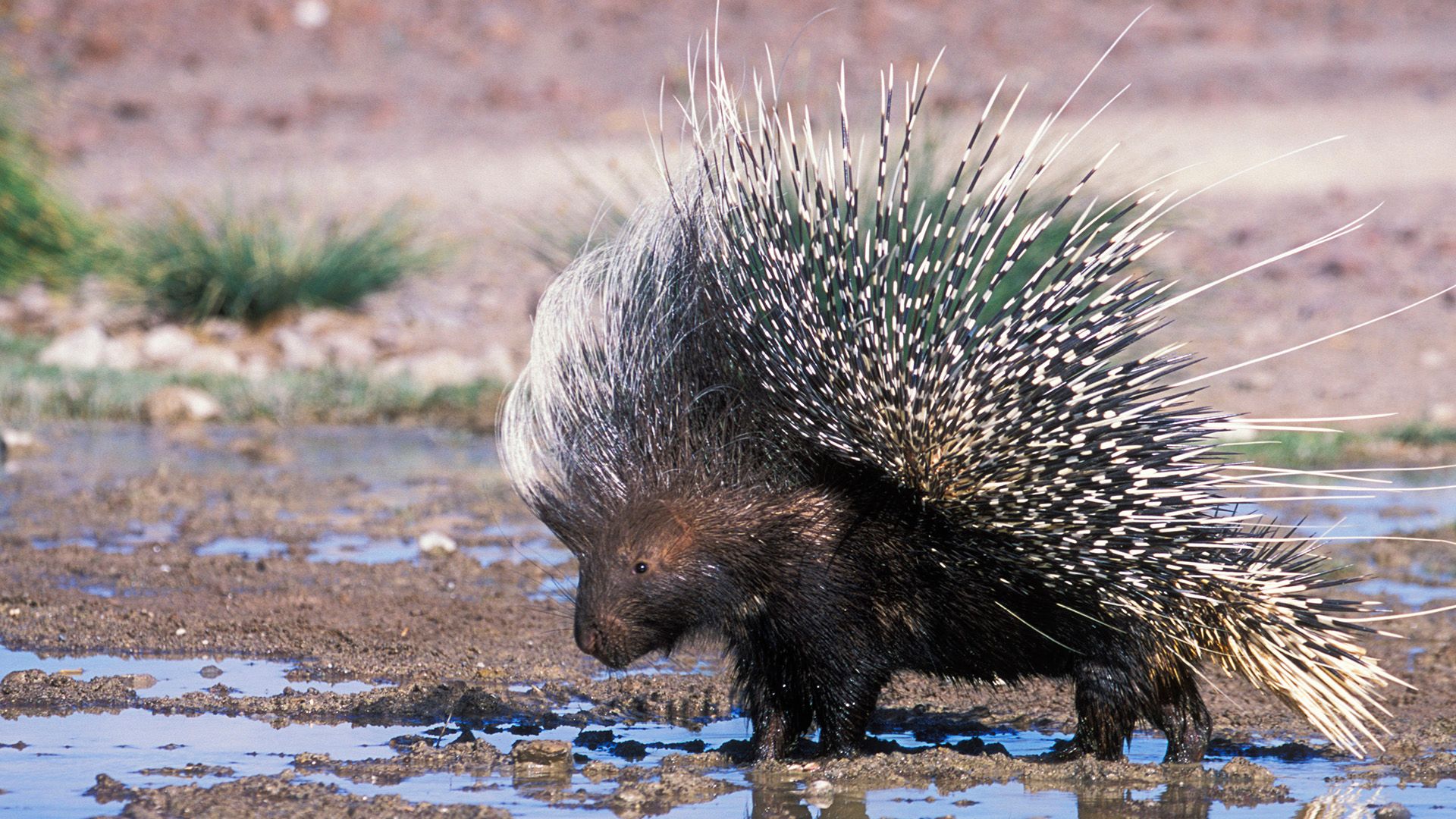
New World porcupines (16 species) are thought by some to have descended from an African rodent ancestor that migrated to South America, while Old World porcupines (11 species) have a long history in Europe, Asia, and Africa, with fossils dating back to the Miocene Epoch. While both groups use their quills for defense, Old World species like the genus Hystrix can also use specialized tail quills to create warning sounds, a feature not found in their New World counterparts.236
How do predators like fishers successfully hunt porcupines?
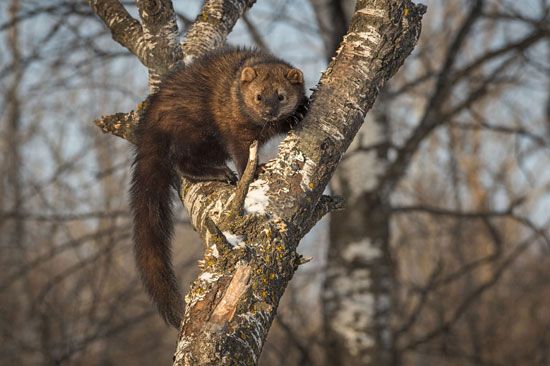
Predators such as fishers successfully hunt porcupines by specifically targeting their vulnerable underside.1
While a porcupine’s primary defense is to present its rear—where its quills are most densely concentrated—to an attacker, this strategy leaves its belly exposed. By maneuvering to attack from below, predators like fishers, as well as bobcats and wolverines, can bypass the porcupine’s main line of defense. This tactic allows them to overcome the porcupine’s passive defense mechanism, which relies on the quills’ ability to detach and embed into an assailant’s skin upon contact.213
What are quills made of and how do they grow back?
Porcupine quills are modified hairs composed of keratin, a fibrous structural protein. Structurally, they consist of an inner spongy core encased in a tough, hollow, pointed shell.3
When a porcupine loses its quills, it does not suffer injury because the base of each quill is designed to detach easily. The process of regrowth begins within a few days of the loss. Quills grow at a rate of approximately 1 mm (0.04 inch) every two days until they reach their full length, which varies significantly by species—ranging from 3.5 cm in the North American porcupine to up to 45 cm in the North African crested porcupine.3
The total time required for a quill to be fully replaced can take several months. This timeline is influenced by the animal’s diet; for instance, during winter months when food sources are limited, the regrowth process may be delayed or suspended.3
Sources
- Are porcupines aggressive? — Encyclopædia Britannica
- porcupine - New World porcupines (family Erethizontidae) — Encyclopædia Britannica
- Do porcupine quills grow back? — Encyclopædia Britannica
- Canada porcupine — Merriam-Webster
- porcupine - Evolution and classification — Encyclopædia Britannica
- porcupine - Old World porcupines (family Hystricidae) — Encyclopædia Britannica
- fisher — Encyclopædia Britannica
Published on · 3 min read