Bobcat
The bobcat (Lynx rufus) is a medium-sized feline characterized by a stout body, long legs, and large paws. Physically, they measure 60–100 cm (24–40 inches)…
What are the physical characteristics of a bobcat?
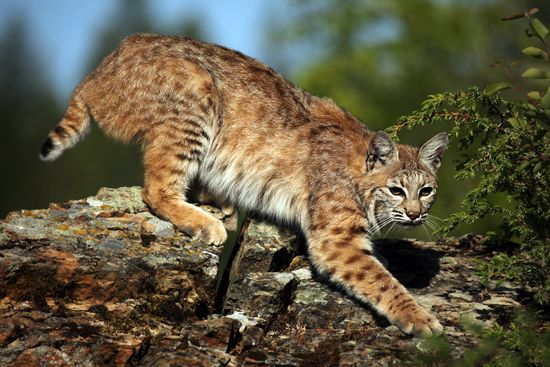
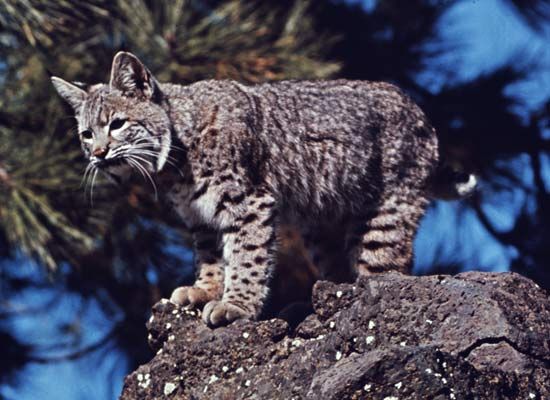
The bobcat (Lynx rufus) is a medium-sized feline characterized by a stout body, long legs, and large paws. Physically, they measure 60–100 cm (24–40 inches) in length, excluding their 10–20 cm (4–8 inch) “bobbed” tail, and stand 50–60 cm (19.5–23.5 inches) at the shoulder. Adults typically weigh between 7 and 15 kg (15–33 pounds), with males generally being larger than females.1
Their coat color ranges from grayish to reddish brown, featuring black or dark brown spots that provide camouflage. The underparts are white, and the tail is marked with a black tip on the upper side. A distinctive feature is the ruff of fur on their face, which forms “muttonchops,” and their ears, which are black with a prominent white spot on the back and a short tuft of dark hair at the tip. These physical traits help distinguish them from their close relative, the Canada lynx, which has larger ear tufts and different tail markings.1
Where are bobcats typically found in their natural habitat?
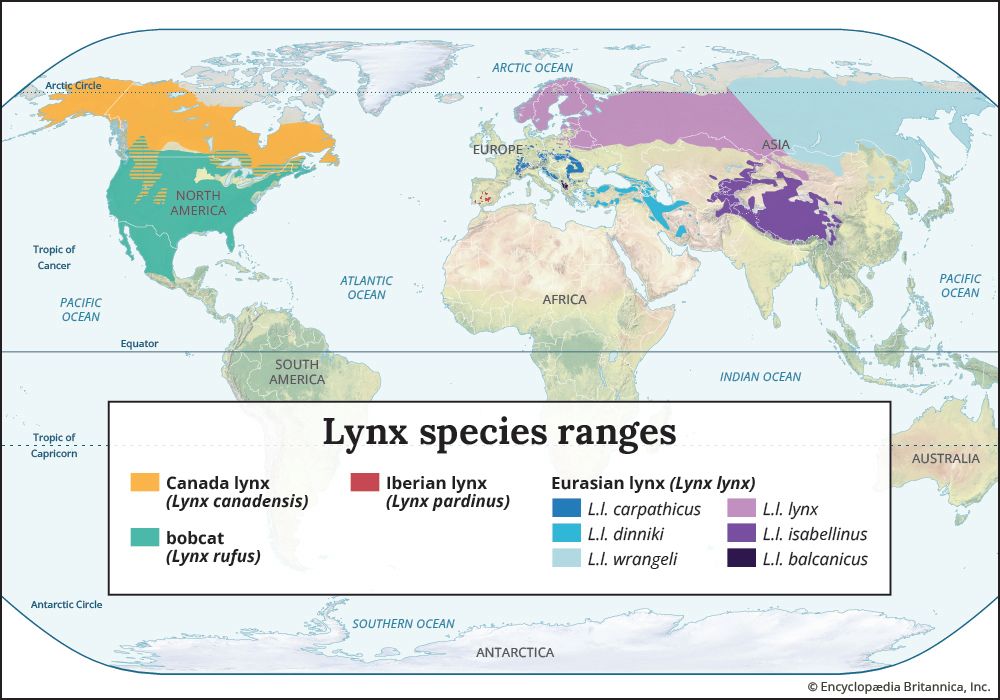
Bobcats are highly adaptable animals found across a wide range of environments in North America, spanning from southern Canada through the contiguous United States—with the exception of Delaware—down to the Mexican states of Oaxaca and Baja California Sur.21
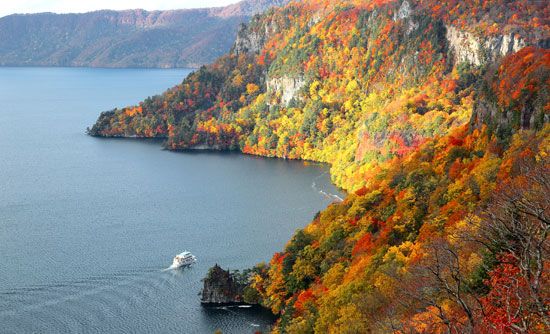
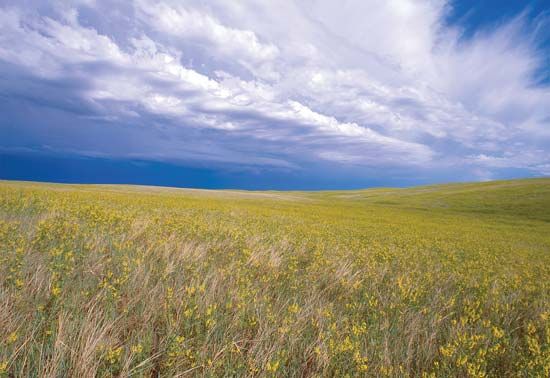
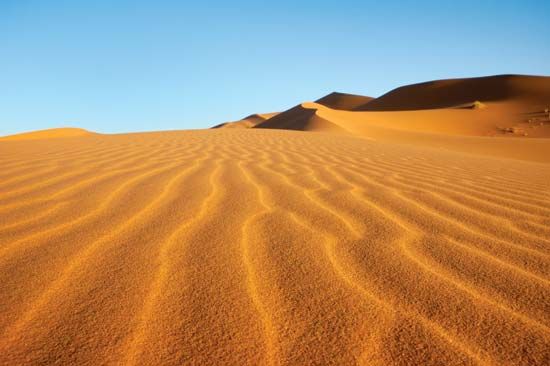
They thrive in diverse habitats, including:
- Forests: Ranging from conifer and deciduous to mixed forests.
- Open Landscapes: Such as shrubby fields, bushy grasslands, and wooded farmland.
- Arid and Wetland Areas: Including deserts, scrublands, and coastal swamps.
Bobcats generally avoid deep snow and are rarely found at elevations exceeding 3,500 meters (about 11,480 feet). They prefer areas that offer cover for hunting and denning, such as rocky outcrops, caves, dense undergrowth, and fallen logs. Because they are adaptable, they can also be found near agricultural fields and even in suburban areas, provided there is sufficient vegetation for concealment.2
How do bobcats differ from other wild cat species in North America?
Bobcats (Lynx rufus) are distinct from other North American wild cats, such as the Canada lynx and the puma, through several physical and behavioral traits. While often confused with the Canada lynx, the bobcat is the smallest of the four lynx species and exhibits specific morphological differences.3
Distinguishing Bobcats from Canada Lynx
The most direct comparison is between the bobcat and the Canada lynx. Key differences include:
Feature
Bobcat
Canada Lynx
Facial Ruff
Smaller, lacks a dark margin
Larger, with a prominent dark margin
Ear Tufts
Shorter
Longer
Tail Tip
Dark on top, white underneath
Dark all over
Paws
Smaller, lacks furry pads
Larger, with furry pads
Coat
More brownish/reddish with distinct spots
More grayish with indistinct spots
Additionally, the Canada lynx possesses longer hind legs than forelegs, resulting in a stooping gait, and its large, furred paws function like snowshoes for traversing deep snow—an environment the bobcat generally avoids.23
Comparison with Other Felids
Compared to the puma, which is also native to North America, the bobcat is significantly smaller and possesses the characteristic “bobbed” tail common to the Lynx genus, whereas the puma has a long tail. While pumas are uniform in color, bobcats are patterned with spots and stripes for camouflage.34
How do bobcats differ from Canada lynx?
While the bobcat and the Canada lynx are closely related, they can be distinguished by several physical characteristics and adaptations.
Key Physical Differences
Feature
Bobcat
Canada Lynx
Facial Ruff
Smaller, without a dark margin
Larger, with a prominent dark margin
Ear Tufts
Shorter
Longer
Tail Tip
Dark on the upper side, white underneath
Dark all over
Paws
Smaller, without furry pads
Larger, with furry pads
Coat
More brownish/reddish with distinct spots and stripes
More grayish with indistinct spots
Behavioral and Ecological Distinctions
Beyond appearance, the two species differ in their movement and habitat preferences. The Canada lynx possesses large, densely furred paws that function like snowshoes, allowing it to traverse deep snow—an environment the bobcat generally avoids. Additionally, the Canada lynx has longer hind legs than forelegs, which creates a characteristic stooping gait.32
While the bobcat is a highly adaptable generalist found in diverse environments ranging from forests to deserts, the Canada lynx is more specialized, relying heavily on the snowshoe hare for food.26
Sources
- bobcat: Top Questions — Encyclopædia Britannica
- bobcat — Encyclopædia Britannica
- Canada lynx - Physical features — Encyclopædia Britannica
- wildcat — Encyclopædia Britannica
- feline — Encyclopædia Britannica
- lynx — Encyclopædia Britannica
Published on · 3 min read