Wolverine
The wolverine (Gulo gulo) is a member of the weasel family that inhabits cold northern latitudes across North America and Eurasia.
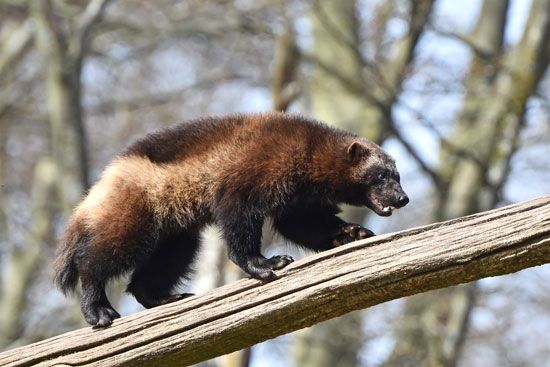
What is the typical range and habitat of wolverines?
The wolverine (Gulo gulo) is a member of the weasel family that inhabits cold northern latitudes across North America and Eurasia.1
Habitat and Range
Wolverines are primarily found in timbered areas and are notably dependent on regions with deep snowpack. This reliance on snow is linked to their survival, as harsh winters with deep snow increase the availability of food resources, such as the carcasses of ungulates and rodents that tunnel beneath the snow.1
While the International Union for Conservation of Nature classifies the species as being of least concern, their populations are sparse in Europe and parts of North America due to hunting and habitat changes. In response to these declines, reintroduction programs have been initiated in regions such as the Cascade Range, the Sierra Nevada, and Colorado.12
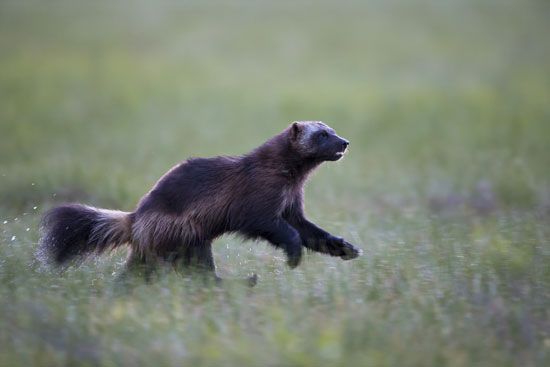
What is the wolverine’s scientific name and taxonomic classification?
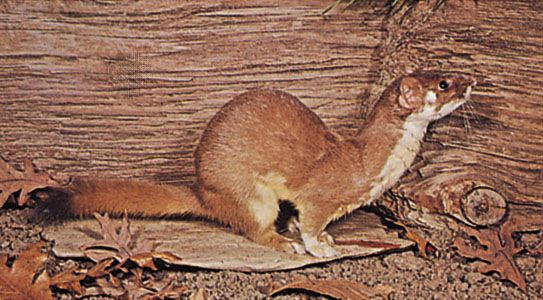
The wolverine is scientifically classified as Gulo gulo. It belongs to the weasel family, known as Mustelidae.134
Within the family Mustelidae, the wolverine is categorized under the subfamily Guloninae and is the sole species within the genus Gulo.45
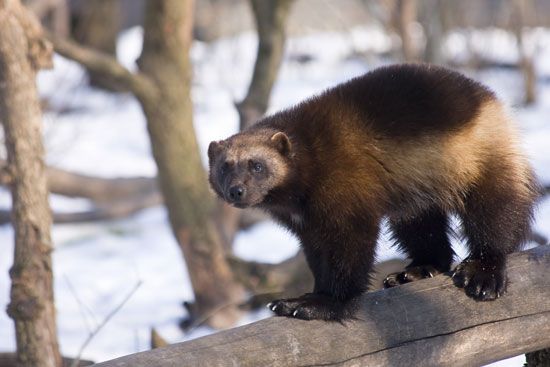
What is the typical diet and hunting behavior of wolverines?
The wolverine is a solitary, nocturnal hunter known for its strength, cunning, and fearlessness. It is a versatile predator that consumes a wide variety of game, including voles, porcupines, squirrels, moose, deer, and livestock.
In addition to active hunting, wolverines are adept scavengers. A significant portion of their diet consists of scavenging the carcasses of elk, caribou, and other ungulates. Their hunting behavior is characterized by remarkable tenacity; they have been observed sparring with larger predators, such as wolves and bears, to defend food or territory.
While typically solitary, some researchers have occasionally observed wolverines hunting in small family groups or alongside members of the same litter. Their ability to secure food is often enhanced by deep snowpack, which provides access to rodents tunneling beneath the surface and increases the availability of winter-killed ungulate carcasses.
How do wolverines interact with other predators in their ecosystem?
Wolverines are renowned for their fearlessness and ability to interact aggressively with other predators in their ecosystem. Despite their relatively small size, they are known to spar with larger animals, including wolves and bears, to defend food sources or their territory.1
Their relationships with other predators are complex and often involve both competition and predation:
- Competition: Wolverines frequently compete with other carnivores for access to carcasses. Their tenacity allows them to stand their ground against larger rivals when securing food.1
- Predation: While adult wolverines are formidable, they are not immune to predation. Young wolverines are vulnerable to being hunted by gray wolves, pumas, golden eagles, and grizzly bears. Occasionally, adult wolverines may also fall victim to wolves or other large predators, though human hunters remain their primary threat.1
Sources
- wolverine — Encyclopædia Britannica
- wolverine: Top Questions — Encyclopædia Britannica
- List of mustelids — Encyclopædia Britannica
- mustelid — Encyclopædia Britannica
- Gulo — Merriam-Webster
- apex predator — Encyclopædia Britannica
- carnivore — Encyclopædia Britannica
Published on · 2 min read