Porcupine
Porcupines are classified as rodents within the suborder Hystricomorpha. They are divided into two distinct families based on their geographic distribution…
How are porcupines classified within the rodent family?
Porcupines are classified as rodents within the suborder Hystricomorpha. They are divided into two distinct families based on their geographic distribution and evolutionary characteristics:123
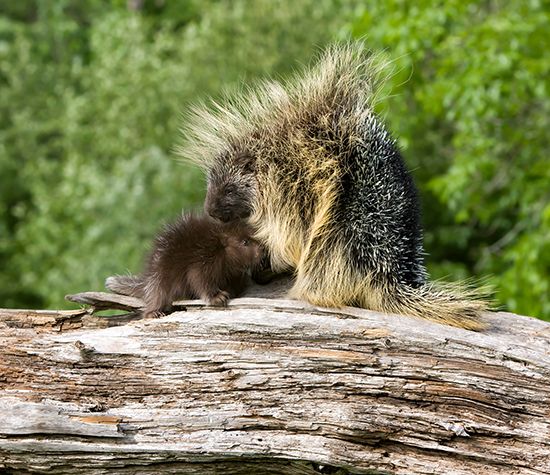
- Family Erethizontidae (New World porcupines): This family consists of 16 species across 5 genera. These porcupines are chiefly arboreal and are characterized by having single quills interspersed with bristles, underfur, and hair.234
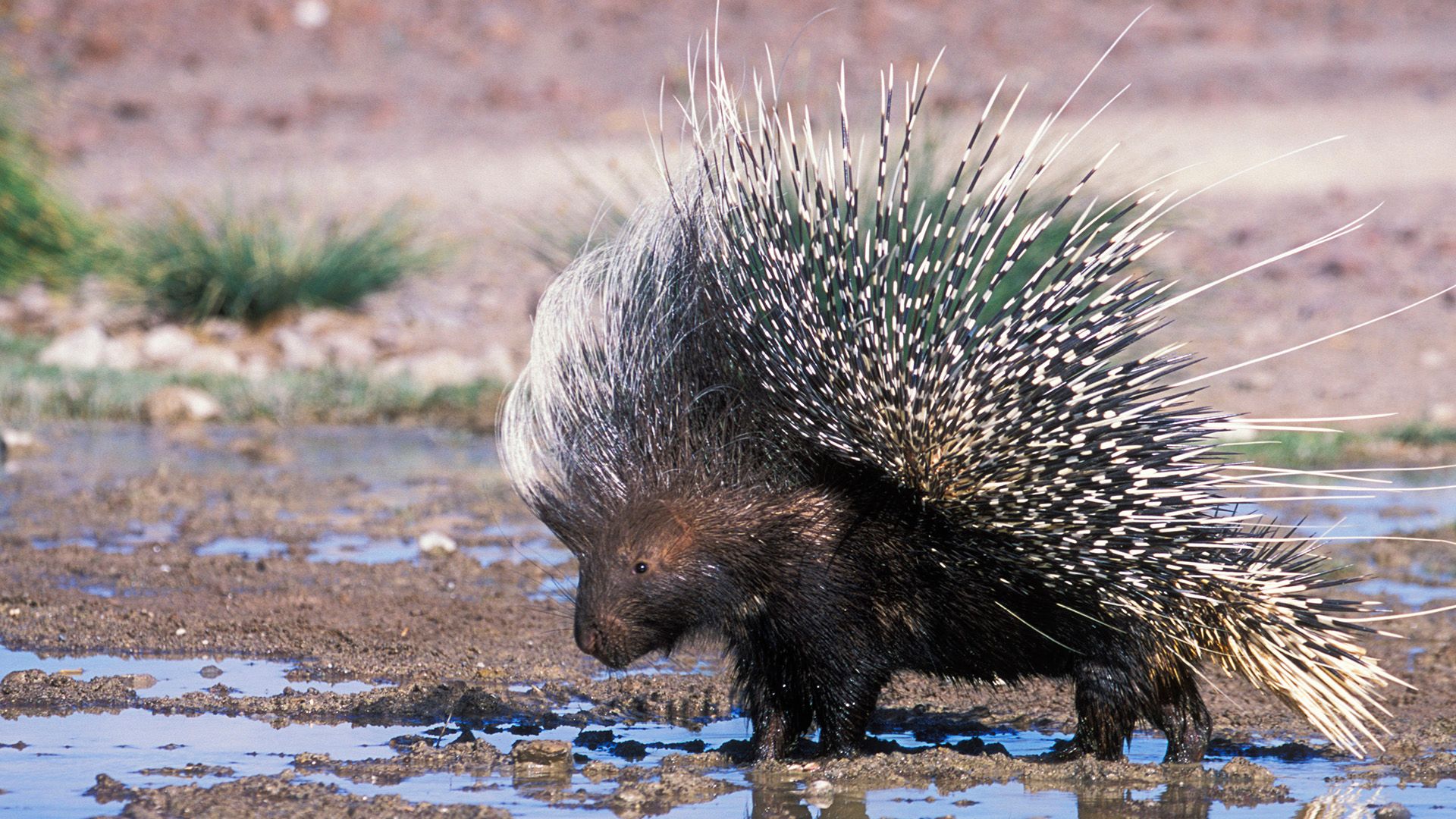
- Family Hystricidae (Old World porcupines): This family includes 11 species across 3 genera. These are terrestrial animals with quills that are embedded in clusters.234
While both families have been present since the Oligocene Epoch, their exact evolutionary relationship remains a subject of scientific debate, with some theories suggesting that New World porcupines may have descended from an African rodent ancestor that migrated to South America.2
What is the typical diet and habitat of porcupines?
Porcupines are divided into two groups with distinct dietary and habitat preferences:
New World Porcupines (Family Erethizontidae)
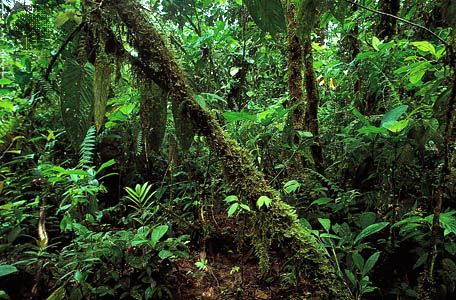
- Habitat: These species are primarily arboreal, inhabiting tropical forests across Mexico and South America. The North American porcupine is an exception, living in forests, tundra, grassland, and desert regions. They den in hollow trees, logs, caves, or rock crevices.5
- Diet: Tropical species primarily eat fruit. The North American porcupine consumes buds, twigs, leaves, flowers, berries, and nuts. In winter, they rely on evergreen needles and tree bark. Both groups gnaw on bones and antlers for minerals.5
Old World Porcupines (Family Hystricidae)
- Habitat: These are primarily terrestrial, sheltering in burrows, rock crevices, caves, or hollow trunks. While most are ground-dwellers, some species, such as the long-tailed porcupine, also climb trees.6
- Diet: They are herbivores that consume underground plant parts, fallen fruits, bark, and occasionally cultivated crops. Like their New World counterparts, they supplement their diet by gnawing on bones and antlers.6
What are the differences between Old World and New World porcupines?
Porcupines are classified into two distinct families, Erethizontidae (New World) and Hystricidae (Old World), which differ significantly in their physical characteristics, behavior, and distribution.
Key Differences
Feature
New World Porcupines (Erethizontidae)
Old World Porcupines (Hystricidae)
Distribution
Found in North and South America.
Found in Asia, Africa, and Europe.
Quill Structure
Individual quills interspersed with bristles, hair, and underfur; possess tiny, backward-pointing barbs.
Quills grow in clusters and lack the barbed tips found in New World species.
Habits
Primarily arboreal; most species have long, muscular, prehensile tails for climbing.
Primarily terrestrial; they typically shelter in burrows or rock crevices.
Size
Generally smaller; the North American porcupine is the largest in this family.
Can be much larger; the North African crested porcupine can have quills reaching up to 45 cm.
While both families have been present since the Oligocene Epoch, their evolutionary history is distinct. Some theories suggest that New World porcupines may have descended from an African rodent ancestor that migrated to South America, while Old World porcupines have a long-established fossil record across Europe, Asia, and Africa.1
What is a porcupine?
A porcupine is any of several species of large, herbivorous rodents characterized by their coat of quills or spines. These animals are primarily active from early evening until dawn and possess short, stocky legs. While their tails vary in length, some species have developed prehensile tails to assist in climbing.4
The quills are actually modified hairs embedded in the animal’s skin musculature. Contrary to popular belief, porcupines cannot throw their quills; however, the spines detach easily and remain embedded in an attacker upon contact.4
Porcupines are categorized into two distinct families:
- New World porcupines (Erethizontidae): These species feature quills interspersed with bristles, hair, and underfur. They are found in North and South America.41
- Old World porcupines (Hystricidae): These species have quills embedded in clusters and are native to Asia, Africa, and Europe.41
Evolutionary studies suggest that porcupines have existed since the Oligocene Epoch, with fossil records tracing their presence across the globe for millions of years.1
Sources
- porcupine - Evolution and classification — Encyclopædia Britannica
- list of rodents — Encyclopædia Britannica
- porcupine — Merriam-Webster
- porcupine — Encyclopædia Britannica
- porcupine - New World porcupines (family Erethizontidae) — Encyclopædia Britannica
- porcupine - Old World porcupines (family Hystricidae) — Encyclopædia Britannica
- Do porcupine quills grow back? — Encyclopædia Britannica
Published on · 3 min read