Ascaris
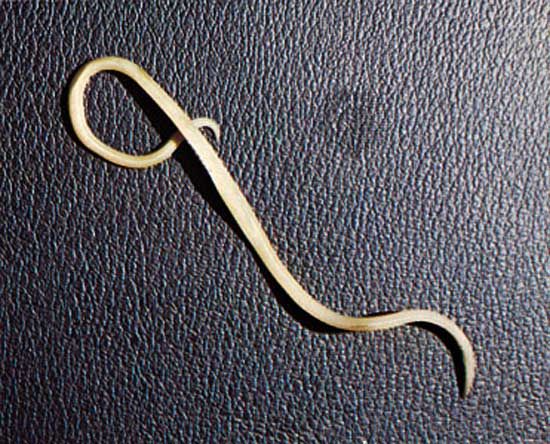
Ascaris is a genus of parasitic roundworms that inhabit the intestines of terrestrial mammals, particularly herbivores. These large worms, which can reach…

What is Ascaris?
Ascaris is a genus of parasitic roundworms that inhabit the intestines of terrestrial mammals, particularly herbivores. These large worms, which can reach lengths of up to 40 cm, are identified by a mouth featuring three distinct lips.1
The species Ascaris lumbricoides is the primary parasite affecting humans, causing an infection known as ascariasis an infection known as ascariasis. Infection occurs when fertilized eggs are ingested through contaminated food or soil. Once inside the body, larvae migrate through the liver and lungs before returning to the small intestine to mature into egg-producing adults.12
While many infections are asymptomatic, heavy infestations—especially in children—can lead to severe health issues, including malnutrition and intestinal obstruction. Prevention relies heavily on the sanitary disposal of human waste and proper hygiene practices. Treatment typically involves the use of anthelmintic drugs.2
How do parasites like Ascaris affect human nutrition?
Parasitic infections like Ascaris significantly impact human nutrition by interfering with the body’s ability to process and absorb essential nutrients. When these roundworms inhabit the small intestine, they actively disrupt the absorption of fat and protein, which frequently results in diarrhea.2
In cases of heavy infestation, these nutritional deficits can lead to severe consequences, particularly in children. The resulting malnutrition is often accompanied by growth stunting, as the body is deprived of the nutrients necessary for healthy development. Furthermore, if the worms are present in sufficient numbers, they can cause intestinal obstruction, which further complicates digestive health and nutrient uptake. While other parasites, such as hookworms, primarily cause nutritional depletion through chronic iron-deficiency anemia, Ascaris infections are specifically noted for their interference with macronutrient absorption and their potential to cause physical blockages in the digestive tract.324
What are some other common types of parasitic worms?
Beyond Ascaris, there are several other common types of parasitic worms that affect humans and animals. These are generally categorized into three groups: tapeworms, roundworms, and flukes.5
- Tapeworms (Cestodes): These flat, segmented parasites attach to the intestinal wall using a head called a scolex. Common varieties include pork, beef, and fish tapeworms, which are typically contracted by consuming raw or improperly cooked meat.67
- Hookworms: These bloodsucking worms live in the small intestine. Infection often occurs when larvae in contaminated soil penetrate human skin, typically through the feet. They are a major cause of anemia in tropical and subtropical regions.89
- Pinworms: Highly common, especially among children, these small worms reside in the large intestine. Female pinworms lay eggs around the anal opening, causing intense itching. The eggs are often transferred to the mouth via fingernails after scratching.610
- Whipworms: These are relatively small, fecund worms that inhabit the colon. Nearly a billion people are estimated to be infected globally.6
- Guinea Worms: Transmitted through water containing infected water fleas, these worms cause significant pain as they emerge from the host’s skin to lay eggs.6
- Toxocara: These parasites are commonly found in dogs and cats and can be transmitted to humans through contact with contaminated soil.6
- Heartworms: Primarily affecting dogs and cats, these worms are transmitted by mosquitoes and can cause severe cardiovascular blockages.6
Why are children more susceptible to parasitic infections?
Children are more susceptible to parasitic infections due to a combination of environmental, behavioral, and physiological factors. In many regions, children living in impoverished or rural communities face a higher risk of exposure to contaminated soil and water, which are primary vehicles for the transmission of parasites like Ascaris and hookworms.21213
Behavioral patterns, such as playing in soil or poor hand-washing habits, increase the likelihood of ingesting parasite eggs or allowing larvae to penetrate the skin. Furthermore, children often have higher nutritional requirements for growth and development, making them more vulnerable to the malnutrition and growth stunting that result when parasites interfere with nutrient absorption.231314
Physiologically, children—particularly infants—have an immature immunologic system and a limited capacity to maintain homeostasis during illness.14 Their bodies are less equipped to handle the metabolic stress caused by heavy infestations, which can lead to severe complications like intestinal obstruction or chronic anemia. These factors create a cycle where poor hygiene and existing nutritional deficiencies further reduce a child’s resistance to infection.2151410
Sources
- Ascaris — Encyclopædia Britannica
- ascariasis — Encyclopædia Britannica
- digestive system disease - Hookworms — Encyclopædia Britannica
- digestive system disease - Roundworms — Encyclopædia Britannica
- Uninvited Guests: The 7 Worst Parasitic Worms — Encyclopædia Britannica
- tapeworm — Encyclopædia Britannica
- hookworm disease — Encyclopædia Britannica
- pinworm — Encyclopædia Britannica
- anthelmintic — Encyclopædia Britannica
- hookworm — Encyclopædia Britannica
- parasitic disease - Prevention and treatment — Encyclopædia Britannica
- digestive system disease - Parasitic infections — Encyclopædia Britannica
- nutritional disease - Protein-energy malnutrition — Encyclopædia Britannica
- childhood disease and disorder - Physiological differences — Encyclopædia Britannica
- infectious disease - Parasites — Encyclopædia Britannica
Published on · 3 min read