Asity
It appears there is a common confusion between the bird known as an asity and the theological concept of aseity.
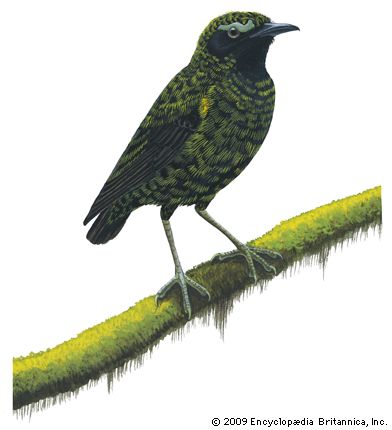
What is Asity?
It appears there is a common confusion between the bird known as an asity and the theological concept of aseity.
Asity (Bird)
An asity refers to either of two species of small, short-tailed birds belonging to the family Philepittidae. These birds are found exclusively in the forests of Madagascar.12
- Velvet Asity (Philepitta castanea): Males are characterized by a black plumage and a green wattle above the eye, while females are greenish.1
- Schlegel’s Asity (P. schlegeli): Males appear yellow after molting with a black crown, and they possess a wattle that extends around the eye.1
These birds are stout-legged and primarily feed on berries and other fruit.12
Aseity (Theological Concept)
If you were referring to the term spelled “aseity,” it is a philosophical and theological concept describing the quality of being self-derived or self-originated. It specifically denotes the absolute independence, autonomy, and self-sufficiency of God.3
What are false sunbirds and how do they differ from asities?
False sunbirds are two species of small birds, belonging to the genus Neodrepanis, that are native to the forests of Madagascar. They were historically misclassified as members of the true sunbird family (Nectariniidae) due to their physical appearance, but they are actually members of the family Philepittidae.45
Differences Between False Sunbirds and Asities
While both false sunbirds and asities belong to the same family, Philepittidae, they exhibit distinct physical and behavioral differences:52
- Appearance: Asities (Philepitta) are plump, stout-legged birds that resemble pittas. In contrast, false sunbirds are smaller, possess weaker legs, and have long, slender, downcurved bills that mimic the appearance of true sunbirds.524
- Diet and Foraging: Asities primarily browse foliage to feed on berries and other fruit. False sunbirds use their specialized bills to dip into flowers to feed on nectar and small insects.54
- Shared Traits: Despite these differences, all members of the Philepittidae family share the presence of bare skin or wattles around their eyes.52
Why are many unique bird species found only in Madagascar?
Madagascar’s unique bird life is primarily the result of the island’s long-term geological isolation from the African mainland. This separation allowed for distinct evolutionary paths, leading to the development of endemic species and families that are found nowhere else on Earth.7891011
Key factors contributing to this biological uniqueness include:
- Geological Isolation: The ancient separation of Madagascar from the mainland acted as a barrier, preventing the migration of many common African animal groups—such as monkeys, antelopes, and big cats—and allowing the island’s existing fauna to evolve in relative seclusion.1089
- Endemic Evolution: Because of this isolation, Madagascar became a center for unique speciation. For example, the island is home to endemic avian groups like the cuckoo roller and ground rollers, as well as the now-extinct elephant birds, which were once the largest birds to ever live.101213
- Diverse Habitats: The island’s varied environments, ranging from eastern rainforests to western deciduous forests and arid southern thickets, have provided a wide array of ecological niches that supported the diversification of specialized bird species.119
What are wattles and why do some birds have them?
A wattle is a fleshy, often brightly colored ornament found on the skin of certain birds. These structures can appear in various locations, such as above or below the eyes, as seen in the wattle-eye, or near the ears, as in the case of the wattlebird.1516
While the specific evolutionary purpose of wattles can vary, they generally serve as visual signals. In many species, these ornaments are used for display, playing a role in social interaction, mate attraction, or signaling excitement. For example, in the genus Platysteira, both sexes possess these fleshy eye ornaments, while in other related groups, their presence may be limited to males or vary between the sexes.15
Sources
- Asity — Encyclopædia Britannica
- Philepittidae — Encyclopædia Britannica
- aseity — Merriam-Webster
- False sunbird — Encyclopædia Britannica
- Nectariniidae — Encyclopædia Britannica
- Passeriform - Annotated classification — Encyclopædia Britannica
- Madagascar — Encyclopædia Britannica
- biogeographic region - Madagascan region — Encyclopædia Britannica
- Africa - Geologic influences — Encyclopædia Britannica
- Coraciiform - Distribution — Encyclopædia Britannica
- Africa - Madagascar — Encyclopædia Britannica
- elephant bird — Encyclopædia Britannica
- avahi — Encyclopædia Britannica
- Madagascar - Plant and animal life — Encyclopædia Britannica
- wattle-eye — Encyclopædia Britannica
- wattlebird — Merriam-Webster
Published on · 3 min read