Philepittidae
Philepittidae is a bird family within the order Passeriformes that is native exclusively to the forests of Madagascar. The family comprises four species of…
What is Philepittidae?
Philepittidae is a bird family within the order Passeriformes that is native exclusively to the forests of Madagascar. The family comprises four species of small birds, categorized into two groups:1
- Asities (Philepitta): These are plump, stout-legged birds that primarily forage for berries and fruit.12
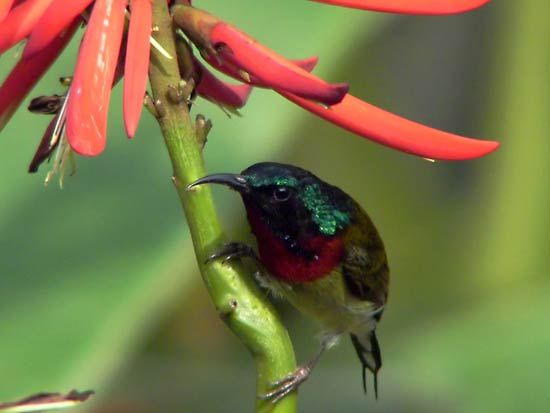
- False sunbirds (Neodrepanis): These are smaller birds with weaker legs and long, down-curved bills adapted for feeding on nectar and small insects.1
All members of the family are characterized by the presence of bare skin, or wattles, around their eyes. While they are currently classified within the suboscine suborder Tyranni, some anatomical evidence suggests they may be more closely related to families in the suborder Eurylaimi.1
It is important to note that “Philepittidae” refers to this biological family and should not be confused with “aseity,” a theological term describing the quality of being self-derived or self-originated.3
What makes Madagascar’s wildlife so unique?
Madagascar’s wildlife is exceptionally unique due to the island’s long-term geographic isolation, which has allowed its flora and fauna to evolve independently from the nearby African mainland. This isolation has resulted in a high degree of endemism, where a vast majority of species are found nowhere else on Earth.456
Unique Fauna
The island serves as a refuge for zoologically primitive groups that have evolved into distinct forms. Key examples include:7
- Lemurs: Approximately 40 species of these primates are indigenous to the island.7
- Insectivores: Unique hedgehoglike creatures, such as the tenrec, are endemic to the region.47
- Reptiles: Madagascar hosts a wide variety of chameleons and shares specific groups, such as boas and iguanas, with the Neotropical realm, suggesting ancient evolutionary links.47
- Marine Life: The coelacanth, a “living fossil,” inhabits the offshore waters.7
Distinctive Flora
The island’s vegetation is equally anomalous, with eastern and western regions featuring highly endemic plant life. The arid south is home to specialized xerophytes, including giant cacti, dwarf baobabs, and pachypodium succulents.67
How do false sunbirds differ from true sunbirds?
Although false sunbirds (Neodrepanis) were historically classified alongside true sunbirds due to their similar appearance, they are distinct in their evolutionary lineage and anatomical structure.
The primary differences between the two groups are as follows:
- Taxonomic Classification: False sunbirds belong to the family Philepittidae, which is part of the suboscine suborder Tyranni. In contrast, true sunbirds belong to the family Nectariniidae, which is part of the songbird (oscine) suborder Passeri.101112
- Anatomical Features: All members of the Philepittidae family, including false sunbirds, possess bare skin or wattles around their eyes—a feature not found in true sunbirds. Additionally, anatomical studies of the syrinx and sternum suggest that false sunbirds are more closely related to broadbills (Eurylaimidae) than to true sunbirds.10111
- Geographic Range: False sunbirds are endemic to the forests of Madagascar. True sunbirds are widespread throughout the warmer forests of Africa and Asia.101112
While both groups share similar physical traits—such as small size, short tails, and long, downcurved bills adapted for sipping nectar—these are examples of convergent evolution rather than a close biological relationship.101211
What are the main characteristics of the order Passeriformes?
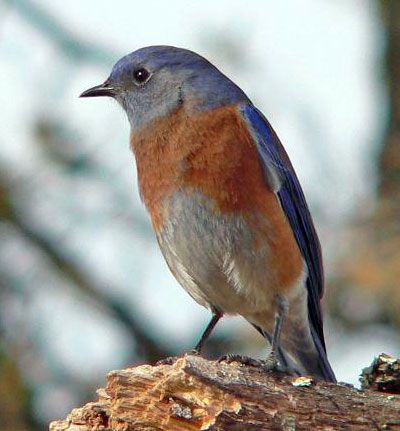
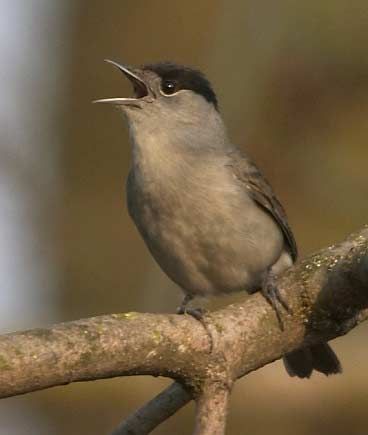
The order Passeriformes, commonly known as passerines or perching birds, is the largest and most dominant group of birds on Earth, comprising approximately 60 percent of all extant avian species.1314
Key Characteristics
Passerines are defined by a suite of unique derived anatomical features, including:
- Foot Structure: They possess an anisodactyl foot, characterized by four toes—three directed forward and one backward—with a large, incumbent hind toe (hallux) capable of independent action.1315
- Skull Anatomy: They exhibit an aegithognathous palate, where the vomer bone is fused in the forward part of the skull.15
- Vocal Apparatus: The syrinx, or vocal organ, is highly specialized, with its structure serving as a primary basis for taxonomic classification within the order.1615
- Other Features: Additional defining traits include the specific insertion of the forearm muscle tensor propatagialis brevis and spermatozoa with a coiled head.15
Classification and Diversity
The order is generally divided into two main suborders:
- Tyranni (Suboscines): Considered more primitive in anatomy and behavior, this group includes birds like broadbills and tyrant flycatchers.1317
- Passeri (Oscines): Often called songbirds, these are considered the most highly specialized birds, possessing complex syringeal musculature.131716
Passerines range from 7.5 to 117 cm in length and have adapted to nearly all terrestrial environments through behavioral plasticity, large brain size, and complex nest-building behaviors.1418
Sources
- Philepittidae — Encyclopædia Britannica
- aseity — Merriam-Webster
- Asity — Encyclopædia Britannica
- biogeographic region - Madagascan region — Encyclopædia Britannica
- Africa - Madagascar — Encyclopædia Britannica
- Madagascar - Plant and animal life — Encyclopædia Britannica
- Madagascar - Climate of Madagascar — Encyclopædia Britannica
- Madagascar - Early history — Encyclopædia Britannica
- history of Madagascar — Encyclopædia Britannica
- False sunbird — Encyclopædia Britannica
- Nectariniidae — Encyclopædia Britannica
- Passeriform - Annotated classification — Encyclopædia Britannica
- Passeriform — Encyclopædia Britannica
- Suboscine — Encyclopædia Britannica
- Passeriform - Evolution and paleontology — Encyclopædia Britannica
- Passeriform - Syrinx — Encyclopædia Britannica
- Passeriform - Size range and structural diversity — Encyclopædia Britannica
- Passeriform - Distinguishing taxonomic features — Encyclopædia Britannica
Published on · 3 min read