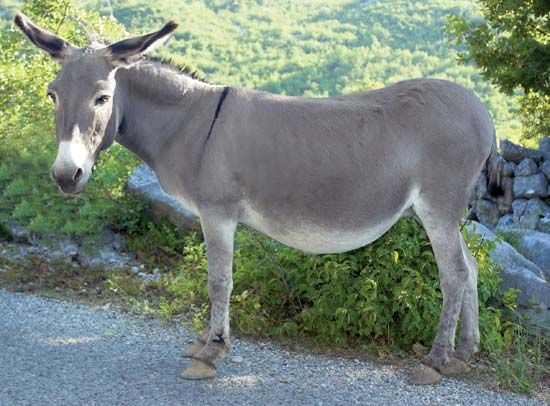
Ass
There are three primary species of wild asses within the family Equidae:
What are the different species of wild asses and where are they found in the world?
There are three primary species of wild asses within the family Equidae:
- African wild ass (Equus africanus): Often called the “true ass,” this species is native to arid regions of North Africa. Its current range includes semidesert areas from the east bank of the Nile in Sudan to the Red Sea, as well as parts of Eritrea, Ethiopia, and Somalia. Isolated populations also exist in the Tibesti Mountains and parts of central and western Africa.12
- Onager (Equus onager): A type of Asiatic wild ass, these animals are known for their slender legs and speed. Historically, they were tamed for work in ancient times.13
- Kiang (Equus kiang): This is another species of Asiatic wild ass.3
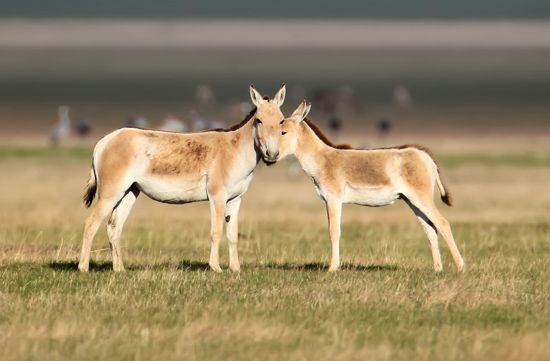
The Asiatic wild ass (E. hemionus) is also recognized, with various races found in regions such as Mongolia (the kulan) and India and Pakistan (the khur). Notably, the Syrian wild ass is now extinct.1
How do the dietary needs of asses differ from those of horses?
Sorry, the Britannica knowledge base does not contain information regarding the specific differences in dietary needs between asses and horses.
How do asses compare to mules in terms of strength, endurance, and intelligence?
When comparing donkeys (asses) and mules, it is important to note that mules are hybrids produced by crossing a male donkey (jackass) with a mare. Their characteristics often reflect a combination of the traits of both parents.4
Strength and Endurance
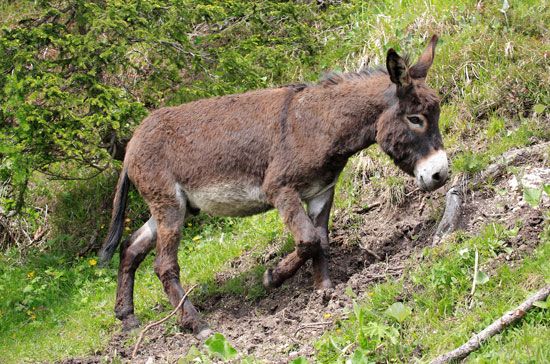
- Donkeys: Known for being hardy and patient, donkeys are well-adapted to arid, rough conditions where they can survive on coarse vegetation. They are naturally persevering and capable of carrying heavy loads in environments where horses might struggle.4
- Mules: Mules are highly valued for their ability to withstand significant stress, including extreme heat and irregular feeding. They are noted for being surer-footed than horses, which makes them particularly useful as pack and saddle mounts in precarious or mountainous terrain.4
Intelligence
While the donkey’s reputation for “stupidity” or “obstinacy” is often a misinterpretation of their natural caution and reaction to poor treatment, mules are widely considered to be more intelligent than horses. This intelligence is reflected in their self-preservation instincts; unlike horses, mules are less likely to injure themselves by overeating or by thrashing when they become tangled or trapped in cramped quarters.4
How do wild asses survive in such harsh desert environments?
Wild asses are remarkably well-adapted to survive in arid, desert environments that are often too harsh to support other large mammals. Their survival is primarily attributed to their physical hardiness and specific behavioral traits.1
Physical and Behavioral Adaptations
- Sturdy Constitution: As members of the Equidae family, wild asses are small and sturdy, allowing them to navigate and thrive in rugged, desolate landscapes.1
- Speed and Mobility: These animals are exceptionally swift runners. For example, the kulan has been clocked at speeds up to 64.4 km (40 miles) per hour, which aids in traversing vast distances to find resources.1
- Social Structure: Their social organization varies to suit their environment. African wild asses are territorial, with dominant stallions maintaining specific areas, while Asiatic wild asses often live in family groups that congregate into larger herds during winter to better manage environmental pressures.1
By occupying these extreme niches, wild asses demonstrate a unique evolutionary success in regions where other large herbivores cannot persist.1
Sources
- ass — Encyclopædia Britannica
- list of horses, zebras, and asses — Encyclopædia Britannica
- perissodactyl - Asses — Encyclopædia Britannica
- Livestock farming - Donkeys and mules — Encyclopædia Britannica
- donkeys — Merriam-Webster
Published on · 3 min read