Equine
The relationship between humans and equines is unique, spanning thousands of years of partnership, utility, and cultural significance. Domesticated…
What roles have equines played in human history and culture?
The relationship between humans and equines is unique, spanning thousands of years of partnership, utility, and cultural significance. Domesticated approximately 6,000 years ago, horses have served as essential companions, laborers, and symbols of status.12
Utility and Labor
Equines have been instrumental in the development of human societies. They have historically plowed fields, hauled goods, and conveyed passengers. The invention of the horse collar was a pivotal technological advancement that allowed horses to exert their full strength for heavy agricultural work and transportation. Beyond labor, horses were vital in warfare, first pulling chariots and later serving as cavalry, which revolutionized military tactics and nomadic life.12345
Cultural and Symbolic Impact
The horse has deeply influenced human culture, language, and art. Terms like chivalry and cavalier reflect the horse’s association with honor and respect. They have been central to mythology, such as the Centaur, and have inspired artists from the Stone Age to the modern era. Historically, they were even buried alongside kings and pharaohs, and their presence has been linked to various superstitions and religious sacrifices.12
What are the different species that belong to the equine family?
The family Equidae, commonly known as the equine family, consists of modern horses, zebras, and asses. All living members of this family are classified within the single genus Equus.Equus](https://www.britannica.com/animal/Equus-mammal-genus)*.6
The modern species within the genus Equus include:
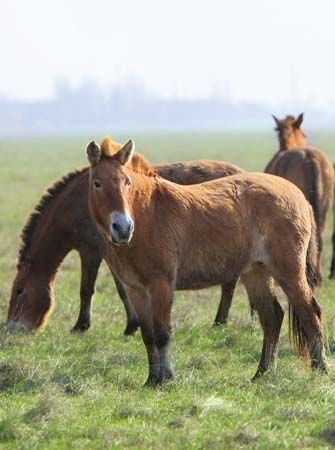
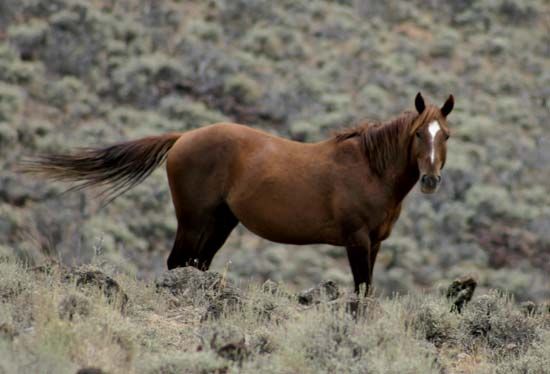
- Horses: The domestic horse (Equus caballus) includes numerous breeds and types. Przewalski’s horse (E. caballus przewalskii) is also recognized, often considered a distinct species.76
- Zebras: There are three distinct species of zebra:
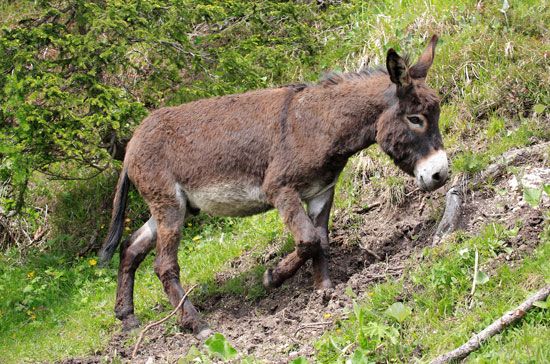
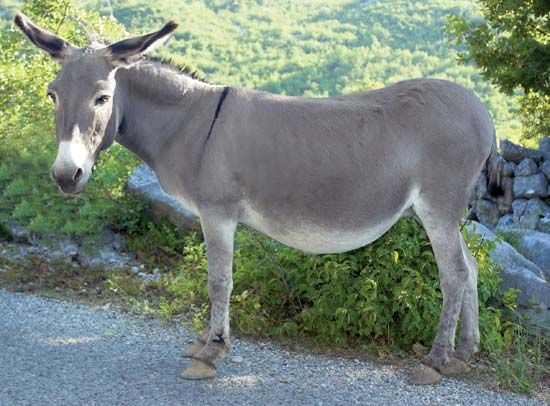
- Asses: These include the donkey (E. asinus) and wild species such as the African wild ass (E. africanus), the kiang (E. kiang), and the onager (E. onager).76
Additionally, hybrids such as the mule and hinny are produced by crossing different species within the genus. The family also includes more than 60 species known only through the fossil record, such as the dawn horse.676
How do equines communicate with each other and with humans?
Equines communicate through a combination of physical cues, vocalizations, and sensory perception, relying on their acute powers of observation and memory to interact with their environment and humans.1011
Communication with Humans
In the context of horsemanship, communication is achieved through “aids.” These are categorized as:
- Natural Aids: These include the rider’s voice, the movement of their weight, and the use of hands (via reins and bit) and legs (against the flanks). Horses learn to associate specific sounds and tones of voice with desired actions, such as walking or halting.11
- Artificial Aids: Tools like whips, spurs, and martingales are used to reinforce commands, maintain control, or demand obedience. Because horses associate events that occur nearly simultaneously, these aids must be applied with precise timing to be effective.11
Behavioral Cues
Horses use their bodies to express their state of mind. Resistance or frustration may be signaled by gnashing teeth or swishing the tail. Conversely, they are highly sensitive to a rider’s emotional state, often sensing nervousness or fear, which can influence their willingness to obey.1110
How do equines reproduce and what is the gestation period for different equine species?
Equines reproduce through sexual mating, with courtship behaviors varying significantly among species. Social equids, such as the wild horse and the plains zebra, exhibit relatively gentle courtship, often involving grooming by the stallion. In contrast, the true ass displays more aggressive behavior, where the male may bite, kick, and chase the female before she accepts him.12
In domestic management, breeding is often carefully monitored by veterinarians to address potential health issues or reproductive abnormalities. The estrous cycle in horses typically ranges from 18 to 28 days, with an average of 22 days.13
The gestation period for the horse is approximately 340 days, or about 11 months. This timing is evolutionarily adapted to ensure that birth occurs in the spring, when food sources are most abundant. When hybrids are produced, such as a mule (the offspring of a jackass and a mare), the gestation period is influenced by both parents but tends to lean toward the mother’s species; a mare carrying a mule foal typically has a gestation period about 10 days longer than the standard for a horse.1413
Sources
- horse - General features — Encyclopædia Britannica
- Domestication - Domestication of animals — Encyclopædia Britannica
- the Steppe - Horsepowered warfare — Encyclopædia Britannica
- Origins of agriculture - Plows and plowing — Encyclopædia Britannica
- 9 of the World’s Deadliest Mammals - Horses ( Equus caballus ) — Encyclopædia Britannica
- list of horses, zebras, and asses — Encyclopædia Britannica
- equine — Encyclopædia Britannica
- equid — Merriam-Webster
- zebra — Encyclopædia Britannica
- horse - Behaviour — Encyclopædia Britannica
- horsemanship - Aids — Encyclopædia Britannica
- Gestation — Encyclopædia Britannica
- perissodactyl - Courtship and mating — Encyclopædia Britannica
- Livestock farming - Management — Encyclopædia Britannica
Published on · 3 min read