Fennec
The fennec (Fennecus zerda) is a small, desert-dwelling fox belonging to the Canidae family. Native to North Africa, the Sinai, and the Arabian peninsulas…
What is fennec?
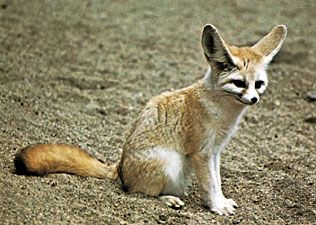
The fennec (Fennecus zerda) is a small, desert-dwelling fox belonging to the Canidae family. Native to North Africa, the Sinai, and the Arabian peninsulas, it is easily identified by its exceptionally large ears, which can reach 15 cm or more in length.1
The fennec is quite small, typically weighing about 1.5 kg (3.3 pounds) with a body length of 36–41 cm. It is adapted to desert life with thick, sand-coloured fur and a black-tipped tail. As a nocturnal animal, it spends the hottest parts of the day in underground burrows and emerges at night to hunt insects, small animals, and forage for fruit.1
It is important to note that the name “fennec” is sometimes incorrectly applied to other species, such as the South African silver fox or Rüppell’s fox, which are distinct from the true fennec.1
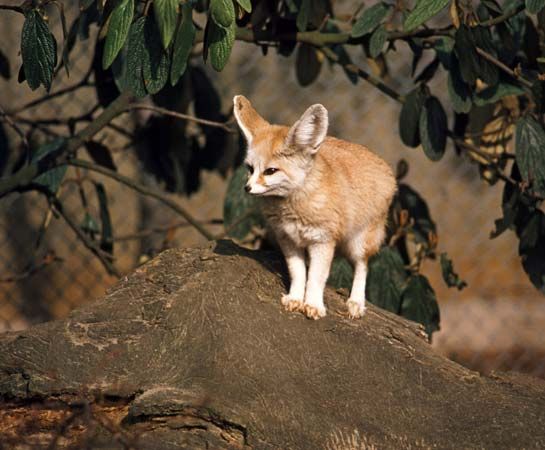
How do their large ears help them survive in the desert?
The fennec’s large ears are a vital adaptation for survival in harsh desert environments. Beyond their primary function of detecting sound, these oversized ears serve as essential heat regulators.1
In hot climates, the large surface area of the ears allows the fennec to dissipate a greater amount of body heat, helping the animal maintain a stable internal temperature. This mechanism stands in direct contrast to species living in colder regions, such as the Arctic fox, which possess much smaller ears to minimize heat loss and promote conservation of body warmth.1
What other animals live in the Sahara Desert?
The Sahara Desert supports a diverse range of wildlife that has adapted to its arid conditions. While some species are now rare or extinct in parts of the region due to human activity, many mammals, birds, and reptiles still inhabit the desert.
Mammals
The desert is home to various mammals, including:
- Rodents: Gerbils, jerboas, and desert hedgehogs.3
- Ungulates: Barbary sheep, scimitar-horned oryx, dorcas gazelles, dama deer, and Nubian wild asses.3
- Carnivores: Spotted hyenas, common jackals, sand foxes, Libyan striped weasels, and slender mongooses.3
- Others: Cape hares and anubis baboons.3
Birds and Reptiles
- Birds: Over 300 species are found in the Sahara, including ostriches, raptors, secretary birds, guinea fowl, Nubian bustards, desert eagle owls, barn owls, sand larks, and ravens.3
- Reptiles: Lizards, chameleons, skinks, and cobras are common among rocks and dunes.3
Additionally, frogs, toads, and even crocodiles can be found in isolated lakes and pools. Many of these animals survive extreme stress through aestivation, a form of dormancy.34
How do nocturnal animals adapt to life in the dark?
Nocturnal animals have evolved a variety of specialized adaptations to navigate, hunt, and communicate in low-light environments. These adaptations primarily involve enhanced visual systems and acute auditory capabilities.
Visual Adaptations
Many nocturnal vertebrates possess a tapetum lucidum, a reflective layer behind the retina that acts like a mirror. This structure reflects light back through the photoreceptors, giving the animal a second chance to absorb light and significantly improving night vision—a phenomenon responsible for the “eyeshine” seen in many species.8
Other visual strategies include:
- Pupil Control: Animals like cats use slit pupils to precisely control light intake, allowing them to open their eyes wide in dim conditions to maximize light absorption.9
- Photoreceptor Sensitivity: Nocturnal eyes often rely on specialized mechanisms, such as the use of rods and cones, to manage varying light intensities.10
- Superposition Eyes: Some invertebrates, such as moths, possess eyes that are significantly more sensitive to light than those of their diurnal counterparts.10
Auditory and Navigational Adaptations
When vision is insufficient, many animals rely on sound:
- Acute Hearing: Owls are highly skilled at using auditory cues to locate prey, such as the rustling of a mouse, allowing them to hunt effectively even on the darkest nights.1112
- Echolocation: Certain animals, including many bats and some birds like oilbirds, use echolocation. By emitting high-frequency sounds and listening for the echoes, they can navigate and track prey with precision.1311
Beyond these sensory tools, nocturnal activity itself serves as an adaptation, protecting many species from high daytime temperatures and visual predators.14
Sources
- fennec — Encyclopædia Britannica
- canine - Form and function — Encyclopædia Britannica
- Sahara - Animal life — Encyclopædia Britannica
- Sahara: Top Questions — Encyclopædia Britannica
- Sahara - Climate of the Sahara — Encyclopædia Britannica
- Sahara - People of the Sahara — Encyclopædia Britannica
- Arabian Desert - Animal life — Encyclopædia Britannica
- Why do cats have slit pupils? — Encyclopædia Britannica
- coloration - Visual functions — Encyclopædia Britannica
- Why do birds chirp at night? — Encyclopædia Britannica
- bat - Activity patterns — Encyclopædia Britannica
- Predation — Encyclopædia Britannica
- sound reception - Uses of hearing in birds — Encyclopædia Britannica
- Photoreception - Adaptive mechanisms of vision — Encyclopædia Britannica
Published on · 3 min read