Assassin Bug
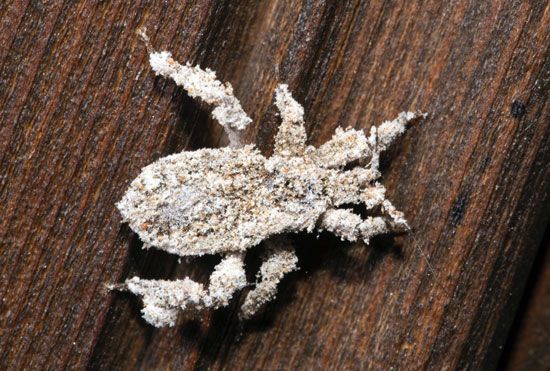
Assassin bugs (family Reduviidae) employ a diverse array of predatory strategies to capture and consume their prey, primarily other insects. Once captured…
How do assassin bugs hunt and capture their prey?
Assassin bugs (family Reduviidae) employ a diverse array of predatory strategies to capture and consume their prey, primarily other insects. Once captured, they use their short, three-segmented beaks to pierce the victim and inject enzymes that liquefy the prey’s tissues, allowing the bug to suck out the body fluids.1
Their hunting techniques include:
- Ambush and Grasping: Many species, such as ambush bugs, hide on vegetation to launch sudden attacks, using enlarged forelegs to seize victims. Others, like the thread-legged bug, use modified, viselike front legs to grasp prey.1
- Luring and Mimicry: Some species, such as Stenolemus bituberus, use aggressive mimicry by plucking spider web silk to mimic trapped insects, drawing the spider into striking range.1
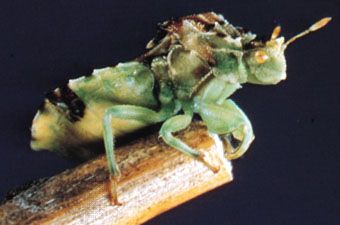
- Chemical Attraction: Feather-legged bugs release secretions from an abdominal structure called a trichome to attract and paralyze ants before feeding.1
- Sticky Traps: Species in the genus Apiomerus coat their legs with plant resins to create a sticky surface that helps them capture bees.1
Can assassin bugs fly, and if so, how well?
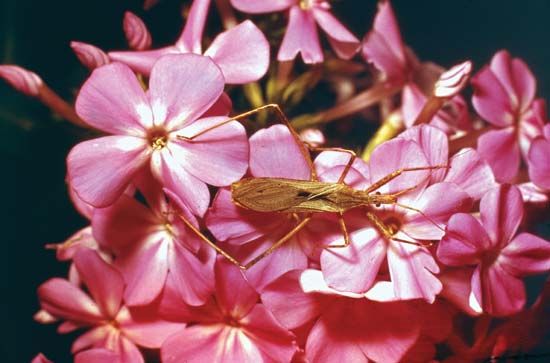
Yes, adult assassin bugs can fly. As members of the suborder Heteroptera, they possess two pairs of wings. Their forewings, known as hemelytra, are stiff and leathery at the base with a membranous tip, while their hind wings are thin and delicate, folding beneath the forewings when the insect is at rest.12
While they are capable of flight, they are generally described as slow, noisy, and clumsy fliers.2
What role do assassin bugs play in ecosystems and pest control?
Assassin bugs (family Reduviidae) play a significant role in ecosystems primarily as predators that help regulate insect populations. By feeding on the eggs, immature stages, and adults of various injurious insects, they serve as natural agents in biological control, helping to manage populations of pests that can damage crops or vegetation.3
Their ecological importance extends beyond pest suppression:
- Food Web Dynamics: Assassin bugs serve as a food source for a variety of animals, including wild birds, mammals, and other predators, integrating them into broader food webs.3
- Predatory Diversity: Because they occupy diverse habitats—ranging from vegetation and trees to soil and human structures—they exert predatory pressure on a wide array of species, including flies, bedbugs, bees, and ants.1
- Specialized Roles: Some species have evolved highly specific interactions, such as the masked hunter, which preys on household pests like bedbugs, or species that utilize aggressive mimicry to hunt spiders.1
It is important to note that while most species are beneficial predators, some, such as the kissing bug, are hematophagous parasites that can transmit Chagas disease to humans and animals, representing a distinct medical concern.1
Are there any species of assassin bugs that are dangerous to humans?
Yes, certain species of assassin bugs can be dangerous to humans, primarily due to their ability to transmit disease or inflict painful bites.
Disease Transmission
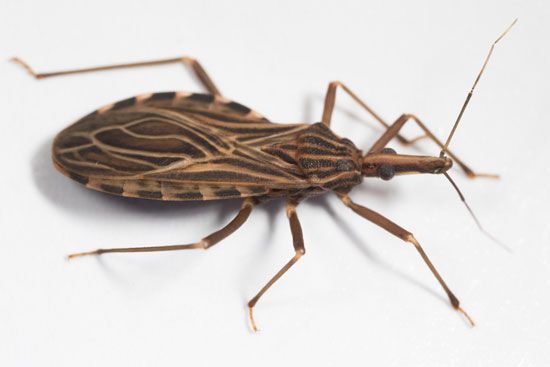
The most significant medical risk associated with assassin bugs comes from the subfamily Triatominae, commonly known as kissing bugs or conenose bugs. These hematophagous (blood-feeding) parasites are vectors for the protozoan parasite Trypanosoma cruzi, which causes Chagas disease.516
- Transmission Method: Unlike mosquitoes, which inject pathogens directly, kissing bugs deposit T. cruzi in their excrement while feeding on a host. The parasite enters the bloodstream when the victim scratches the bite site or touches mucous membranes.46
- Impact: Chagas disease can cause acute symptoms like fever and swelling, and if left untreated, it may progress to a chronic stage leading to serious heart complications or death.6
Painful Bites
Many non-parasitic assassin bugs are predatory and will bite humans if handled or threatened, which can be quite painful. Notable examples include:5
- Wheel bug (Arilus cristatus): Known for the crest on its thorax, this species can deliver a very painful bite if handled, injecting venomous saliva through its beak.5
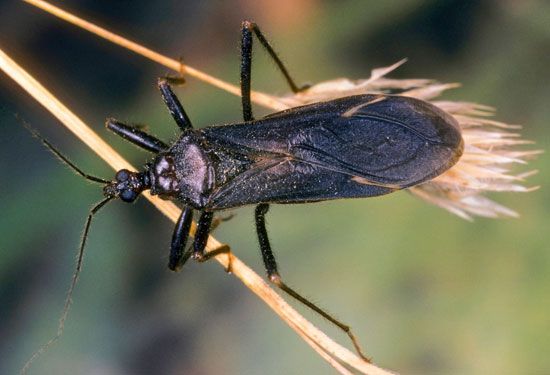
- Black corsair (Melanolestes picipes): This species is also capable of inflicting painful bites.5
- Masked hunter (Reduvius personatus): While primarily a predator of household pests like bedbugs, this species will bite humans if threatened, causing pain and localized swelling.5
In addition to pain, the injection of saliva or venom from these bugs may trigger allergic reactions in susceptible individuals.4
Sources
- assassin bug — Encyclopædia Britannica
- wheel bug — Encyclopædia Britannica
- heteropteran - Beneficial aspects — Encyclopædia Britannica
- assassin bug — Merriam-Webster
- heteropteran - Harmful aspects — Encyclopædia Britannica
- Rhodnius prolixus — Encyclopædia Britannica
- kissing bug — Merriam-Webster
Published on · 3 min read