Burrower Bug
A burrower bug is any of approximately 750 species of insects belonging to the family Cydnidae (order Heteroptera). These insects are typically small…
What is burrower bug?
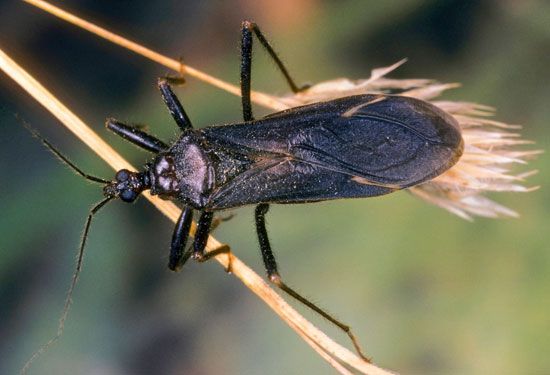
A burrower bug is any of approximately 750 species of insects belonging to the family Cydnidae (order Heteroptera). These insects are typically small, measuring up to 7 mm (0.3 inch) in length, and are characterized by their oval, brown or black bodies and spined tibiae (the upper leg segments).1
As their name suggests, these bugs are largely subterranean. They are known for their ability to burrow underground by cutting through soil and pushing it behind them, often living in moving chambers beneath ground litter, sandy areas, or clumps of grass. They are related to stinkbugs, and members of the family Cydnidae often feature front legs that are specifically modified for digging.2134
While the term generally refers to the family Cydnidae, the subfamily Thyreocorinae—sometimes classified as the separate family Thyreocoridae—is also associated with these insects. These are often smaller, shiny black, and found on vegetation rather than underground.1
What defines a true bug in the order Hemiptera?
In entomology, the term “true bug” refers specifically to insects within the order Hemiptera, particularly those in the suborder Heteroptera. While the word “bug” is often used colloquially to describe any small insect or creepy-crawly, true bugs are defined by a specific set of biological characteristics.910
Key defining features include:
- Piercing-Sucking Mouthparts: True bugs possess specialized mouthparts, often called stylets, adapted for piercing plant or animal tissues to feed on juices or blood.3910
- Wing Structure: The forewings, known as hemelytra, are a primary diagnostic feature. They are thickened and leathery at the base and membranous at the tip. When at rest, these wings are folded flat over the back, typically creating a characteristic X-shaped design.9111210
- Development: True bugs undergo incomplete metamorphosis (hemimetabolous). They hatch from eggs as nymphs—which resemble smaller, wingless versions of the adults—and mature through several molts without ever entering a pupal or chrysalis stage.9
- Anatomical Details: Heteropterans are further distinguished by a hard bridge on the underside of the head called the gula, which separates the mouthparts from the prothorax. Many also possess scent glands.310
How do burrower bugs use their spiny legs to move underground?
While the specific mechanical sequence of how burrower bugs (family Cydnidae) utilize their spiny legs to move underground is not detailed in the provided search results, we know that these insects possess tibiae—the upper segments of their legs—that are equipped with spines specifically adapted for digging.1
In general, arthropods move through their environment using their segmental appendages as a lever system, where muscles attach to the inside of their exoskeleton. For insects that burrow, these appendages are modified to facilitate pushing through soil. Burrower bugs are known to move underground by cutting through the soil and pushing it behind them, often creating moving chambers beneath ground litter or sandy areas. Their specialized, spiny legs likely provide the necessary traction and leverage to displace soil effectively as they navigate these subterranean environments.141
What are some other examples of terrestrial insects in the suborder Heteroptera?
While many members of the suborder Heteroptera are aquatic or semiaquatic, the majority of species are terrestrial, occupying diverse habitats ranging from open foliage to protected crevices under logs and rocks.173
Beyond the well-known assassin bugs and stink bugs, other common terrestrial heteropterans include:
- Plant bugs: Comprising families such as Miridae and Lygaeidae, these insects are often found on vegetation, where they feed on plant sap.1718
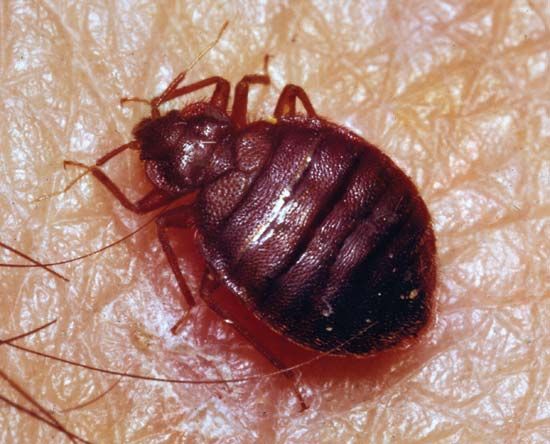
- Bedbugs: Members of the family Cimicidae, these are specialized parasites that inhabit protected areas like crevices.173
- Lace bugs: Known for their intricate, net-like wing patterns, these insects typically reside on the undersides of foliage.173
- Burrower bugs: Members of the family Cydnidae, these insects are adapted for a subterranean life, moving through soil to create underground chambers.173
- Stilt bugs: Characterized by their long, slender legs, these bugs are frequently found wandering over leaves and other surfaces.173
- Flat bugs: These insects live in highly obscure habitats, such as under loose bark, and are rarely seen unless their environment is disturbed.173
- Damsel bugs: Predatory insects often found in vegetation, sometimes even hunting within spider webs.173
Sources
- burrower bug — Encyclopædia Britannica
- burrower bug — Merriam-Webster
- heteropteran — Encyclopædia Britannica
- caddisfly - Distinguishing taxonomic features — Encyclopædia Britannica
- Coleoptera - Typical life cycle — Encyclopædia Britannica
- Cydnidae — Merriam-Webster
- Coleoptera - Feeding habits and habitats — Encyclopædia Britannica
- heteropteran - Habitats — Encyclopædia Britannica
- heteropteran - Distinguishing taxonomic features — Encyclopædia Britannica
- The Difference Between 'Bug,' 'Insect,' and 'Beetle' — Merriam-Webster
- insect - Head — Encyclopædia Britannica
- heteropteran - Wings — Encyclopædia Britannica
- hemelytron — Merriam-Webster
- Locomotion - Fossorial vertebrates — Encyclopædia Britannica
- Locomotion - Fossorial invertebrates — Encyclopædia Britannica
- arthropod - Muscles , appendages , and locomotion — Encyclopædia Britannica
- list of true bugs — Encyclopædia Britannica
- assassin bug — Encyclopædia Britannica
- plant bug — Encyclopædia Britannica
Published on · 3 min read