Astilbe
Astilbe is a genus of approximately 14 species of herbaceous perennials belonging to the Saxifragaceae family. Native to eastern Asia and North America…
What is Astilbe?
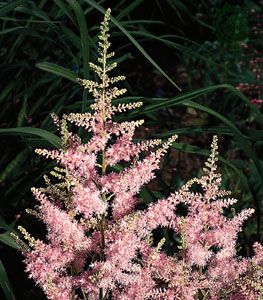
Astilbe is a genus of approximately 14 species of herbaceous perennials belonging to the Saxifragaceae family. Native to eastern Asia and North America, these plants are popular in gardens for their fernlike foliage and erect, featherlike flower spikes that bloom in shades of white, yellow, pink, magenta, or purple during the summer.12
The genus includes various forms, such as the compact A. chinensis and the smaller A. simplicifolia, which features starlike flowers. Additionally, A. japonica and its hybrids are frequently cultivated as florist’s spirea. Interestingly, while the plants are prized for their beauty, the name Astilbe is thought to be derived from Greek roots meaning “not showy” or “dull,” a curious contrast to their vibrant garden presence.12
What are the best soil conditions for growing Astilbe?
How do perennials differ from annual plants?
The primary difference between annual and perennial plants lies in the duration of their life cycles and their survival strategies across seasons.
- Annual Plants: These plants complete their entire life cycle—germination, growth, reproduction, and death—within a single growing season. Because the entire plant dies after producing seeds, the species relies on those seeds to survive and continue the next generation. Common examples include many vegetables, wildflowers, and garden favorites like marigolds and zinnias.345
- Perennial Plants: These plants persist for several years. While the aboveground portions of many herbaceous perennials may die back in autumn, the plant survives through specialized underground structures—such as bulbs, rhizomes, or tubers—that allow them to regrow and rebloom in subsequent seasons. This category includes trees, shrubs, and various flowering plants like chrysanthemums and primroses.63
In essence, while annuals sacrifice the parent plant to ensure the success of the next generation through seeds, perennials are adapted to survive and renew their growth over an indefinite number of years.365
What other plants belong to the Saxifragaceae family?
The Saxifragaceae family, commonly known as the saxifrage family, comprises approximately 36 genera and 600 species of mostly perennial herbaceous plants. While the genus Saxifraga (rockfoil) is the most prominent, the family includes a variety of popular garden ornamentals and woodland plants.7
Notable members of the Saxifragaceae family include:
- Coral bells (genus Heuchera), also known as alum root7
- Astilbe7
- Bishop’s cap or mitrewort (genus Mitella)7
- Woodland stars (genus Lithophragma)7
- Indian rhubarb (Darmera peltata)7
- Foamflower or false mitrewort (genus Tiarella)7
- Pickaback plant (Tolmiea menziesii)7
- Chinese bergenia (Bergenia purpurascens)7
- Creeping saxifrage (Saxifraga stolonifera)7
- Other genera such as Rodgersia, Astilboides, Peltiphyllum, Micranthes, and Boykinia7
These plants are widely distributed, particularly in northern cold and temperate regions, and exhibit a remarkable range of adaptations, from aquatic species to those that thrive on exposed rocky crags.7
Sources
- Astilbe — Encyclopædia Britannica
- astilbe — Merriam-Webster
- Is That Plant 'Perennial' or 'Annual'? — Merriam-Webster
- annual — Encyclopædia Britannica
- perennial — Encyclopædia Britannica
- plant development - Senescence in plants — Encyclopædia Britannica
- Saxifragaceae — Encyclopædia Britannica
- Saxifragaceae — Merriam-Webster
- Saxifragales - Order characteristics — Encyclopædia Britannica
Published on · 2 min read