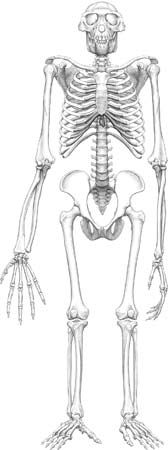
Atapuerca
The oldest human fossils discovered at the Atapuerca site are fragments of a jawbone and teeth found in the Sima del Elefante cave. These remains date to…
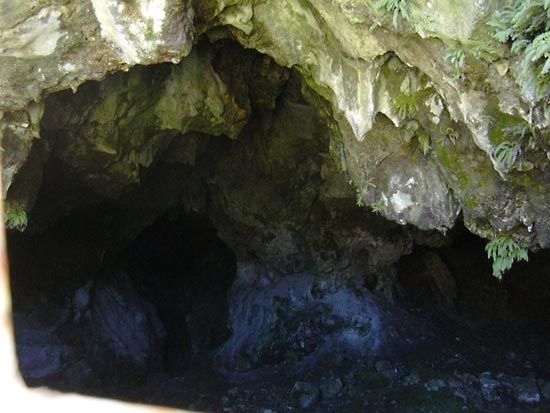
How old are the oldest human fossils found at Atapuerca, and what species do they belong to?
The oldest human fossils discovered at the Atapuerca site are fragments of a jawbone and teeth found in the Sima del Elefante cave. These remains date to approximately 1.1 to 1.2 million years ago, representing the earliest evidence of the genus Homo in western Europe.1
While these findings provide critical insight into early human migration, the classification of other fossils at the site remains a subject of scientific discussion. For instance, remains found at the Gran Dolina site, dating to about 800,000 years ago, were initially attributed to a new species, H. antecessor, though some researchers prefer to classify them as H. heidelbergensis.1

What is the significance of the Atapuerca archaeological site in Spain?
The Atapuerca archaeological site near Burgos, Spain, is a globally significant location for understanding human evolution. Designated a World Heritage site in 2000, it provides an unparalleled fossil record of the earliest humans in western Europe, spanning from over one million years ago to the present day.21
Key findings include:
- Earliest European Evidence: The Sima del Elefante site contains human remains dating to 1.1–1.2 million years ago, marking the earliest evidence of the genus Homo in the region.1
- Hominin Diversity: Discoveries at Gran Dolina have sparked debate regarding the classification of H. antecessor and its relationship to H. heidelbergensis.21
- Sima de los Huesos: This “Pit of Bones” holds the world’s largest hominin collection, offering insights into the ancestors of Neanderthals.21
- Behavioral Records: The site provides evidence of early human behavior, including the oldest known instance of interpersonal violence and the earliest record of cannibalism.21
How has the discovery of the Homo antecessor species at Atapuerca changed our view of early human migrations into Europe?
The discovery of Homo antecessor at the Atapuerca site in Spain has significantly influenced scientific understanding of early human migrations into Europe. By providing evidence of hominin presence in western Europe dating to approximately 800,000 years ago, these fossils helped establish that the continent was inhabited by human ancestors much earlier than previously confirmed, following the initial dispersal of the genus Homo out of Africa.134
The significance of H. antecessor in migration models includes:
- Evolutionary Linkage: Some paleoanthropologists have proposed that H. antecessor served as a direct ancestor to later European species, including H. heidelbergensis and, eventually, the Neanderthals.534
- Complex Dispersal Patterns: The presence of these fossils supports the theory that human migration out of Africa occurred in successive waves over many millennia, rather than a single event.34
- Taxonomic Debate: The classification remains a subject of intense discussion; while some researchers view H. antecessor as a distinct species and a key evolutionary bridge, others prefer to group these remains with H. heidelbergensis, reflecting the ongoing challenge of mapping the “tangled” lineage of early human evolution.154
What evidence of early human culture and behavior has been found at the Atapuerca sites?
The Atapuerca archaeological site has provided profound insights into the behavior and cultural practices of early humans in western Europe. Excavations have uncovered evidence that challenges our understanding of early hominin social interactions and survival strategies.
Key findings regarding early human behavior include:
- Evidence of Cannibalism: The Gran Dolina site yielded the earliest known record of cannibalism in the human fossil record. Researchers believe this was a form of “gastronomic cannibalism,” suggesting that these early hominins consumed one another for sustenance rather than as part of a ritual or due to extreme famine.2
- Interpersonal Violence: A 430,000-year-old fractured skull discovered at the Sima de los Huesos (“Pit of Bones”) provides the earliest evidence of interpersonal violence within the genus Homo.1
- Technological Development: The presence of stone tools alongside human remains at Gran Dolina, dating back between 780,000 and 1,000,000 years, demonstrates that these early inhabitants possessed the technical capability to craft implements for survival in the rugged European landscape.21
Sources
- Atapuerca — Encyclopædia Britannica
- 11 Caves That Made History - Atapuerca Caves — Encyclopædia Britannica
- human evolution - The emergence of Homo sapiens — Encyclopædia Britannica
- Quaternary - Hominin evolution — Encyclopædia Britannica
- Homo sapiens - The genus Homo — Encyclopædia Britannica
Published on · 3 min read