Australian Terrier
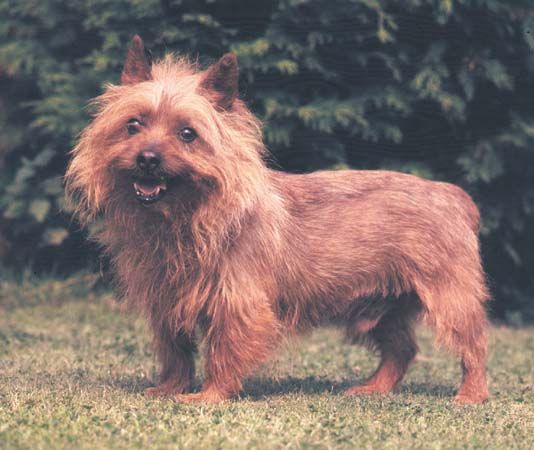
The Australian terrier is a perky dog breed that originated as a farm dog in Australia. First exhibited in 1885, its ancestry is linked to the extinct…
What is Australian terrier?
The Australian terrier is a perky dog breed that originated as a farm dog in Australia. First exhibited in 1885, its ancestry is linked to the extinct, broken-haired, black-and-tan Old English terrier, with influences from several other breeds, including the Dandie Dinmont, Skye, Scottish, cairn, and Yorkshire terriers.1
Physically, the breed is long-bodied, standing approximately 10 inches (25 cm) tall and weighing between 11 and 15 pounds (5 to 7 kg). It features a harsh coat with a softer topknot, typically colored blue-black or silver-black with tan markings on the head and legs, or alternatively, sandy or reddish brown. Like other terriers, they are known for being energetic, vocal, and tenacious, requiring consistent exercise and training.12
What are the main differences between long-legged and short-legged terriers?
The primary distinction between long-legged and short-legged terriers is rooted in their historical function, as the physical form of these dogs was developed to suit specific working environments.3
- Short-legged terriers: These breeds were specifically developed to work underground, where they needed to fit into rodent burrows and dig out vermin. Their compact, low-to-the-ground stature allowed them to navigate these tight spaces effectively.32
- Long-legged terriers: These breeds were generally developed to work aboveground. Because they did not need to fit into subterranean tunnels, they were bred with squarer proportions and longer legs, which provided different advantages for their tasks in the field.3
While both types share the spirited, tenacious, and vocal temperament characteristic of the terrier group, their physical differences are a classic example of how form follows function in dog breeding. Regardless of leg length, all terriers were historically bred to be useful around farms and stables, often tasked with hunting vermin or assisting in various forms of pest control.32
Why do many terrier breeds require a grooming process called stripping?
Many terrier breeds possess a tough, wiry coat that does not naturally shed in the same way as other dog breeds. If left ungroomed, these coats can become unruly and resemble tumbleweeds.5
The grooming process known as stripping—or plucking—involves manually pulling out the dead hair from the dog’s coat. This practice is essential for maintaining the breed’s characteristic hard coat texture and keeping the animal looking sleek and trim. While some owners choose to use a stripping knife or stripping comb to assist with this task, the goal remains the same: to remove the old, dead hair that the dog cannot shed on its own.52
It is important to note that while clipping the coat is a common and easier alternative for many owners, it often results in a softer coat texture, which deviates from the traditional, hard-coated appearance typical of many terriers.5
What does the term ‘prey drive’ mean when describing a dog’s behavior?
In the context of canine behavior, “prey drive” refers to an innate, instinctive inclination to pursue, chase, and capture moving objects or animals. This behavior is a remnant of ancestral instincts developed through generations of selective breeding for specific tasks, such as hunting vermin or tracking game.26
Dogs with a strong prey drive are naturally motivated by movement and are often quick to react to small animals or objects that trigger their chase instinct. Because many terrier breeds were historically developed to hunt and confront prey, they frequently exhibit a high prey drive, which can manifest as a tendency to chase small pets or be overly energetic in environments with high activity. While this drive is a functional trait for working dogs, it requires consistent training and supervision to ensure the dog remains well-behaved in domestic settings.26
Sources
- Australian terrier — Encyclopædia Britannica
- terrier — Encyclopædia Britannica
- dog - Terriers — Encyclopædia Britannica
- Skye terrier — Encyclopædia Britannica
- stripping knife — Merriam-Webster
- dog - Breed-specific behaviour — Encyclopædia Britannica
Published on · 3 min read