Babassu Palm
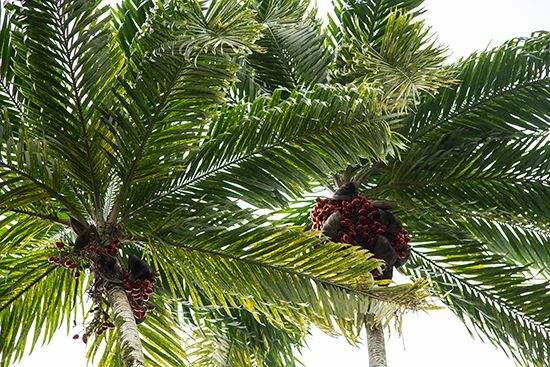
The babassu palm (Attalea speciosa) is historically and economically significant to tropical northeastern Brazil, where it has served as a vital resource for…
What is the historical significance of the babassu palm in its native regions?
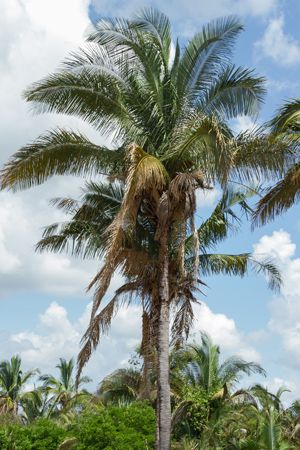
The babassu palm (Attalea speciosa) is historically and economically significant to tropical northeastern Brazil, where it has served as a vital resource for local communities for centuries. The tree is exceptionally versatile, yielding 28 products of both edible and chemical value.123
Its primary historical importance lies in its role within local domestic economies. The palm provides essential materials for daily life:
- Construction and Crafts: Stalks are used as timber, while leaves serve as coverings and partitions for dwellings, as well as materials for baskets and plaited objects.1
- Food and Drink: The ripe fruit is a nutritious food source, and the mesocarp can be processed into chocolate-like beverages. A liquid from the fruit stalk is fermented into a locally prized alcoholic beverage.1
- Industrial Utility: The kernels are a major source of babassu oil, which is used in cooking, fuel, lubricants, and the soap and cosmetic industries. The press cake remaining after oil extraction is used as animal feed.1
Today, babassu oil remains a major export item for the state of Maranhão4.
How are babassu palm nuts harvested and processed?
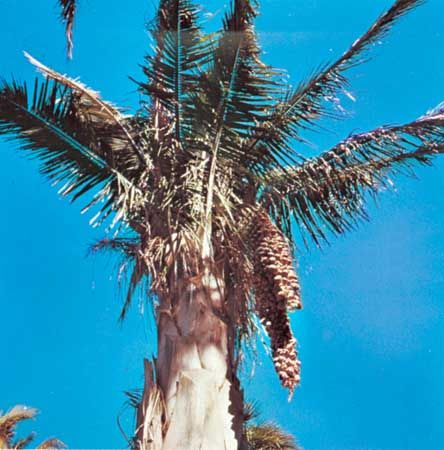
Harvesting and processing the babassu palm nut is a labor-intensive task due to the tree’s growth in dense, often inaccessible tropical jungles, which complicates both collection and transport.1
The nuts, which grow in large bunches of up to 600, are oblong and feature a very hard shell. Processing involves the following steps:1
- Extraction: While specialized machines have been developed to crack the hard shells and remove the kernels, the vast majority of this work is still performed by hand.1
- Oil Production: The kernels are highly valuable, containing between 65 and 68 percent oil. Once extracted, they are processed to produce babassu oil, which is similar in properties to coconut oil.1
- By-products: After the oil is extracted from the kernels, the remaining press cake is utilized as animal feed. Additionally, other parts of the nut are used: the exocarp provides fiber, the mesocarp is used for beverages, and the endocarp is used to manufacture buttons.1
How does the babassu palm adapt to its natural habitat and climate conditions?
The babassu palm (Attalea speciosa) has developed several biological adaptations to thrive within the dense, tropical forest ecosystems of northeastern Brazil.
Its survival and reproductive strategies include:
- Pollination Mechanisms: The babassu palm utilizes a dual strategy for reproduction, relying on both wind and insects to ensure effective pollination.1
- Soil Enrichment: The species (Orbignya phalerata) plays a significant role in its habitat by contributing large amounts of dry matter to the forest floor. When this organic material is recycled, it enhances soil fertility, supporting the broader forest community.1
- Establishment Growth: Similar to other palms in its family, the babassu exhibits specialized growth patterns during its establishment phase. Some related species, such as Orbignya cohune, initially grow geotropically, burying their stems up to one meter deep to secure a stable foundation before vertical growth begins.1
- Resource Allocation: The tree produces large, hard-shelled fruits in dense bunches of up to 600, which protect the kernels—the tree’s primary reproductive investment—from environmental stressors and predators until they are ready for dispersal.61
What are the primary uses and products derived from the babassu palm?
The babassu palm (Attalea species) is a highly versatile tree, yielding 28 products of both edible and chemical value. Its utility is comparable to that of the coconut palm, providing essential resources for local communities in Brazil.13
Primary Products and Uses
- Babassu Oil: Extracted from the kernels, this oil is similar in properties to coconut oil and serves as a common substitute. It is used in cooking, as a fuel, and as a lubricant, while the soap and cosmetic industries are major consumers of the product.37
- Food and Beverages: The ripe fruit is consumed as a nutritious food, and the mesocarp (the main portion of the fruit) is used to create chocolate-like drinks. Additionally, a liquid from the fruit stalk is fermented into a prized local alcoholic beverage.3
- Construction and Crafts: The stalks are used as timber, while the leaves serve as coverings and partitions for dwellings. Leaves are also plaited to create baskets and other domestic objects.3
- Industrial and Miscellaneous: The endocarp is used to manufacture buttons, and fiber is harvested from the exocarp. Furthermore, the press cake remaining after oil extraction is utilized as animal feed.3
Sources
- Babassu palm — Encyclopædia Britannica
- babassu — Merriam-Webster
- Palm - Economic importance — Encyclopædia Britannica
- Maranhão — Encyclopædia Britannica
- Attalea — Merriam-Webster
- Palm - Ecology — Encyclopædia Britannica
- babassu oil — Merriam-Webster
Published on · 3 min read