Pigweed
Pigweed is a general term for several vigorous, weedy annual plants, most of which belong to the amaranth family (Amaranthaceae). These plants are…
What is pigweed?
Pigweed is a general term for several vigorous, weedy annual plants, most of which belong to the amaranth family (Amaranthaceae). These plants are distributed nearly worldwide and are commonly found in waste areas.123
Many species of pigweed are classified within the genus Amaranthus, including:
- Rough pigweed (or redroot, A. retroflexus): A stout plant that can reach up to 3 metres (about 10 feet) in height.13
- Prostrate pigweed (or mat amaranth, A. graecizans): A plant that grows along the ground with stems rising at the tips.13
- Spiny pigweed (or spiny amaranth, A. spinosus): Characterized by spines located at the base of its leafstalks.1
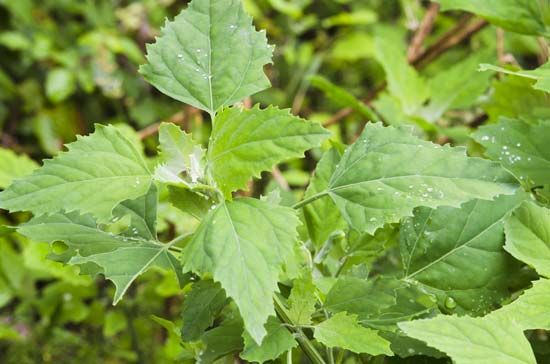
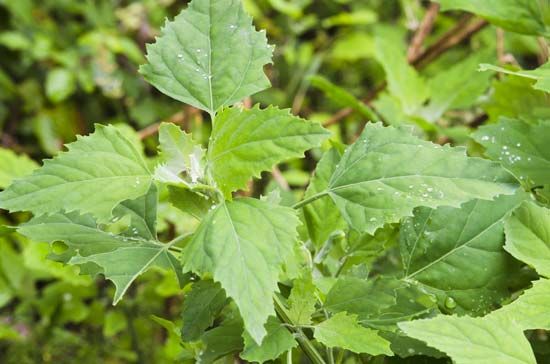
Other plants also referred to as pigweed include lamb’s quarters (Chenopodium album), which is edible, and winged pigweed (Cycloloma atriplicifolium), a branched plant often found in sandy soils.1
What are some other common plants in the Amaranthaceae family?
The Amaranthaceae family is a diverse group of flowering plants that includes approximately 2,500 species. Beyond the various types of pigweed, the family encompasses a wide range of food crops, garden ornamentals, and wild plants.24
Food Crops
Many members of this family are significant in agriculture due to their nutritional value:
- Beets and related plants: This includes garden beets, sugar beets, chard, and mangel-wurzel, all of which are forms of Beta vulgaris.24
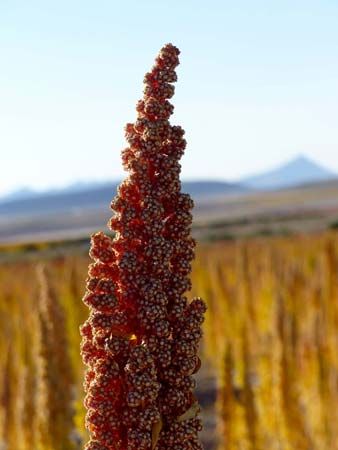
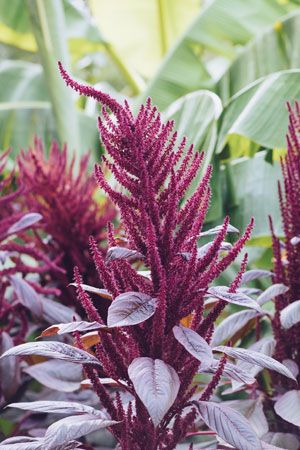
- Leafy greens and grains: Spinach and lamb’s quarters are common, while quinoa and various amaranth species (such as red amaranth) are valued as high-protein pseudo-grains.24
Ornamentals
Several species are cultivated for their aesthetic appeal in gardens:
- Cockscomb: Known for its unique, crested flower heads, the genus Celosia is a popular ornamental.24
- Globe amaranth: The genus Gomphrena is frequently grown for its colorful, clover-like flowers.24
- Other varieties: Plants like love-lies-bleeding, prince’s feather, and Joseph’s coat are also common garden staples.25
Other Notable Plants
The family also includes wild or specialized plants such as saltbush, glasswort, and the genus Bassia, many of which are adapted to survive in saline or poor soil conditions.24
Why are some plants in the amaranth family considered food crops while others are weeds?
The distinction between food crops and weeds within the Amaranthaceae family is primarily defined by human cultivation, utility, and ecological behavior rather than inherent biological differences.
Domestication and Utility
Plants classified as food crops, such as quinoa, spinach, and certain amaranth species, have been selectively bred over millennia for desirable traits like nutritional density, yield, and ease of harvest. These species were historically domesticated by cultures such as the Aztecs and Inca for their edible leaves and protein-rich seeds.562
The Nature of Weeds
Conversely, species labeled as weeds—often referred to as pigweed—are characterized by their competitive nature and ability to thrive in disturbed or waste areas. These plants are highly successful because they:52
- Readily reseed: They produce vast quantities of seeds, ensuring rapid propagation.5
- Adaptability: They are tolerant to diverse and harsh growing conditions.5
- Competitiveness: They often outcompete desired crops for resources.5
Some, such as Palmer’s amaranth, have even developed resistance to common herbicides, making them significant agricultural pests. Ultimately, a plant is often considered a weed simply because it grows where it is not wanted, interfering with the cultivation of other, more economically valuable species.5
What is the C4 photosynthetic pathway and why is it important for these plants?
The C4 photosynthetic pathway is a specialized mechanism of carbon fixation that allows certain plants to thrive in warm, dry, or low-carbon dioxide environments. While most plants (C3 plants) fix carbon directly into a three-carbon molecule, C4 plants utilize a two-step process that spatially separates carbon fixation from the Calvin-Benson cycle.78
How the Pathway Works
- Initial Fixation: In the mesophyll cells, the enzyme phosphoenolpyruvate carboxylase (PEP carboxylase) captures carbon dioxide to form a four-carbon acid, such as oxaloacetate or malate.78
- Spatial Separation: This four-carbon acid is transported to specialized bundle-sheath cells, where it is broken down to release a high concentration of carbon dioxide.78
- Efficiency: This high concentration of CO2 allows the enzyme Rubisco to function efficiently, minimizing photorespiration—a wasteful process where the plant consumes oxygen instead of carbon dioxide.78
Why It Is Important
This pathway provides a significant competitive advantage in harsh climates. Because PEP carboxylase has a high affinity for carbon dioxide, C4 plants can keep their stomata partially closed during hot, dry conditions, drastically reducing water loss while maintaining high rates of photosynthesis. Consequently, these plants often achieve higher biomass yields, making them highly successful both as crops and as resilient, competitive weeds.78
Sources
- pigweed — Encyclopædia Britannica
- Amaranthaceae — Encyclopædia Britannica
- pigweed — Merriam-Webster
- list of plants in the family Amaranthaceae — Encyclopædia Britannica
- Amaranth — Encyclopædia Britannica
- 18 Food Crops Developed in the Americas — Encyclopædia Britannica
- Photosynthesis - Carbon fixation in C 4 plants — Encyclopædia Britannica
- Plant - Specific variations in photosynthesis — Encyclopædia Britannica
Published on · 3 min read