Babuyan Islands
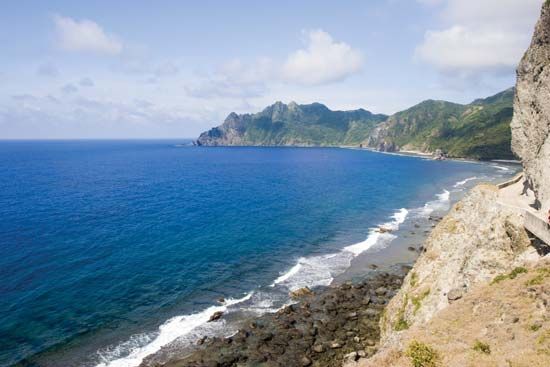
The Babuyan Islands are a group of 24 volcanic-coralline islands located in the Luzon Strait. While the islands are volcanic in origin, the provided…
How does the volcanic activity in the Babuyan Islands affect the local environment and inhabitants?
The Babuyan Islands are a group of 24 volcanic-coralline islands located in the Luzon Strait. While the islands are volcanic in origin, the provided information does not detail specific ongoing volcanic activity or its direct impact on the local environment and inhabitants.1
The inhabitants of the islands primarily engage in fishing and farming, maintaining strong cultural ties to Luzon. Due to the lack of arable land and the presence of strong winds, agriculture is focused on root crops like sweet potatoes rather than rice or corn. The local economy is supported by a small livestock industry, with exports including cattle, hogs, goats, and lumber. Transportation to the islands, particularly through the port of Calayan, is frequently disrupted by the typhoon season between September and February.1
What are the major islands in the Babuyan group, and what are their distinctive features?
The Babuyan Islands are a volcanic-coralline group located in the Luzon Strait, serving as a northern extension of the Philippines. The group consists of 24 islands, with five primary islands characterized by their volcanic origins and agricultural limitations.1
Major Islands and Features
- Babuyan: Recognized as the chief island of the group, it shares the name of the archipelago.12
- Camiguin: One of the principal islands in the chain.1
- Calayan: This island serves as the largest town and the only port with regular shipping services connecting to Aparri and Manila. However, these connections are often interrupted by the typhoon season between September and February.1
- Fuga: Identified as one of the five chief islands of the group.1
- Dalupiri: Also categorized as a major island within the archipelago.1
Due to the prevalence of strong winds and a lack of arable land, these islands are generally unsuitable for rice or corn cultivation. Instead, the inhabitants focus on growing root crops, such as sweet potatoes, and maintain a small livestock industry that exports cattle, hogs, and goats.1
Where are the Babuyan Islands located, and how many islands make up this group?
The Babuyan Islands are located in the Luzon Strait, situated as a northern extension of the Philippines. They are positioned south of the Batan Islands and the Balintang Channel, lying approximately 20 miles (32 km) north of Luzon across the Babuyan Channel.1
The group is composed of 24 volcanic-coralline islands, the five largest of which are Babuyan, Camiguin, Calayan, Fuga, and Dalupiri.1
What indigenous people inhabit the Babuyan Islands, and what is their history?
The available information does not identify a specific indigenous group inhabiting the Babuyan Islands, nor does it provide a detailed history of the local population.
The inhabitants of the islands are primarily described as fishermen and farmers who maintain strong cultural ties to Luzon. Due to the challenging environment—characterized by strong winds and a lack of arable land—the local economy is focused on the cultivation of root crops, such as sweet potatoes, and a small-scale livestock industry that exports cattle, hogs, and goats.1
While the Batan Islands to the north are home to the Ivatan people, who have distinct cultural and linguistic traditions, such details are not provided for the Babuyan group in the current records.2
Sources
- Babuyan Islands — Encyclopædia Britannica
- Babuyan — Merriam-Webster
- Batan Islands — Encyclopædia Britannica
Published on · 2 min read