Bald Cypress
Cypress knees are distinctive, woody outgrowths that emerge from the root systems of the bald cypress. These structures rise above the ground or water level…
What are ‘cypress knees’ and what purpose do they serve for the tree?
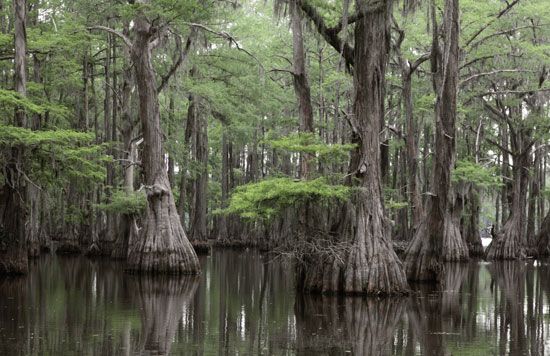
Cypress knees are distinctive, woody outgrowths that emerge from the root systems of the bald cypress. These structures rise above the ground or water level surrounding the base of the tree.1
While the exact biological function of these formations is not fully settled, they are widely presumed to assist in aerating the tree’s submerged root system, particularly in the waterlogged environments where bald cypresses often grow.1
What is the scientific name of the bald cypress tree and what does it mean?
The scientific name of the bald cypress is Taxodium distichum.34
The genus name, Taxodium, is derived from the New Latin Taxus (referring to the yew tree) combined with the suffix -odium, which originates from the Greek -odos (meaning “resembling” or “like”). This reflects the tree’s physical similarity to the yew. The specific epithet distichum refers to the arrangement of the tree’s leaves, which grow in two distinct ranks or rows along its twigs.53
What is the cultural and economic significance of the bald cypress tree?
The bald cypress (Taxodium distichum) holds significant economic and cultural value, particularly in the southern United States.
Economic Significance
The wood of the bald cypress is highly prized in the lumber trade for its exceptional resistance to water and rot. Historically and currently, it is utilized for various construction purposes, most notably for shingles. When the wood features small, attractive holes caused by a fungus, it is marketed as “pecky” or “peggy” cypress, a variety valued for its unique aesthetic qualities.54
Cultural and Ecological Significance
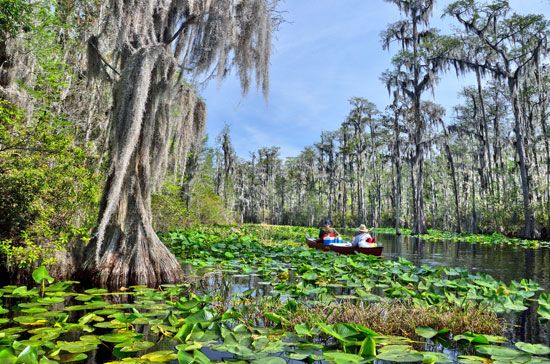
Beyond its commercial utility, the tree serves as a vital component of wetland and riverine ecosystems. It provides essential habitat and breeding grounds for diverse wildlife, including wading birds and amphibians. Furthermore, the tree plays a crucial role in environmental health by improving water quality, controlling floodwaters, and mitigating soil erosion. Reflecting its regional importance, the bald cypress has been designated as the state tree of Louisiana.4
What are the distinctive characteristics of the bald cypress tree?
The bald cypress (Taxodium distichum) is a long-lived, slow-growing conifer with several distinctive physical characteristics:
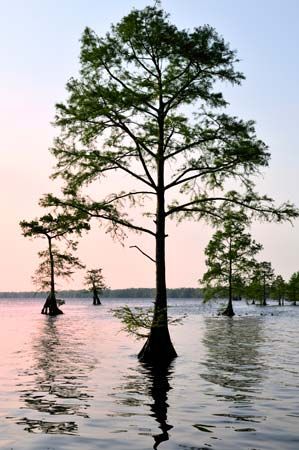
- Growth Habit: Young trees are symmetrical and pyramidal, while mature specimens develop a coarse, wide-spreading head. They typically reach about 30 meters (100 feet) in height with a trunk diameter of 1 meter (3 feet).
- Deciduous Nature: Unlike many other conifers, the bald cypress is deciduous, meaning it sheds its leaves annually—a trait that gives the tree its “bald” name. Its flat, needlelike leaves turn striking shades of red and orange in the fall.
- “Knees”: Trees growing in wet soil often develop conical woody projections from their horizontal roots known as “knees.” These pneumatophores are believed to help oxygenate the root system and provide stability in soft, muddy ground.
- Bark and Trunk: The trunk is often strongly buttressed at the base, and the reddish-brown bark weathers to an ashy gray. Old trees are typically hollow.
- Reproduction: As a gymnosperm, it produces small, globular green seed cones rather than flowers or fruit.
Sources
- cypress knee — Merriam-Webster
- cypress — Encyclopædia Britannica
- taxodium — Merriam-Webster
- bald cypress — Encyclopædia Britannica
- bald cypress — Merriam-Webster
- southern cypress — Merriam-Webster
Published on · 3 min read