Mixed Forest
A mixed forest is a type of vegetation that serves as a transition zone between coniferous forest and broad-leaved deciduous forest. These forests are…
What is Mixed forest?
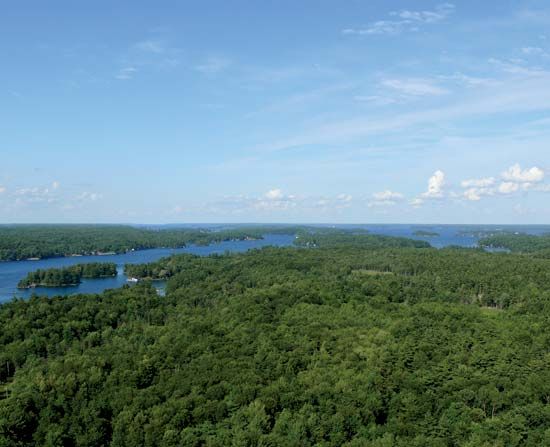
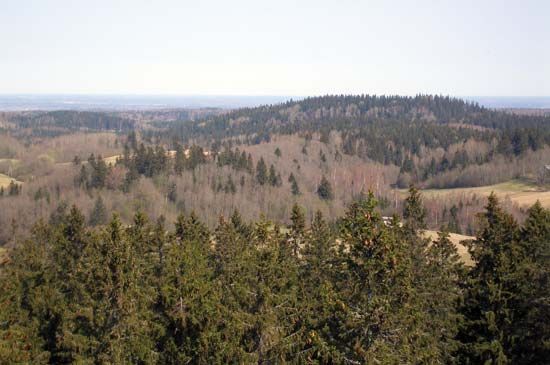
A mixed forest is a type of vegetation that serves as a transition zone between coniferous forest and broad-leaved deciduous forest. These forests are predominantly found in temperate high-latitude climates where both types of trees coexist. The term may also refer more broadly to any forest characterized by the presence of two or more dominant tree species.12
In regions like the Appalachian Plateau in North America, the term is specifically used to describe forests that feature a high diversity of tree species and experience moderate levels of precipitation. Because these forests exist at the boundaries of different climatic zones, they reflect the varying environmental requirements of the tree species that compose them.13
How do deciduous trees differ from coniferous trees?
Deciduous and coniferous trees differ primarily in their leaf characteristics, life cycles, and environmental adaptations.
Leaf Characteristics and Longevity
- Deciduous Trees: These trees typically possess relatively thin, delicate leaves that are shed annually as days shorten in autumn. Because these leaves are not designed for long-term survival, they do not require a high investment of chemical energy, making it efficient for the plant to replace them each spring.5
- Coniferous Trees: Most conifers are evergreen, meaning they retain their leaves throughout the year and into the following growing season. Their leaves are often needlelike or scalelike, thicker, and leathery, featuring a waxy, waterproof coating to minimize water loss. A single leaf may remain on the tree for two years or longer.678
Environmental Adaptations
- Deciduous Strategy: This habit is an adaptation to temperate climates where winter temperatures fall below freezing, rendering leaves susceptible to damage and reducing photosynthetic activity. By shedding leaves, the tree avoids the metabolic cost of maintaining foliage during periods when it cannot function.5
- Coniferous Strategy: Conifers are well-adapted to survive in extreme environments, including cold-temperate and Arctic regions. Their specialized leaf structures and sunken stomates allow them to conserve moisture and protect against harsh conditions. While most conifers are evergreen, a few species—such as larch, bald cypress, and dawn redwood—are deciduous.687
What animals are commonly found in mixed forest ecosystems?
Mixed forest ecosystems, which serve as transition zones between coniferous and broad-leaved deciduous forests, support a diverse array of wildlife. Because these forests provide a variety of ecological niches, they host animals adapted to both the vertical structure of the trees and the forest floor.
Common animal groups found in these temperate environments include:
- Arboreal Mammals: Many species, such as squirrels, utilize the canopy for food and shelter. In various temperate regions, tree holes serve as essential nesting sites for these mammals and various birds.
- Birds: These forests are home to diverse bird populations, including owls and pigeons. In the Northern Hemisphere, foliage-gleaning insectivores like tits and warblers are particularly prominent.
- Ground-Dwelling Animals: Many mammals use the forest floor for shelter and foraging. While specific species vary by region, the structural complexity of mixed forests allows for a mix of ground-dwelling and climbing animals to coexist by occupying different vertical strata.
Because mixed forests share characteristics with both coniferous and deciduous biomes, they often host species that are also found in those adjacent forest types, depending on the local climate and tree composition.
How does the climate influence where mixed forests grow?
Mixed forests are primarily influenced by their location within temperate high-latitude climates, where they serve as a transitional zone between coniferous forests and broad-leaved deciduous forests.13
The distribution of these forests is dictated by specific climatic thresholds. Generally, forests can develop wherever temperatures rise above 10 °C (50 °F) during the warmest months and annual precipitation exceeds 200 mm (8 inches). Within these broader limits, mixed forests thrive in temperate regions that balance the requirements of both conifer and deciduous species. While coniferous forests dominate in cooler, high-latitude subpolar regions—often characterized by prolonged winters and lower annual rainfall—deciduous forests typically require middle-latitude climates with a growing period of 100 to 200 days and annual precipitation above 400 mm (16 inches).3
Consequently, the mixed forest emerges where these environmental conditions overlap, allowing for the coexistence of hardy conifers and broad-leaved trees. Beyond these primary climatic factors, local development can be further shaped by altitude, soil fertility, and unique meteorological conditions.3
Sources
- Mixed forest — Encyclopædia Britannica
- forestry - Occurrence and distribution — Encyclopædia Britannica
- Forest — Encyclopædia Britannica
- Tropical rainforest - Biota — Encyclopædia Britannica
- evergreen — Encyclopædia Britannica
- Temperate forest - Environment — Encyclopædia Britannica
- gymnosperm - Pinophyta — Encyclopædia Britannica
- conifer - Leaves — Encyclopædia Britannica
- conifer - Distinguishing taxonomic features — Encyclopædia Britannica
- tree - Adaptations — Encyclopædia Britannica
- conifer - Stem — Encyclopædia Britannica
- Taiga - Mammals — Encyclopædia Britannica
- Temperate forest - Fauna — Encyclopædia Britannica
- Tropical rainforest - Fauna — Encyclopædia Britannica
Published on · 3 min read