Conifer
Conifers play a vital role in the global carbon cycle primarily through photosynthesis, a process by which they capture atmospheric carbon dioxide and…
How do conifers contribute to the global carbon cycle?
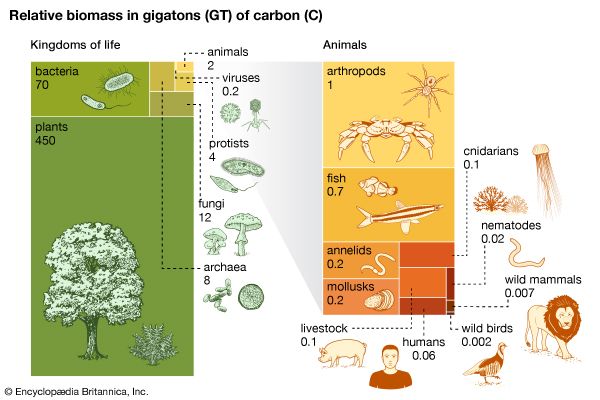
Conifers play a vital role in the global carbon cycle primarily through photosynthesis, a process by which they capture atmospheric carbon dioxide and convert it into biomass.12
In regions where conifers are ecologically dominant—such as the boreal and montane forests of the Northern Hemisphere—these trees can constitute 90 percent or more of the living matter, making them significant contributors to the biosphere’s carbon uptake. This stored carbon, known as net primary production, is essential for regulating the global carbon budget.13
When conifers die, their organic matter enters the soil as litter and is eventually incorporated into soil humus, where it continues to cycle through decomposition by microorganisms. However, this cycle is sensitive to ecological disturbance. While many conifer forests depend on fire for regeneration, these events can release stored carbon back into the atmosphere. Furthermore, human-driven land-use changes, such as deforestation, disrupt this natural balance, potentially turning these vital carbon repositories into sources of carbon emissions.321
What is the difference between deciduous and evergreen conifers?
The primary difference between deciduous and evergreen conifers lies in their leaf-retention strategy. While most conifers are evergreen—meaning they retain their foliage throughout the year and into the following growing season—a small number of species are deciduous, shedding their leaves annually in the autumn.56
Evergreen Conifers
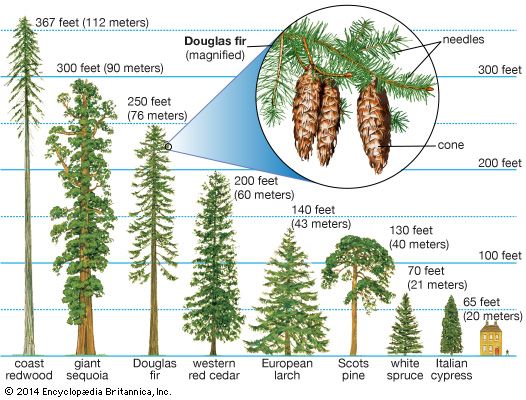
Evergreen conifers, such as pines, firs, and spruces, typically possess thick, leathery, or needlelike leaves designed to withstand harsh conditions. These leaves may remain on the tree for two years or longer, allowing the plant to maintain photosynthetic activity whenever environmental conditions are favorable.56
Deciduous Conifers
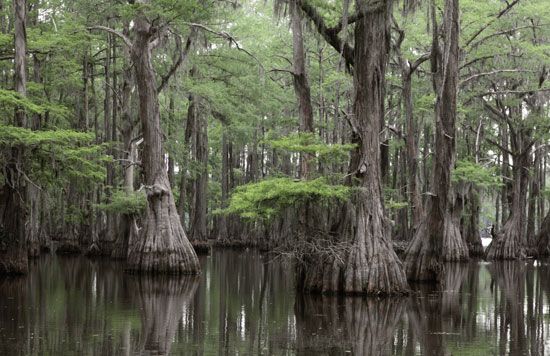
Deciduous conifers, such as larch (Larix), bald cypress, and dawn redwood, shed their leaves or specialized branchlets each autumn. This process is an adaptive response to seasonal changes; by dropping their foliage, these trees protect themselves from the damage that freezing, wind, and snow can cause to delicate leaf structures, while also conserving energy during the winter dormancy period.768910
How have humans used conifers throughout history, and what are their modern applications?
Throughout history, humans have relied on conifers for a wide range of essential needs, from military dominance to daily utility. Historically, the durability and strength of conifer wood made it a primary resource for naval construction; for instance, the great cedar forests of the Middle East were harvested for ancient imperial navies, while North American white pines were used to mast British fleets in the 18th and 19th centuries. Beyond maritime use, conifers like the yew provided the wood for medieval longbows, and various decay-resistant species have been used for coffins in East Asia since ancient times.12
In modern applications, conifers remain economically vital, supplying all of the world’s softwood timber and approximately 45 percent of annual lumber production. Their utility extends into several key areas:12
- Construction and Manufacturing: Softwoods are used for general construction, plywood, particleboard, and chipboard.1213
- Chemical and Industrial Products: Conifers are processed into paper and plastics derived from wood pulp are processed into paper and plastics derived from wood pulp. They are also the source of naval stores, including turpentine and rosin, which are used in paints, varnishes, adhesives, soaps, and synthetic rubber.121415
- Food and Pharmaceuticals: Certain species provide pine nuts, and juniper berries are used to flavor gin. Additionally, conifers are a source of various pharmaceuticals and mounting media for scientific preparations.1213
- Ornamental Use: Conifers are widely planted in public and private landscapes and serve as the traditional Christmas tree in many cultures.12
How long have conifers existed on Earth, and how have they evolved over time?
Conifers (division Pinophyta) first appeared toward the end of the Carboniferous Period, approximately 358.9 to 298.9 million years ago.18
Evolutionary History
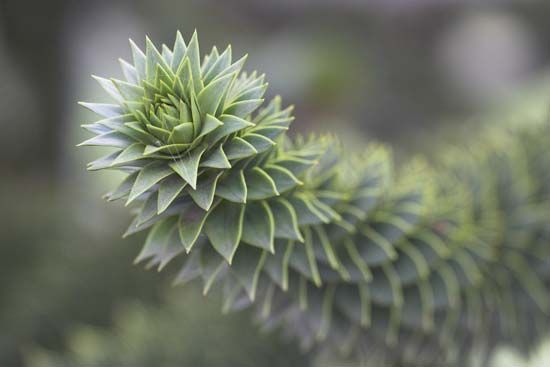
The earliest conifers, such as those in the class Cordaitopsida, were trees characterized by long, strap-shaped leaves and dense, compact wood. By the late Paleozoic, a group known as the Voltziales emerged, which resembled modern araucarias with whorled branches and needlelike leaves.18
A significant evolutionary development occurred during the transition from the late Paleozoic to the early Mesozoic: the transformation of axillary buds into the complex, woody seed cones seen today. In this process, sterile parts flattened and fused, while the ovule-bearing portions became specialized scales.18
Diversification
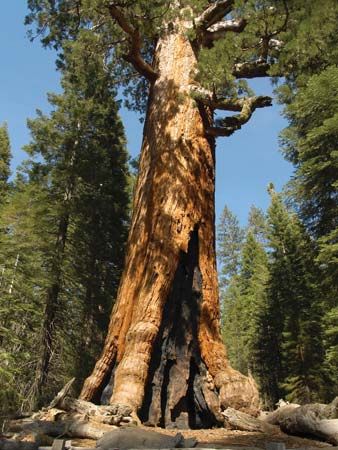
Modern conifer families began to emerge during the Mesozoic Era. Members of the Cupressaceae family appeared in the Jurassic Period, and the oldest known pine (Pinus mundayi) dates back about 140 million years. Before the rise of angiosperms, conifers were the dominant vegetation on Earth. Today, they remain among the most diverse gymnosperms, including some of the world’s oldest and largest living organisms.1819
Sources
- conifer - Sporophyte phase — Encyclopædia Britannica
- Photosynthesis - Carbon dioxide — Encyclopædia Britannica
- soil - Soils and global warming — Encyclopædia Britannica
- soil - Carbon and nitrogen cycles — Encyclopædia Britannica
- Evergreen — Encyclopædia Britannica
- conifer - Stem — Encyclopædia Britannica
- gymnosperm - Pinophyta — Encyclopædia Britannica
- larch — Encyclopædia Britannica
- Plant development - Seasonal adaptations — Encyclopædia Britannica
- dawn redwood — Encyclopædia Britannica
- Deciduous forest: Top Questions — Encyclopædia Britannica
- conifer - Economic importance — Encyclopædia Britannica
- wood - Extractives — Encyclopædia Britannica
- turpentine — Encyclopædia Britannica
- clear-cutting — Encyclopædia Britannica
- wood - Marking, felling , and processing — Encyclopædia Britannica
- Did you know? — Merriam-Webster
- conifer — Encyclopædia Britannica
- gymnosperm - Appearance of gymnosperm divisions — Encyclopædia Britannica
Published on · 4 min read