Bandicoot Rat
Bandicoot rats have successfully adapted to human-altered landscapes by exploiting environments that mirror their original habitats, such as grasslands and…
How have bandicoot rats adapted to urban environments?
Bandicoot rats have successfully adapted to human-altered landscapes by exploiting environments that mirror their original habitats, such as grasslands and marshy areas. Rather than originating from pristine forests, these rodents likely evolved in environments ecologically similar to the cultivated fields and man-made structures they now inhabit.1
Their primary urban adaptation involves their behavior as aggressive burrowers. For instance, the lesser bandicoot rat (B. bengalensis) has been observed constructing tunnels within the concrete cellars of rice warehouses, demonstrating a capacity to utilize human infrastructure for shelter and nesting. These rats are nocturnal or crepuscular, and their ability to thrive in urban buildings is a significant departure from the habits of forest-dwelling species, which typically struggle to transition into human-associated environments. By occupying these niches, they continue to subsist on a diet of grains and other food sources found in proximity to human populations.1
Are bandicoot rats considered pests, and if so, why?
Yes, bandicoot rats are widely considered pests because of the significant damage they cause to human food supplies and infrastructure.1
Their status as pests is primarily due to the following behaviors:
- Destruction of Crops: These rodents subsist on grains, fruit, and invertebrates, making them highly destructive to cultivated crops.1
- Damage to Infrastructure: As aggressive burrowers, they often excavate tunnels in areas that compromise human structures. For example, the lesser bandicoot rat has been known to tunnel into the concrete cellars of rice warehouses.1
- Agricultural Interference: Species such as the short-tailed bandicoot rat (Nesokia indica) cause extensive damage to grain crops by excavating tunnels just below the surface, which can disrupt fields and irrigation.1
Because they are closely associated with human populations and thrive in cultivated lands and urban buildings, their presence frequently leads to economic loss and property damage.1
What is a bandicoot rat and where are they typically found?
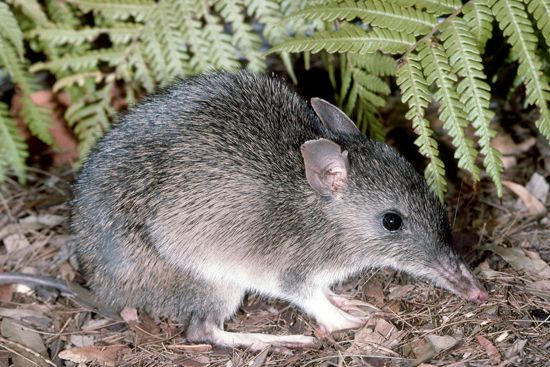
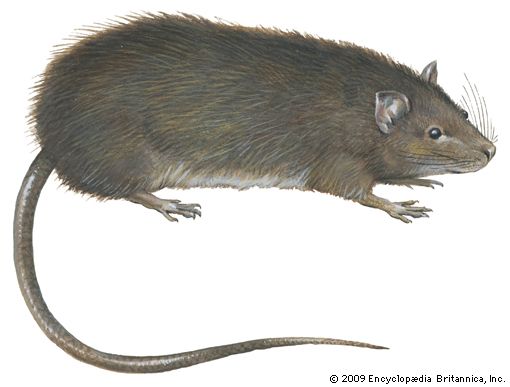
A bandicoot rat is any of five Asiatic species of rodents belonging to the subfamily Murinae within the family Muridae. It is important to distinguish these rodents from the bandicoot, which is a completely different group of marsupial mammals native to Australia, New Guinea, and nearby islands.13
Bandicoot rats are typically found across the Indian subcontinent and throughout Indochina. Specific distributions include:
- Greater bandicoot rat (Bandicota indica): Found on the Indian subcontinent and throughout Indochina, with introduced populations on the Malay Peninsula, Taiwan, and Java.1
- Lesser bandicoot rat (B. bengalensis): Found on the Indian subcontinent, Sri Lanka, and Myanmar, with introduced populations in parts of Southeast Asia, Saudi Arabia, and Kenya.1
- Savile’s bandicoot rat (B. savilei): Occurs on the mainland of Southeast Asia.1
- Short-tailed bandicoot rat (Nesokia indica): Ranges from Bangladesh through Central Asia to northeastern Egypt and parts of China.1
Unlike many other rodents, they are rarely found in native habitats, preferring cultivated lands and human-altered environments.1
What is the diet and behavior of bandicoot rats?
Bandicoot rats exhibit distinct behaviors and dietary habits primarily centered around their adaptation to human-altered environments.
Behavior
Most bandicoot rat species are terrestrial and nocturnal or active at twilight. They are prolific burrowers, constructing tunnels where they nest and raise litters ranging from 2 to 18 offspring. Their burrowing behavior is often aggressive; for instance, the lesser bandicoot rat is known to tunnel through concrete cellars in warehouses. While most species remain terrestrial, the Nesokia bunnii is an exception, as it is an excellent swimmer that constructs nests on reed platforms above water in marshy habitats. Unlike many other rodents, these rats rarely inhabit pristine native environments, preferring cultivated lands, fallow fields, and urban buildings that mimic their original grassland or scrub habitats.1
Diet
Their diet is varied and opportunistic, consisting of:
- Grains and Fruit: They are significant consumers of agricultural produce, which makes them highly destructive to cultivated crops.1
- Invertebrates: They supplement their plant-based diet with various invertebrates.1
- Roots and Bulbs: Species like the short-tailed bandicoot rat forage primarily on succulent roots and bulbs, often remaining underground while feeding.1
Sources
- bandicoot rat — Encyclopædia Britannica
- mammal - Food habits — Encyclopædia Britannica
- bandicoot — Encyclopædia Britannica
- bandicoot — Merriam-Webster
Published on · 3 min read