Bandicoot
The provided search results do not contain information regarding how bandicoots have adapted to urban environments. The available data focuses on the…
How have bandicoots adapted to urban environments?
The provided search results do not contain information regarding how bandicoots have adapted to urban environments. The available data focuses on the biological characteristics, classification, and distribution of various bandicoot species in natural habitats such as forests, deserts, and rainforests, as well as their conservation status.
What are the main threats to bandicoot populations, and are any species endangered?
Bandicoot populations face significant threats primarily driven by human activity and the introduction of non-native species. Since the 19th century, large-scale land clearing, hunting, and trapping have severely impacted their numbers. Furthermore, the introduction of red foxes and feral cats has been a primary cause for the elimination of certain species from the Australian mainland.12
Many bandicoot species are currently endangered or have already faced extinction:
- Extinct: The desert bandicoot (P. eremiana), the lesser bilby (M. leucura), and the pig-footed bandicoot (C. ecaudatus) are all considered extinct.2
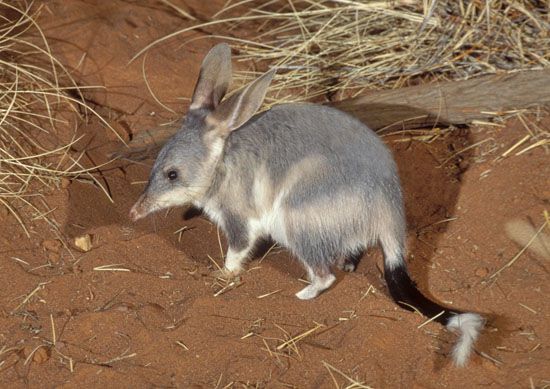
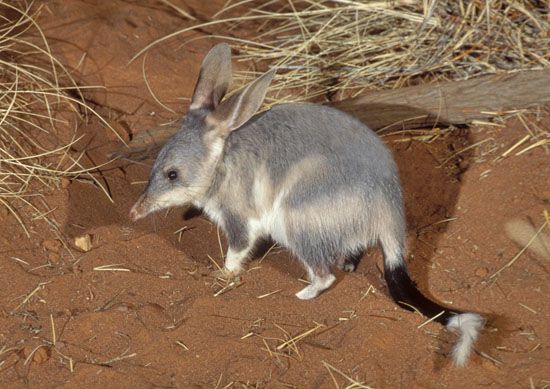
- Endangered: The greater bilby (M. lagotis) is currently endangered and restricted to remote colonies in arid interior Australia.2
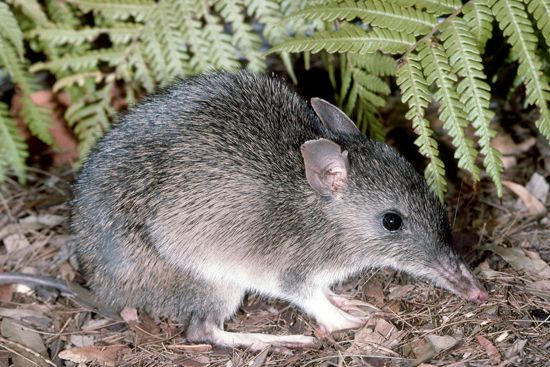
- Declining: Nearly all bandicoot species have experienced population declines, and the eastern barred bandicoot (P. gunnii) has been eliminated from the mainland, surviving primarily in Tasmania.2
We could dive deeper into the specific conservation efforts being made to protect these unique marsupial species.
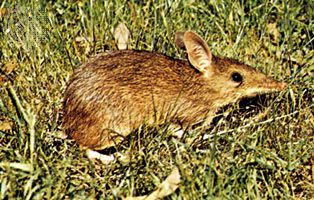
How do bandicoots differ from other marsupials like kangaroos or koalas?
Bandicoots belong to the order Peramelemorphia, which distinguishes them from other marsupials like kangaroos and koalas, which are part of the order Diprotodontia.
Key differences include:
- Reproductive Biology: Unlike most other marsupials, bandicoots possess a placenta that facilitates development, though it lacks the villi found in placental mammals. Their gestation period is also notably short, lasting only 12–15 days.13
- Physical Traits: Bandicoots are generally terrestrial and omnivorous, often digging for food with a tapered muzzle. In contrast, many diprotodonts, such as kangaroos, are primarily herbivorous and adapted for jumping, while others like koalas are specialized, arboreal leaf-eaters.143
- Pouch Orientation: The bandicoot pouch opens rearward, an adaptation that prevents dirt from entering while the animal digs.1
- Syndactyly: While many marsupials exhibit syndactyly—a condition where two or more digits are fused—bandicoots have specific toe reductions and structural patterns in their hind limbs that differ from the specialized feet of macropodids.14
Where are bandicoots primarily found in the wild?
Bandicoots (order Peramelemorphia) are native to the Australasian region. They are primarily found in Australia, including Tasmania, as well as New Guinea and various nearby islands.1
Their specific habitats vary by species and region:
- Australia: Different species occupy diverse environments ranging from lightly forested country in eastern Australia to the arid interior, where the greater bilby resides in remote colonies. Some species, such as the western barred bandicoot, are now restricted to small island refuges like Bernier and Dorré Islands in Shark Bay.11
- New Guinea: Bandicoots here are typically found in rainforests, inhabiting both mountain and lowland areas.1
- Other Islands: Certain species extend to offshore islands, and the genus Rhynchomeles is found on Seram, an island in the Moluccas.1
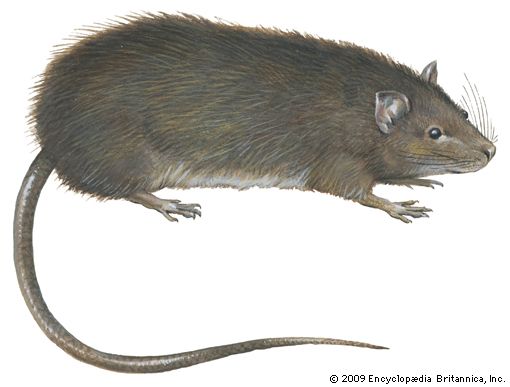
It is important to distinguish these marsupials from the “bandicoot rat,” which is a group of rodents found in Asia and the Indian subcontinent, rather than the Australasian marsupials.15
Sources
- bandicoot — Encyclopædia Britannica
- marsupial - Paleontology and recent history — Encyclopædia Britannica
- marsupial - Classification — Encyclopædia Britannica
- marsupial — Encyclopædia Britannica
- bandicoot rat — Encyclopædia Britannica
Published on · 3 min read