Temperate Forest
Human activities significantly impact the biodiversity of temperate forests through several destructive processes, primarily driven by land-use changes and…
How do human activities impact the biodiversity of temperate forests?
Human activities significantly impact the biodiversity of temperate forests through several destructive processes, primarily driven by land-use changes and the introduction of nonnative species.12
- Deforestation and Land Clearing: Historically, vast areas of temperate forests in Europe, North America, China, and elsewhere have been cleared for agriculture, timber, and human settlement. This widespread removal of forest cover eliminates essential habitats for native species.13
- Habitat Fragmentation: When forests are cleared, the remaining land is often divided into small, isolated patches. This fragmentation hinders the movement and reproduction of species, potentially leading to genetic bottlenecks and localized extinctions, as populations become too small to remain viable.3
- Invasive Species: Human activities, such as global commerce, frequently introduce nonnative invasive species into temperate ecosystems. These species often outcompete native flora and fauna for resources, act as predators, or introduce diseases, which can lead to the decline or total displacement of indigenous species.2
- Replacement with Monocultures: In some cases, deforested lands are replanted with commercially important trees that lack the structural complexity to support native biodiversity, failing to function as adequate habitats.3
How do seasonal changes affect the ecology of temperate forests?
Seasonal changes profoundly shape the ecology of temperate forests, driving distinct cycles in plant growth, animal behavior, and nutrient cycling.
Plant Adaptations and Phenology
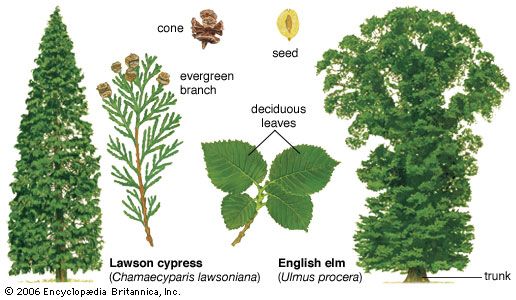
In temperate deciduous forests, the winter season presents extreme stress due to freezing temperatures and reduced light, which limit photosynthesis. To survive, many trees have evolved to be deciduous, shedding their leaves in autumn to conserve energy and prevent frost damage.45
In spring, rising temperatures and increased light trigger a rapid surge of growth. Herbaceous spring ephemerals take advantage of the sunlight reaching the forest floor before the tree canopy fully develops. By summer, the dense canopy shades the understory, while warm temperatures and rain fuel the growth of trees and shrubs.56
Animal Responses
Animals in these regions have developed various strategies to cope with seasonal environmental extremes:
- Dormancy: Many mammals enter dormancy, such as hibernation or torpor, to survive winter food shortages and cold.78
- Migration: Many birds and larger mammals migrate to lower altitudes or warmer climates during the winter months.79
- Reproductive Cycles: Breeding is often timed to coincide with periods of food abundance, such as the spring and summer months, to ensure the survival of offspring.89
Nutrient Cycling
Autumn leaf fall creates a layer of litter on the forest floor. During the warmer months, fungi, bacteria, and invertebrates break down this organic matter, returning essential nutrients to the soil, which supports the next cycle of growth.5
What are some common plant and animal species found in temperate forests?
Temperate forests are diverse ecosystems that vary significantly by region and climate, supporting a wide array of plant and animal life.
Flora
The vegetation in temperate forests is largely determined by climate and moisture levels.
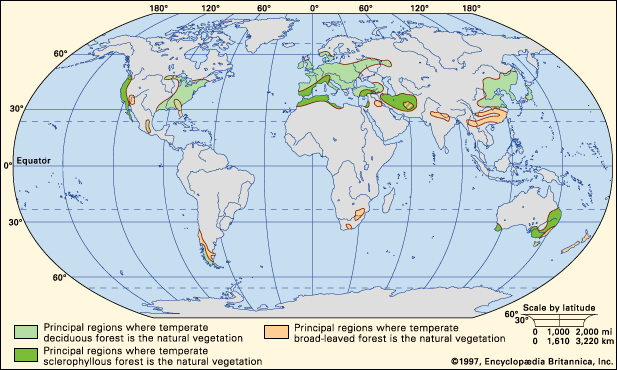
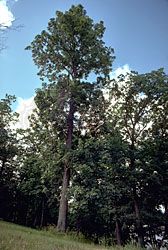
- Deciduous Forests: These are dominated by broad-leaved trees that shed their leaves seasonally, such as oaks, beeches, maples, birches, hickories, and elms.1112
- Coniferous Forests: Found in areas with long winters, these are dominated by needle-leaved, evergreen trees like pines, spruces, firs, and larches.13
- Temperate Rainforests: These feature giant trees such as coast redwood, Douglas fir, and western red cedar, often with a lush understory of ferns and mosses.135
Fauna
Animal life in these forests is adapted to seasonal changes and specific ecological niches.
- Mammals: Common inhabitants include squirrels, deer, foxes, bears, rabbits, and voles. In Australia, the fauna is distinct, featuring marsupials like the koala and greater glider.1413115
- Birds: Owls, hawks, woodpeckers, and warblers are widespread across many temperate forest regions.141311
- Invertebrates and Others: The forest floor is home to many insects, spiders, snails, and earthworms, as well as cold-blooded vertebrates like salamanders, frogs, and snakes.1311
How might climate change affect the future of temperate forests?
Climate change poses a significant threat to the future of temperate forests by disrupting the delicate balance of their ecosystems. As global temperatures rise, the seasonal patterns that these forests rely on are shifting, often at a pace that exceeds the natural adaptive capacity of many species.16
Key impacts include:
- Altered Phenology: Rising temperatures are triggering earlier leaf production and vegetation greening. This can create mismatches in the timing of biological events, such as the breeding and migration cycles of birds and other animals, potentially threatening their survival.16
- Increased Disturbance: Changes in precipitation patterns and more frequent droughts are increasing the risk of wildfires and pest outbreaks. These disturbances can fundamentally alter forest structure and composition, sometimes beyond the point of recovery.162
- Extinction Risks: Many species are at an increased risk of extinction as their established geographic ranges become unsuitable. When combined with human-made barriers like roads and urban development, these species struggle to migrate to more favorable climates.16
- Synergistic Stresses: The combination of climatic stress and human activity—such as deforestation and pollution—creates a compounded threat that is far more destructive than either factor alone.1617
We could dive deeper into how specific tree species are migrating or discuss the role of forest management in mitigating these climate-driven risks.
Sources
- Deforestation - Effects — Encyclopædia Britannica
- Temperate forest - Origin — Encyclopædia Britannica
- invasive species — Encyclopædia Britannica
- Temperate forest - Environment — Encyclopædia Britannica
- Deciduous forest — Encyclopædia Britannica
- mammal - Response to environmental cycles — Encyclopædia Britannica
- Dormancy - Reproductive cycles — Encyclopædia Britannica
- Temperate forest - Population and community development and structure — Encyclopædia Britannica
- Mountain ecosystem - Population and community development and structure — Encyclopædia Britannica
- Tundra - Use of sunlight and carbon dioxide — Encyclopædia Britannica
- Temperate forest - Fauna — Encyclopædia Britannica
- Tree - Adaptations — Encyclopædia Britannica
- Coniferous forest — Encyclopædia Britannica
- Temperate rainforest — Encyclopædia Britannica
- Temperate forest - Flora — Encyclopædia Britannica
- Global warming - Environmental consequences of global warming — Encyclopædia Britannica
- Wildfire — Encyclopædia Britannica
- Climate change - Seasonal variation — Encyclopædia Britannica
- Tundra - Effects of human activities and climate change — Encyclopædia Britannica
Published on · 4 min read