Clematis
Clematis is a genus of perennial, primarily climbing shrubs belonging to the buttercup family (Ranunculaceae). Comprising approximately 370 species, these…
What is Clematis?
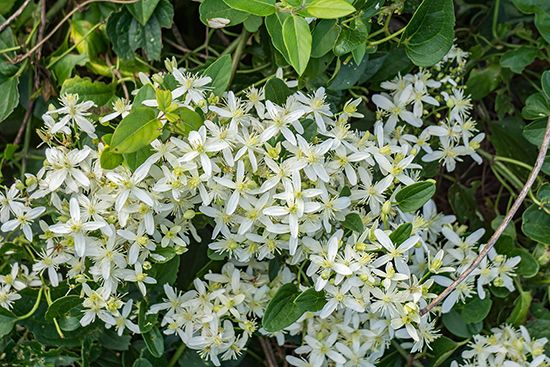
Clematis is a genus of perennial, primarily climbing shrubs belonging to the buttercup family (Ranunculaceae). Comprising approximately 370 species, these plants are found globally, with a high concentration in Asia and North America.1
Key characteristics include:
- Flowers: They may appear singly or in large clusters and are highly valued in horticulture for their aesthetic appeal.1
- Foliage: The leaves are opposite, individually stalked, and compound.1
- Fruit: The fruits are notable for their persistent styles and typically grow in spherical clusters.1
Common varieties include woodbine (Clematis virginiana), traveler’s joy (C. vitalba), and virgin’s bower (C. cirrhosa). Popular horticultural hybrids often derive from C. florida, C. patens, and C. jackmanii, which are prized for their distinct flowering habits on either old or new wood.1
What other plants belong to the buttercup family?
The Ranunculaceae family, commonly known as the buttercup family, is a diverse group of approximately 2,252 species across 62 genera. These plants are primarily herbaceous and are widely distributed throughout temperate and subtropical regions.23
Beyond Clematis, the family includes many well-known wildflowers and garden ornamentals, such as:
- Anemone (genus Anemone)
- Baneberry (genus Actaea)
- Buttercup (genus Ranunculus)
- Columbine (genus Aquilegia)
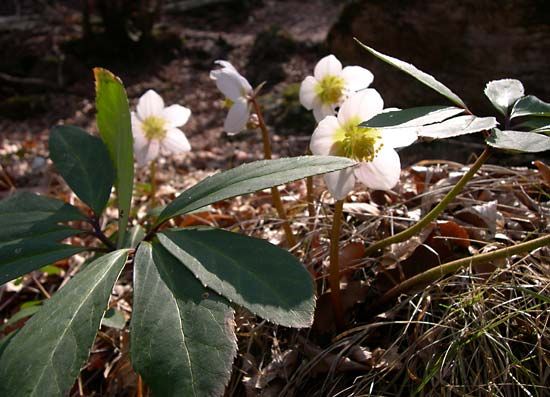
- Hellebore (genus Helleborus), including the Christmas rose
- Larkspur (genus Delphinium)
- Marsh marigold (Caltha palustris)
- Meadow rue (genus Thalictrum)
- Monkshood (genus Aconitum), also known as wolfsbane43
Other notable members include hepatica, globeflower, goldenseal, love-in-a-mist, mousetail, pheasant’s-eye, and winter aconite. Many of these plants are prized for their showy flowers, though some contain potent alkaloids that can be toxic to humans and livestock.34
How do climbing plants like Clematis attach themselves to surfaces?
Climbing plants utilize various specialized structures to attach themselves to surfaces and support their upward growth.
- Leaf Climbers: Plants like Clematis are categorized as leaf climbers. They support themselves by using their leaves, specifically the petioles (leafstalks), which twist around a support structure to anchor the plant.6
- Tendrils: Many vines produce tendrils, which are slender, threadlike organs derived from leaves, leaflets, or stems. These are highly sensitive to contact; when they brush against an object, they curl around it. Over time, they develop strong mechanical tissue to support the plant’s weight, and some even secrete adhesives to cement themselves to surfaces.7
- Adventitious Roots: Some climbing plants, such as English ivy, use specialized adventitious roots that emerge from stems to grip and cling to non-soil surfaces like walls or rocks.8
What are the differences between perennial and annual plants?
The primary difference between annual and perennial plants lies in the duration of their life cycles.
Annual Plants
An annual is a plant that completes its entire life cycle—from germination to seed production and death—within a single growing season. Because they do not survive beyond one season, the only part of the plant that persists is the dormant seed11. Many common garden flowers, such as marigolds and zinnias, as well as major food crops like corn and wheat, are annuals.1011
Perennial Plants
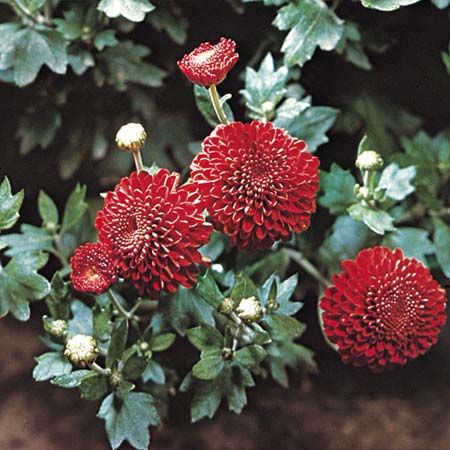
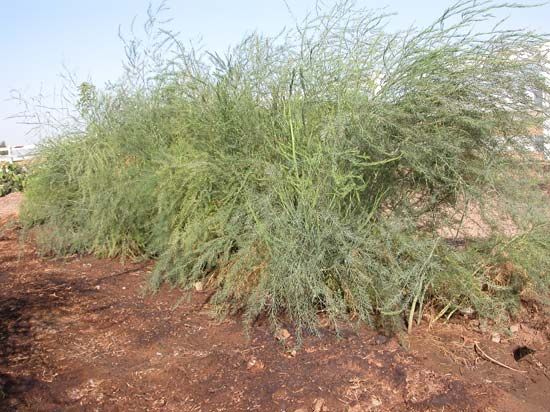
A perennial is a plant that lives for an indefinite number of years. These plants persist by regrowing and reblooming year after year. While woody plants like trees and shrubs are perennials, many herbaceous perennials survive cold climates by dying back to the ground in autumn and regenerating from underground structures like bulbs, tubers, or rhizomes. Examples include chrysanthemums, columbines, and asparagus.1012
Note: Biennials represent a middle ground, completing their life cycle over two growing seasons before dying.13
Sources
- Clematis — Encyclopædia Britannica
- Ranunculaceae — Encyclopædia Britannica
- Ranunculaceae — Merriam-Webster
- Ranunculales — Encyclopædia Britannica
- list of plants in the family Ranunculaceae — Encyclopædia Britannica
- leaf climber — Merriam-Webster
- adventitious root — Encyclopædia Britannica
- tendril — Encyclopædia Britannica
- climbing plant — Merriam-Webster
- Is That Plant 'Perennial' or 'Annual'? — Merriam-Webster
- annual — Encyclopædia Britannica
- biennial — Encyclopædia Britannica
- perennial — Encyclopædia Britannica
Published on · 3 min read