Banks Islands
The Banks Islands are a volcanic group located in northern Vanuatu in the southwestern Pacific Ocean. Geologically, the islands are characterized by volcanic…
How were the Banks Islands formed geologically?
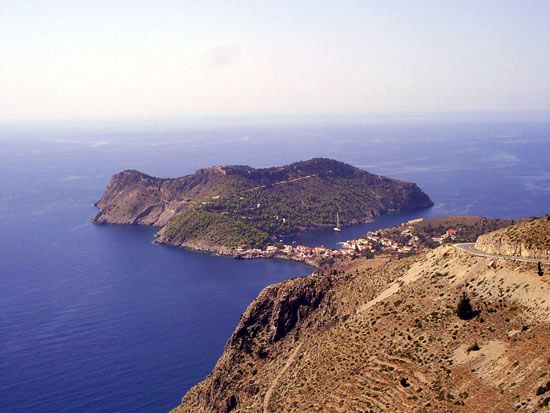
The Banks Islands are a volcanic group located in northern Vanuatu in the southwestern Pacific Ocean. Geologically, the islands are characterized by volcanic rock, and the region remains structurally unstable, as evidenced by frequent earthquakes.12
The formation of these islands is tied to the intense volcanic activity prevalent throughout the Vanuatu archipelago. Several islands in the Banks group still feature active volcanoes. For instance, the northernmost islet, Uréparapara, is a volcanic cone that has been breached by the sea, forming a bay. The broader region also contains various submarine volcanoes, solfataras, and fumaroles, which are indicative of ongoing tectonic and magmatic processes. This volcanic nature is consistent with the broader geological setting of the region, which is influenced by the nearby New Hebrides Trench.123
What is the cultural significance of the Banks Islands to the people of Vanuatu?
The Banks Islands are an integral part of the cultural landscape of Vanuatu. While specific cultural practices unique solely to the Banks group are not detailed in the provided sources, the islands share in the broader cultural framework of the nation, where life is deeply rooted in kastom (custom) and a profound connection to the land.14
For the indigenous Melanesian inhabitants of these islands, land is far more than an economic resource; it is the physical embodiment of a metaphysical link to the past. The concept of man ples—identifying oneself with a specific tract of land—is a fundamental pillar of ni-Vanuatu culture. This connection is protected by the constitution, which ensures that land remains with its traditional owners.14
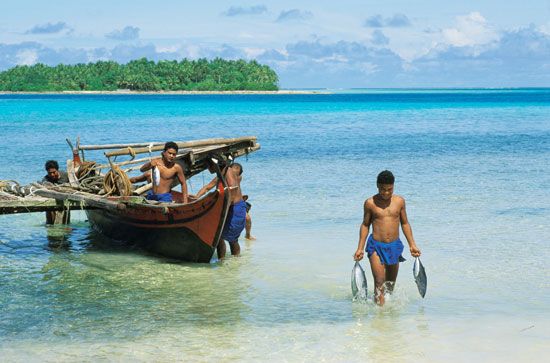
Daily life in rural villages, including those in the Banks Islands, is often centered around subsistence agriculture and the nakamal (men’s house). In these spaces, community members gather to drink kava and engage with the spiritual realm, maintaining a connection to their ancestors.4
What role do the Banks Islands play in Vanuatu’s economy and politics?
The Banks Islands play a localized but essential role in the economy of Vanuatu, primarily through their contribution to the nation’s agricultural exports. The inhabitants of the group, who are predominantly Melanesian, focus on the cultivation of copra and coffee for trade. This aligns with the broader national economic model, where subsistence agriculture remains a foundational base, supplemented by the production of export commodities like cocoa and timber.741
Regarding their political role, the Banks Islands are an administrative division of Vanuatu. As part of the national territory, they fall under the constitutional framework that governs the entire country, including the critical policy of customary land ownership. Under the 1980 constitution, all land in Vanuatu is held under ni-Vanuatu customary collective ownership, a principle that applies to the Banks Islands as it does to the rest of the archipelago. While the islands have airstrips on Mota Lava and Vanua Lava to facilitate interisland connectivity, they remain part of a nation that is actively working to balance traditional land rights with modern economic development, such as tourism and service sectors, which are centered primarily in the capital, Port-Vila.817
What is the history of European exploration and colonization of the Banks Islands?
The European exploration and colonization of the Banks Islands, located in northern Vanuatu, followed a trajectory similar to the broader history of the New Hebrides.
Exploration
The first European to visit the Banks Islands was the Portuguese navigator Pedro Fernández de Quirós in 1606. Over a century later, in 1793, the British naval officer William Bligh mapped the group. Bligh named the islands in honor of his patron, the naturalist Sir Joseph Banks.
Colonial Context
The colonization of the islands was tied to the complex political history of the New Hebrides. By the mid-19th century, the region faced increasing European intervention, driven by missionary activity, trade, and the controversial labour trade, which saw islanders recruited for plantations under often brutal conditions.
To resolve legal disputes and competing colonial interests, Britain and France established a joint naval commission in 1887. This arrangement eventually led to the creation of a condominium in 1906, which provided a framework for joint administration and settled issues such as land titles across the archipelago.
Sources
- Banks Islands — Encyclopædia Britannica
- New Hebrides Trench — Encyclopædia Britannica
- Vanuatu - Land — Encyclopædia Britannica
- Banks Islands — Merriam-Webster
- Vanua Lava — Encyclopædia Britannica
- Vanuatu - Cultural life — Encyclopædia Britannica
- Vanuatu - Economy — Encyclopædia Britannica
- Vanuatu — Encyclopædia Britannica
- Santa Maria — Encyclopædia Britannica
- British Virgin Islands - Economy — Encyclopædia Britannica
- Hawaii - Agriculture, forestry, and fishing — Encyclopædia Britannica
- Micronesia - Economy — Encyclopædia Britannica
- Pacific Islands - Foreign intervention and control — Encyclopædia Britannica
- Pacific Islands - Missionary activity — Encyclopædia Britannica
Published on · 3 min read