Barchan
Barchan sand dunes are typically found in open, inland desert regions across the world. These crescent-shaped landforms develop specifically in areas where…
In which types of environments are barchan sand dunes typically found?
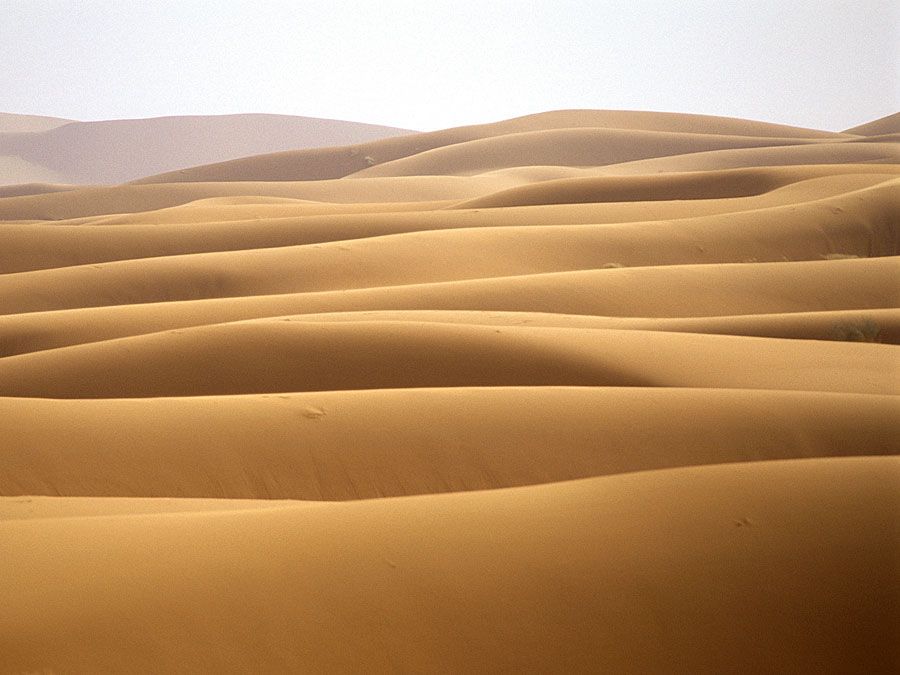
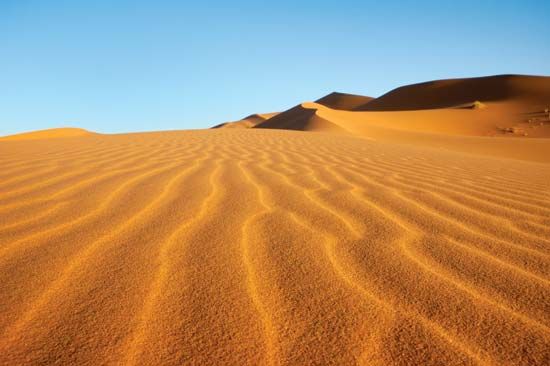
Barchan sand dunes are typically found in open, inland desert regions across the world. These crescent-shaped landforms develop specifically in areas where the regional wind blows consistently from one direction.12
Because they require a steady, unidirectional wind to maintain their characteristic shape, they are common in environments where sand supply is limited enough to allow for the formation of isolated dunes or chains of dunes across a plain. Beyond Earth, these dunes have also been identified on Mars, where similar wind conditions exist.12
What is the typical size range of barchan sand dunes?
Barchan sand dunes typically fall within the following size ranges:
- Height: 9–30 meters (30–100 feet)1
- Width: Up to 370 meters (1,214 feet) at the base, measured perpendicular to the wind1
These crescent-shaped landforms are characterized by their asymmetry, featuring a gentle windward slope and a steeper slip face on the leeward side. While they are among the most common dune types, their specific dimensions can vary based on local environmental factors, such as wind velocity and sand availability.12
How do barchan sand dunes compare to other types of sand dunes?
Barchan sand dunes are distinct from other dune types primarily due to their specific formation requirements and isolated nature. While many dunes form complex networks in large sand seas, barchans typically occur as small, isolated crescent-shaped bodies in areas where wind blows consistently from one direction.42
Key Comparisons
- Formation and Pattern: Unlike the extensive, interconnected networks of compound dunes (or draa) found in great sand seas, barchans are often solitary or arranged in simple chains. While compound dunes can reach heights of nearly 200 meters and span kilometers, barchans are significantly smaller, generally ranging from 9 to 30 meters in height.421
- Wind Dynamics: Barchans require a steady, unidirectional wind to maintain their characteristic crescent shape, with horns pointing downwind. In contrast, other dunes are shaped by more complex wind patterns. For example, “reversing dunes” form where seasonal winds blow from opposing directions, and “echo dunes” are deposited against topographic obstructions like hills or scarps, sometimes reaching heights exceeding 400 meters.42
- Surface Features: While barchans are true dunes, they must be distinguished from sand accumulations influenced by vegetation, which are common in humid coastal areas. Additionally, they differ from sand sheets—gently undulating surfaces of coarse sand that lack the high relief of true dunes.1
What are the distinctive features of a barchan sand dune?
A barchan is a distinct, crescent-shaped sand dune formed by wind blowing consistently from one direction. Its primary features include:
- Shape and Orientation: The dune is convex toward the wind, with its “horns” pointing downwind, marking the lateral advancement of the sand.1
- Asymmetry: In cross section, barchans are markedly asymmetrical. They feature a gentle windward slope and a much steeper leeward slope, known as the slip face.1
- Migration: These dunes are dynamic and migrate with the wind as sand is eroded from the windward side and deposited on the leeward side. Migration rates typically range from one to one hundred meters per year, with smaller dunes generally moving faster than larger ones.13
- Size: They typically reach heights of 9–30 meters (30–100 feet) and can be up to 370 meters (1,214 feet) wide at the base.1
- Occurrence: Barchans often appear as isolated dunes or in chains across open, inland desert plains.1
Sources
- barchan — Encyclopædia Britannica
- sand dune - Dune and sheet patterns — Encyclopædia Britannica
- barchan — Merriam-Webster
- sand dune — Encyclopædia Britannica
- sand dune - Winds — Encyclopædia Britannica
- sand dune - Formation and growth of dunes — Encyclopædia Britannica
Published on · 3 min read