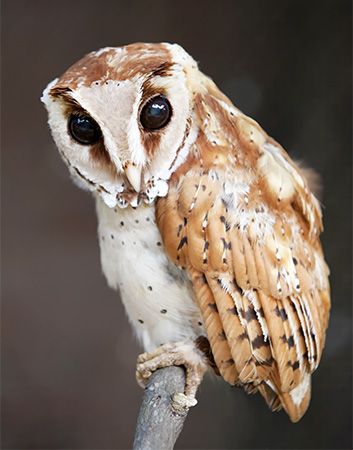
Barn Owl
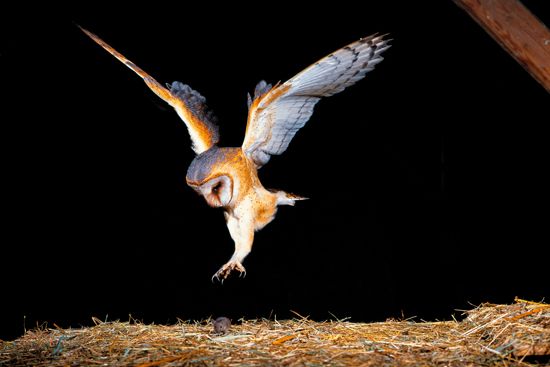
Barn owls are specialized nocturnal predators that primarily hunt small rodents, such as mice and shrews. They typically hunt over open areas like cultivated…
How do barn owls hunt and what is their primary diet?
Barn owls are specialized nocturnal predators that primarily hunt small rodents, such as mice and shrews. They typically hunt over open areas like cultivated land or grasslands using sustained, silent flight.123
Their hunting success relies on exceptional sensory adaptations:
- Auditory Precision: Barn owls possess highly acute hearing, aided by asymmetrical ear openings that allow them to localize the origin of sounds—such as the rustling of prey in grass—with extreme accuracy. This enables them to capture prey even in total darkness without visual aid.456
- Silent Flight: Their flight feathers feature a specialized nap that renders their movement perfectly noiseless, preventing the sound of their own flight from interfering with their ability to hear prey.5
- Capture Technique: Once a target is located, the owl drops into the grass to seize the animal with its strong, sharp-taloned feet. Prey is generally swallowed whole, and indigestible materials like fur and bones are later regurgitated as compact pellets.35
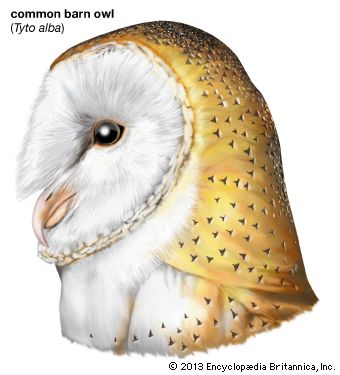
What is the breeding and nesting behavior of barn owls?
Barn owls exhibit flexible nesting habits, frequently utilizing cavities in buildings, towers, and hollow trees, or occasionally occupying old hawk nests. Unlike many other birds, they typically do not construct elaborate nests; instead, they may rely on accumulated prey remains and regurgitated pellets to provide a cushion for their eggs.81
Regarding their breeding cycle, barn owls are notable for their lack of a strict seasonal restriction, as they have been observed nesting during every month of the year, even at the northern edges of their range. However, their peak nesting activity generally occurs in the spring.8
Barn owls lay eggs at approximately two-day intervals, but hatching is not synchronized, meaning the oldest and youngest nestlings in a brood can hatch weeks apart. This strategy is linked to food availability: if prey populations are insufficient to support the entire brood, younger nestlings may starve, while the more aggressive older siblings survive. This ensures that at least some offspring reach maturity when prey is scarce.8
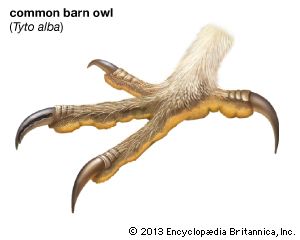
What role do barn owls play in controlling rodent populations?
Barn owls (Tyto alba) serve as significant natural predators that help regulate rodent populations within their habitats. By hunting over open areas such as grasslands and cultivated lands, these owls actively target small mammals that are often considered pests in agricultural settings.34
Because barn owls are highly efficient hunters that rely on sustained, silent flight to locate and capture prey, they can consume large numbers of rodents throughout the year. When a specific prey species becomes exceptionally abundant, barn owls may focus their hunting efforts on that population, which can provide a natural check on the growth of those rodent numbers. Their role as specialized predators makes them a valuable component of the ecosystem, as they help maintain a balance between prey availability and the surrounding environment.4
How do barn owls communicate and what sounds do they make?
Barn owls communicate primarily through sound, which is essential for activities such as territorial defense and mating rituals. Unlike many other owl species that produce deep, rhythmic hoots, the barn owl is well-known for its distinctive, raggedy wail—a high-pitched, piercing screech that can be quite startling to human listeners.91011
Beyond this signature call, barn owls utilize a variety of vocalizations to convey information. These sounds serve several critical functions:
- Territorial Defense: Vocalizations are used to mark and defend nesting areas, warning other owls to keep their distance.9
- Mating: Calls play a vital role in attracting potential mates and establishing pair bonds.9
- Communication: Owls use different pitches and rhythms to signal the presence of predators or to coordinate with other members of their species.910
In addition to vocalizations, barn owls may employ physical behaviors like bill-snapping to signal aggression or defense when threatened. These diverse methods of communication allow them to navigate their nocturnal environment effectively and maintain social structures within their habitat.109
Sources
- owl - Behaviour — Encyclopædia Britannica
- barn owl — Encyclopædia Britannica
- owl - Ecology — Encyclopædia Britannica
- barn owl — Merriam-Webster
- How Do Birds Hear? — Encyclopædia Britannica
- sound reception - Uses of hearing in birds — Encyclopædia Britannica
- owl - Form and function — Encyclopædia Britannica
- owl - Reproduction and development — Encyclopædia Britannica
- Why do owls hoot? — Encyclopædia Britannica
- 15 Bird Sounds and the Birds Who Make Them | Screech — Merriam-Webster
- screech owl — Merriam-Webster
Published on · 3 min read