Bay Owl
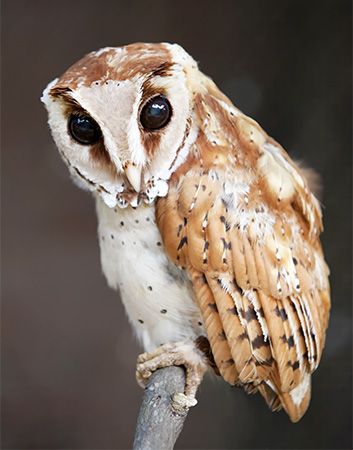
The bay owl (Phodilus badius) is an uncommon and atypical owl belonging to the family Tytonidae, which also includes barn owls.
What is Bay owl?
The bay owl (Phodilus badius) is an uncommon and atypical owl belonging to the family Tytonidae, which also includes barn owls.1
Native to Southeast Asia, this bird is known for being entirely nocturnal and retiring in nature. Its physical appearance is distinguished by a heart-shaped facial disk featuring two earlike extensions that assist in sound reception. The diet of the bay owl consists of insects, lizards, frogs, and small mammals and birds. Additionally, a related bird known as the Congo bay owl is found in Africa, though it is even less understood and sometimes classified as a distinct species.1
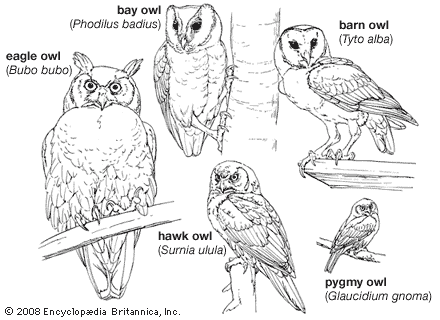
How do heart-shaped facial disks help owls hunt?
The heart-shaped facial disk found in many owls is a specialized adaptation that significantly enhances their ability to hunt, particularly in low-light conditions. This structure is composed of a ruff of stiff, papery feathers that serves to concentrate sound toward the bird’s ear openings.2
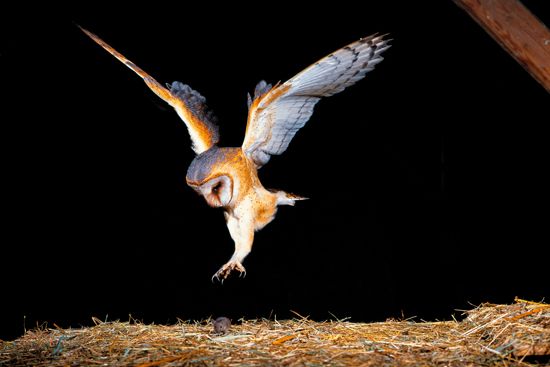
The disk functions as a parabolic reflector, gathering and funneling sound waves into the ears, which are located behind the facial feathers. Because the feathers are lacy and permeable to sound, they allow the owl to capture subtle noises—such as the rustle of a mouse—with high precision.32
Furthermore, many owls possess asymmetrical ear openings, which, when combined with the sound-focusing properties of the facial disk, allow them to localize the origin of a sound in two planes simultaneously. This enables the owl to determine both the horizontal and vertical position of prey with extreme accuracy, even in total darkness. Additionally, a movable flap of skin known as an operculum may act as a baffle to further focus these sounds, ensuring the owl can pinpoint its target before striking.23
What are the main differences between barn owls and bay owls?
While both the bay owl (Phodilus badius) and the barn owl belong to the family Tytonidae, they exhibit distinct differences in distribution, behavior, and habitat usage:
- Distribution: The barn owl is one of the most widely distributed birds in the world, found on nearly every continent. In contrast, the bay owl is an uncommon species restricted to Southeast Asia, with a related, poorly understood population (the Congo bay owl) located in Africa.15
- Hunting and Habitat: Barn owls are typically associated with open habitats like grasslands, where they hunt by sustained flight to catch rodents. Bay owls are more retiring and nocturnal, often found in dense forest environments. Their hunting behaviors also differ; for example, bay owls have been documented stationing themselves in caves to capture bats as they emerge at dusk.45
- Nesting: Barn owls frequently utilize man-made structures and buildings for nesting. Bay owls are generally more elusive, and their specific nesting habits are less commonly associated with human-altered environments compared to the highly adaptable barn owl.65
Why are bay owls considered nocturnal and retiring?
The bay owl (Phodilus badius) is characterized as nocturnal and retiring primarily due to its specialized ecological niche and behavioral adaptations. Like many other owls, these traits serve as a survival strategy, providing protection from potential threats and allowing the species to thrive in its dense forest habitats in Southeast Asia.41
Their retiring nature is reflected in their elusive behavior, such as their unique habit of perching vertically on tree trunks rather than on horizontal branches, which helps them remain inconspicuous within the foliage. Furthermore, their nocturnal activity is tied to their specific hunting strategies; for instance, they have been documented waiting within caves to ambush bats as they emerge at dusk. By remaining active under the cover of darkness and maintaining a low profile during the day, bay owls minimize their visibility to predators and competitors, a common evolutionary advantage for many owl species.7541
Sources
- bay owl — Encyclopædia Britannica
- How Do Birds Hear? — Encyclopædia Britannica
- owl - Form and function — Encyclopædia Britannica
- owl - General features — Encyclopædia Britannica
- owl - Ecology — Encyclopædia Britannica
- owl - Reproduction and development — Encyclopædia Britannica
- owl - Locomotion — Encyclopædia Britannica
Published on · 3 min read