Basellaceae
Basellaceae, commonly known as the Madeira-vine family, is a small family of flowering plants within the order Caryophyllales. This group consists of…
What is Basellaceae?
Basellaceae, commonly known as the Madeira-vine family, is a small family of flowering plants within the order Caryophyllales. This group consists of approximately 4 genera and 15 to 25 species of herbaceous perennial vines, which are primarily found in the tropical regions of the New World.12
Key characteristics of these plants include:
- Physical Traits: They typically feature fleshy, untoothed leaves and tuberous rootstocks. Their flowers, which appear in clusters, are generally red or white.1
- Distinction: While sometimes historically grouped with the Chenopodiaceae, the family is distinguished by having a calyx and corolla that are dissimilar in appearance.2
- Uses: Several species are cultivated for their utility or aesthetic appeal. The Madeira-vine is often grown as an ornamental, while Malabar spinach (Basella alba) is widely recognized as a popular hot-weather substitute for common spinach.1
What is Malabar spinach and how is it used?
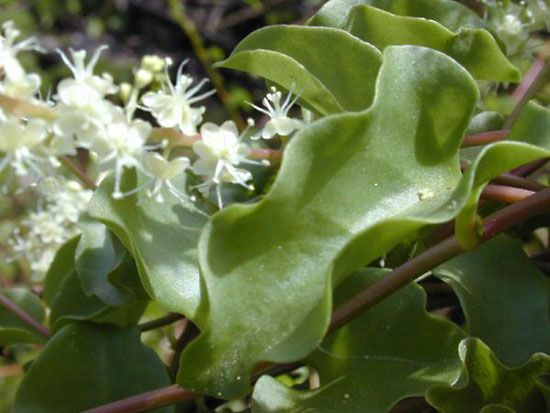
Malabar spinach (Basella alba), also known as Malabar nightshade, is an Asiatic climbing plant characterized by its fleshy, shining leaves and small white flowers. While it shares the name “spinach” with the hardy leafy annual Spinacia oleracea, it is a distinct, vining herb that thrives in tropical climates.34
Regarding its use, Malabar spinach is primarily cultivated as a potherb in tropical regions, where it is valued for its edible leaves. In temperate regions, it is often grown as an ornamental vine. Unlike some other leafy greens that require specific preparation to be safe, Malabar spinach is versatile and can be eaten either raw or cooked.34
What are the characteristics of the order Caryophyllales?
The order Caryophyllales is a diverse group of dicotyledonous flowering plants comprising 37 families and approximately 12,000 species. Occupying a basal position within the core eudicots, the order exhibits remarkable morphological and ecological variety.56
Key Characteristics
- Habit and Adaptation: Members range from trees and shrubs to lianas, succulents, and carnivorous plants. Many are specialized for extreme environments, utilizing C4 or CAM photosynthesis to thrive in saline or desert-like habitats.576
- Pigmentation: A unique evolutionary feature is the presence of betalains—pigments found only in this order—which replace anthocyanins in many families.6
- Floral Morphology: Flowers vary from large and showy to small and reduced. In the “core” Caryophyllales, true petals have been lost; structures appearing as petals are often derived from stamens.76
- Economic Importance: The order is a vital source of food, including spinach, quinoa, and rhubarb, as well as popular ornamentals like cacti and carnations.5
How do climbing vines adapt to tropical environments?
Climbing vines, particularly lianas, have evolved specialized strategies to thrive in the competitive environment of tropical rainforests. Because light is a limiting factor at the forest floor, these plants avoid the high energy investment required to develop thick, self-supporting trunks. Instead, they utilize the stems of other plants for structural support to reach the well-lit canopy.89
Key adaptations include:
- Climbing Mechanisms: Many vines use specialized devices such as grapnel-like hooks or tendrils to secure themselves to host trees as they ascend toward the sunlight.810
- Structural Parasitism: By relying on host trees, lianas can grow to massive sizes—reaching up to 100 meters in length—while dedicating their energy to leaf production and rapid vertical growth rather than trunk development.9
- Resource Exploitation: Some vines are hollow, allowing them to conduct water efficiently through the plant. They also play a vital role in the ecosystem by providing food sources like sap, nectar, and fruit for various animals.9
- Successional Resilience: Lianas are highly adapted to the dynamic nature of the rainforest; they often loop through multiple tree crowns, allowing them to persist even as their original supporting trees die and decay.8
Sources
- Basellaceae — Encyclopædia Britannica
- Basellaceae — Merriam-Webster
- Malabar nightshade — Merriam-Webster
- Spinach — Encyclopædia Britannica
- Caryophyllales — Encyclopædia Britannica
- Caryophyllales - Characteristic morphological features — Encyclopædia Britannica
- Caryophyllales - Evolution — Encyclopædia Britannica
- Tropical rainforest - General structure of the rainforest — Encyclopædia Britannica
- liana — Encyclopædia Britannica
- vine — Encyclopædia Britannica
- reptile - Clinging and climbing — Encyclopædia Britannica
Published on · 3 min read