Basket-of-gold
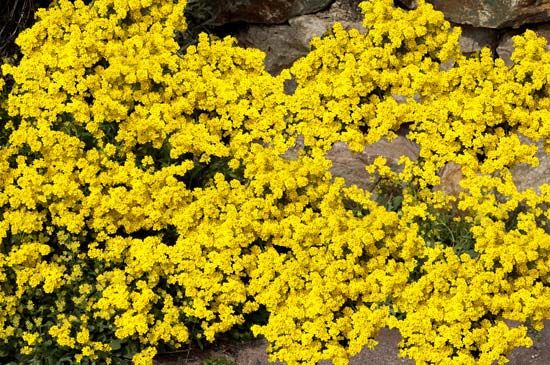
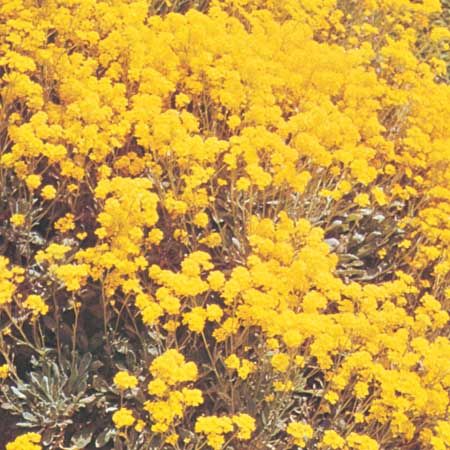
Basket-of-gold (Aurinia saxatilis) is an ornamental perennial plant belonging to the mustard family (Brassicaceae).
What is basket-of-gold?
Basket-of-gold (Aurinia saxatilis) is an ornamental perennial plant belonging to the mustard family (Brassicaceae).12
Native to the sunny, rocky regions of central and southern Europe, this plant is characterized by its low-growing, dense evergreen mat of gray-green foliage. It is widely recognized for its vibrant clusters of tiny, golden-yellow flowers, making it a popular choice for rock gardens where it thrives in thin soils. Previously known by the synonym Alyssum saxatile, it has been cultivated for its aesthetic appeal since at least the early 19th century.12
What are other common plants found in rock gardens?
Beyond the basket-of-gold, many other plants are well-suited for the unique conditions of a rock garden. These spaces often feature rocky slopes or crevices that require hardy, adaptable species.
Common plants for rock gardens include:
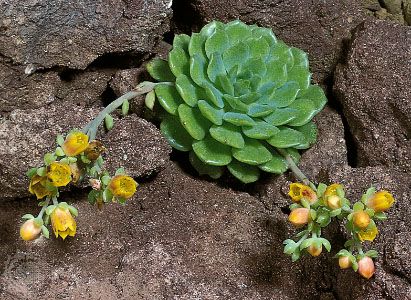
- Stonecrops (Sedum): A genus of about 600 species of succulent plants. Low-growing varieties are particularly popular for their ability to thrive in rocky environments and their showy, clustered flowers.3
- Dianthuses: Often referred to as “pinks,” these plants are noted for performing exceptionally well in limestone-based rock gardens.4
- Rockroses: These are excellent choices for areas of the garden that receive significant sun exposure.4
- Primulas: These primroses are ideal for the cooler, north-facing aspects of a rock garden where they can enjoy more shade.4
These plants are generally chosen for their ability to fill vertical cracks or cover rocky surfaces, helping to create a naturalistic, mountainous aesthetic.4
How does the mustard family differ from other plant families?
The mustard family, or Brassicaceae, is distinguished from other plant families by several unique morphological and chemical characteristics.
Distinctive Floral Structure
The most recognizable feature of the family is its cruciform (cross-shaped) flowers, which consist of four petals and four sepals. Because of this arrangement, members are commonly referred to as “crucifers.” Additionally, the flowers typically feature a specific stamen arrangement of four long and two short stamens, with a two-chambered ovary positioned above the other floral parts.8
Chemical Composition
A defining chemical trait of the Brassicaceae is the presence of glucosinolates, also known as mustard oils. These sulfur-containing compounds provide the family’s characteristic pungent smell and peppery taste. While these compounds serve as a defense mechanism against many herbivores, they are notably absent in most other plant families, with the exception of the order Brassicales and the unrelated family Putranjivaceae.89
Fruit Development
The family is also identified by its dry, podlike fruits. Depending on their length, these are classified as either siliques (long and thin) or silicles (short and rounded), which often contain a partition between the two halves.810
What are the benefits of planting evergreen ground covers?
Evergreen ground covers serve as versatile alternatives to traditional turf lawns, particularly in environments where grass struggles to thrive. By incorporating these perennial plants, gardeners can achieve several aesthetic and practical benefits:
- Design Versatility: Ground covers introduce a variety of deep greens, bronzes, and other colors that provide pleasing visual contrasts to the uniform green of a standard lawn.11
- Adaptability: They are ideal for areas where grasses perform poorly, allowing for the cultivation of greenery in challenging garden spots.11
- Design Integration: These plants can be used as standalone grass substitutes or combined with grassy areas to create specific, intentional landscape designs.11
It is important to note that while ground covers offer significant aesthetic value, they are generally less durable than lawns and are not designed to withstand heavy foot traffic or intensive outdoor activities.11
Sources
- basket-of-gold — Encyclopædia Britannica
- basket-of-gold — Merriam-Webster
- stonecrop — Encyclopædia Britannica
- gardening - Rock gardens — Encyclopædia Britannica
- rock plant — Merriam-Webster
- rock garden — Merriam-Webster
- Perennial — Encyclopædia Britannica
- Brassicaceae — Encyclopædia Britannica
- Brassicales — Encyclopædia Britannica
- brassica — Encyclopædia Britannica
- gardening - Lawns and ground covers — Encyclopædia Britannica
Published on · 3 min read