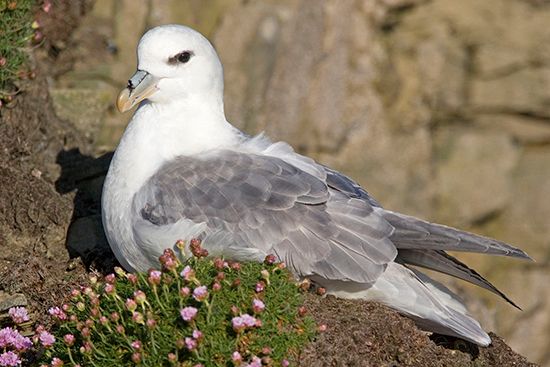
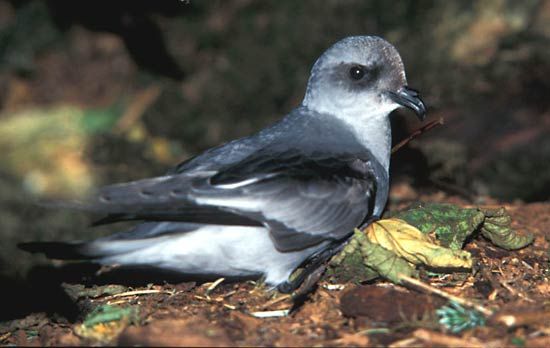
Shearwater
Shearwaters are long-winged, oceanic birds belonging to the family Procellariidae, which also includes fulmars and petrels. Their defining characteristics…
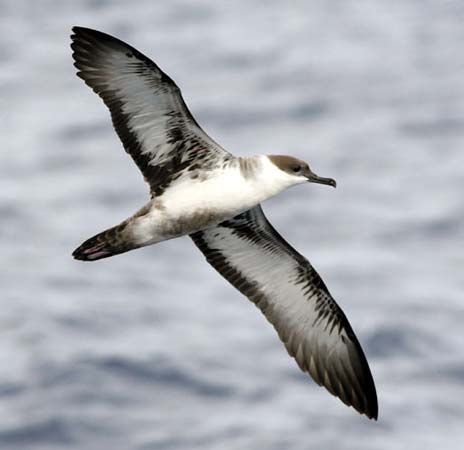
What are the defining characteristics of shearwater birds?
Shearwaters are long-winged, oceanic birds belonging to the family Procellariidae, which also includes fulmars and petrels. Their defining characteristics include:12
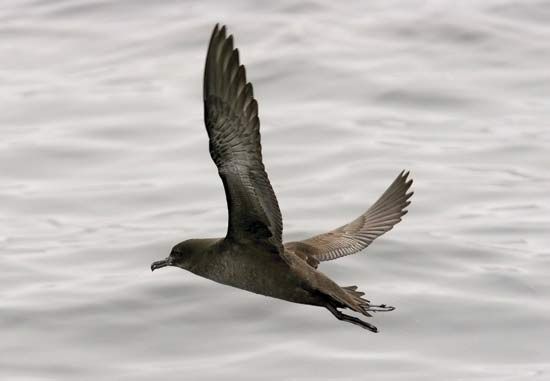
- Physical Appearance: They are generally drab, slender-billed birds ranging from 22 to 75 cm in length. As members of the order Procellariiformes, they possess tubular nostrils and bills covered with horny plates.12
- Flight Behavior: The name “shearwater” refers to their characteristic habit of gliding on stiff wings along the troughs of ocean waves.1
- Nesting and Breeding: They typically nest in large colonies within burrows on offshore islands and coastal hills. They lay a single white egg, which is incubated by both parents.12
- Feeding Habits: They primarily feed on small fish and crustaceans near the water’s surface, occasionally making short dives to capture prey.3
- Navigation: These birds are known for remarkable homing abilities, with some species capable of traveling thousands of miles across oceans to return to their nesting sites.4
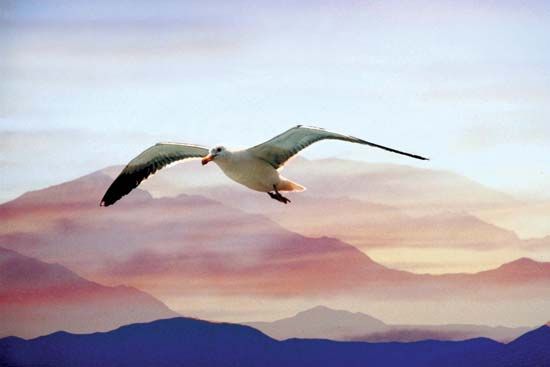
Where are shearwaters typically found and what are their habitats like?
Shearwaters are primarily pelagic, or open-sea, birds that spend the vast majority of their lives roaming vast expanses of the world’s oceans. Their distribution is widespread, encompassing the North Atlantic, eastern South Atlantic, the Mediterranean, and much of the Pacific Ocean.15
Breeding Habitats
While they are oceanic for most of the year, shearwaters return to land specifically to breed. Their nesting habitats are characterized by:
- Offshore Islands and Coastal Hills: They typically establish large, densely populated colonies in these areas.14
- Burrows: Most species dig burrows in soft soil to serve as nests, which provide protection for their single egg and developing chick.14
- Nocturnal Activity: To avoid predators and navigate safely, many burrowing shearwaters visit their nesting colonies only at night.14
Migratory Range
Shearwaters are known for their extraordinary geographic range. For example, the short-tailed shearwater breeds on islands in the Bass Strait and Tasmania before migrating across the Pacific to spend the summer in the North Pacific and Arctic Ocean.15
What are some of the different species of shearwaters and how do they differ?
There are approximately 20 species of shearwaters within the genus Puffinus, all characterized by their slender bills and long wings used for gliding over ocean waves. While they share similar physical traits, they differ significantly in size, geographic range, and conservation status.1
Key species include:
- Sooty Shearwater (P. griseus): A larger species (approx. 50 cm long) that breeds near Australia, New Zealand, and southern South America, wintering across the Atlantic and Pacific oceans.1
- Manx Shearwater (P. puffinus): A large species (30–37 cm) that breeds on islands throughout the North Atlantic.1
- Short-tailed Shearwater (P. tenuirostris): Also known as the muttonbird or whalebird, this 40 cm bird breeds in the Bass Strait and Tasmania. It is notable for its extensive migration, circumnavigating the Pacific Ocean annually.16
- Newell’s Shearwater (P. newelli): A smaller species (33 cm) found in the North Pacific. It is currently classified as endangered due to habitat loss and natural disasters.1
- Townshend’s and Balearic Shearwaters: Both are 33 cm in length and classified as critically endangered, facing severe threats from predation and commercial fishing activities.1
How do shearwaters’ breeding and nesting habits compare to other seabirds?
Shearwaters exhibit distinct breeding and nesting habits compared to other seabirds, primarily characterized by their nocturnal, burrow-nesting lifestyle and long-distance foraging strategies.17
Key Comparisons
- Nesting Environment: While many seabirds—such as gulls, terns, and various pelecaniforms—nest on open ground, cliff ledges, or in trees, most shearwaters dig burrows in soft soil on offshore islands and coastal hills. This behavior provides protection for their single egg and developing chick.1897
- Nocturnal Activity: Unlike many diurnal seabirds that are active at their colonies throughout the day, shearwaters are largely nocturnal at their breeding grounds. They move in and out of their burrows at night, which helps them avoid predators and navigate their colonies, where they rely on voice, touch, and smell for mate recognition rather than visual cues.17
- Parental Care and Foraging: Like other members of the order Procellariiformes, shearwaters exhibit a unique feeding strategy. Parents do not feed each other; instead, they take turns incubating for several days at a time while the other forages at sea. They feed their chicks an oily, nutrient-rich broth of semidigested marine organisms. Unlike some species that feed their young for extended periods after fledging, shearwater parents desert their chicks before they leave the nest, leaving the young to undergo a period of fasting and thinning before their first flight.7
Sources
- Shearwater — Encyclopædia Britannica
- Migration - Navigation and orientation — Encyclopædia Britannica
- Procellariiform - Annotated classification — Encyclopædia Britannica
- Procellariiform - Feeding habits — Encyclopædia Britannica
- Procellariiform - Reproduction and growth — Encyclopædia Britannica
- Migration - In coastal and pelagic regions — Encyclopædia Britannica
- Charadriiform - Gulls (suborder Lari) — Encyclopædia Britannica
- Pelecaniform - Nests, eggs, and young — Encyclopædia Britannica
- Charadriiform - Auks (suborder Alcae) — Encyclopædia Britannica
Published on · 4 min read