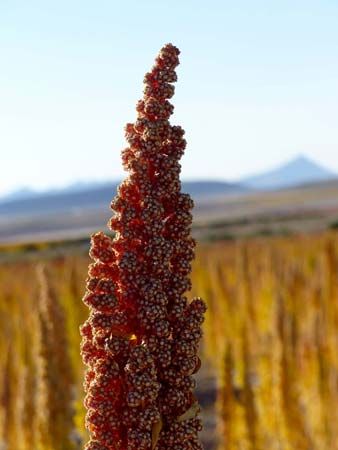
Bassia
Bassia plants, a genus within the Amaranthaceae family, exhibit specific adaptations that allow them to thrive in their native Eurasian environments. A…
How are Bassia plants adapted to their native environments?
Bassia plants, a genus within the Amaranthaceae family, exhibit specific adaptations that allow them to thrive in their native Eurasian environments. A primary adaptation is their ability to tolerate saline soil conditions, which enables them to inhabit environments that are often inhospitable to other vegetation.1
Physically, these plants are frequently covered with dense hairs, a feature that can help reduce water loss and protect the plant in arid or exposed conditions. Their growth habit as herbs or subshrubs, combined with narrow, sessile leaves, further supports their survival in diverse habitats. Additionally, some species have evolved chemical defenses, as they can be poisonous to grazing animals, which serves as a protective mechanism against herbivory.1
What are the defining characteristics of plants in the Bassia genus?
The Bassia genus consists of approximately 10 species of annual plants within the Amaranthaceae family, native primarily to Eurasia. While some older sources may classify them under the family Chenopodiaceae, they are currently recognized as members of the amaranth family.12
Key characteristics of the genus include:
- Growth Habit: Members are typically herbs or subshrubs, often covered with dense hairs.1
- Leaves: The leaves are narrow and sessile (lacking a leafstalk), arranged alternately along the stems.1
- Flowers: They produce bisexual flowers in terminal spikes, which often feature distinctive hooked or conical appendages.1
- Fruit and Seeds: The fruits are achenes containing small brown seeds.1
- Environmental Tolerance: Many species are notable for their ability to thrive in saline soil conditions.1
- Toxicity: Several species can be poisonous to grazing animals, particularly sheep.1
Several species, such as the five-horn smotherweed (Bassia hyssopifolia), have become invasive species in regions outside their native range, including the Americas.1
What are the main threats to Bassia plants in their native habitats?
The provided information does not specify the primary threats to Bassia plants within their native Eurasian habitats. While the genus is known for its resilience—specifically its ability to tolerate saline soils and its potential toxicity to grazing animals—the current knowledge base does not detail specific environmental or anthropogenic pressures that threaten these plants in their natural range.1
What are some of the most well-known species within the Bassia genus?
Within the Bassia genus, which comprises approximately 10 species of annual plants, two of the most well-known species are recognized primarily for their status as invasive plants in the Americas:
- Five-horn smotherweed (Bassia hyssopifolia): This species is a notable invasive plant that has been introduced to regions outside its native Eurasian range, including North America.1
- Hairy smotherweed (Bassia hirsuta): Similar to the five-horn smotherweed, this species is also recognized for its invasive presence in the Americas.1
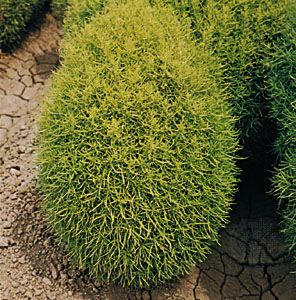
It is important to note that some plants previously associated with this genus are now classified elsewhere. For example, the summer cypress (Kochia scoparia), often grown as an ornamental hedge and known for its vibrant autumn foliage, was formerly placed in the genus Bassia but is no longer considered a member of it.1
Sources
- Bassia — Encyclopædia Britannica
- list of plants in the family Amaranthaceae — Encyclopædia Britannica
- Bassia — Merriam-Webster
Published on · 2 min read