Bat-eared Fox
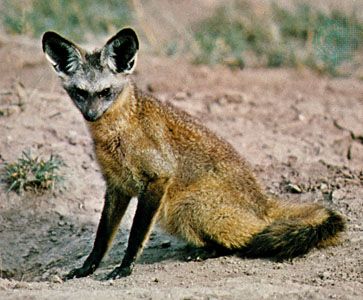
The bat-eared fox (Otocyon megalotis) is a unique member of the dog family (Canidae) native to the arid, open regions of eastern and southern Africa.
What is bat-eared fox?
The bat-eared fox (Otocyon megalotis) is a unique member of the dog family (Canidae) native to the arid, open regions of eastern and southern Africa.12
Physically, it resembles the red fox but is distinguished by its exceptionally large ears, which are used for thermoregulation and detecting prey. It typically features a yellowish-gray coat with black markings on its face, legs, ears, and tail. Measuring about 80 cm (32 inches) in length—including its tail—it weighs between 3 and 4.5 kg (6.6–10 pounds).1
A notable biological feature of the bat-eared fox is its dentition; it possesses 48 teeth, which is six more than any other canid. These specialized teeth support its diet, as the animal is primarily an insectivore that feeds heavily on termites. These foxes are typically solitary or live in small groups, with a gestation period lasting 60 to 70 days for litters of two to five young.1
Why are the ears of a bat-eared fox so large?
The large ears of the bat-eared fox serve two primary biological functions essential for survival in their arid African habitats.
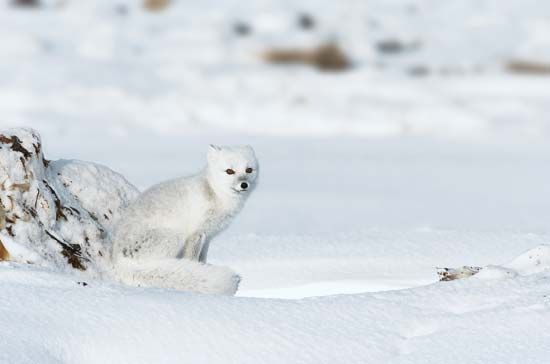
First, these oversized ears act as highly effective heat regulators. By providing a large surface area, they allow the animal to dissipate body heat more efficiently, which is critical for maintaining a stable internal temperature in hot climates. This adaptation stands in stark contrast to species like the Arctic fox, which possess much smaller ears to minimize heat loss in freezing environments.1
Second, the ears are vital for detecting sound. Like other canines, the bat-eared fox relies on its acute sense of hearing to locate prey, which consists primarily of insects such as termites.41
How do bat-eared foxes use their extra teeth?
The bat-eared fox possesses 48 teeth, which is six more than any other canid. While most canines have 42 teeth featuring large, fanglike canines and molars designed for crushing bones, the bat-eared fox has evolved a specialized dentition to support its diet as an insectivore that feeds primarily on termites.14
What other animals live in the arid regions of Africa?
Arid regions in Africa, such as the Sahara and the Kalahari Desert, support a diverse range of wildlife adapted to harsh, water-scarce environments.
Mammals
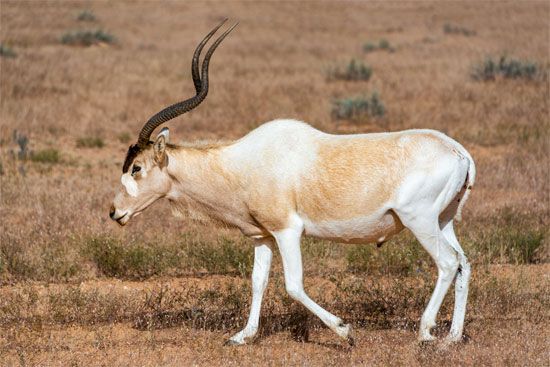
These deserts are home to various antelopes and gazelles, including the addax, gemsbok (oryx), dorcas gazelle, and springbok. Other notable mammals include:
- Predators: Lions, cheetahs, leopards, spotted hyenas, and jackals.
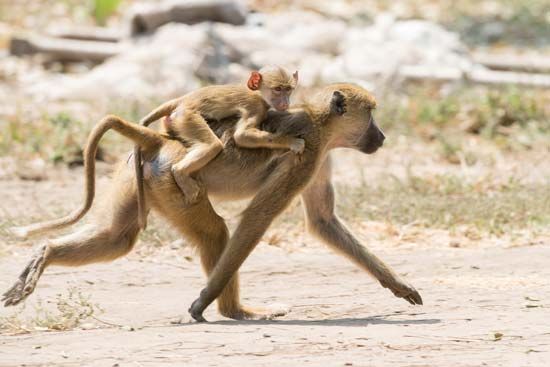
- Small Mammals: Gerbils, jerboas, Cape hares, hedgehogs, and baboons.
Reptiles and Birds
- Reptiles: The landscape features various lizards, such as skinks and chameleons, as well as snakes like cobras and vipers.
- Birds: The ostrich is a prominent desert bird. Other species include raptors like eagles and vultures, as well as sand larks and ravens.
Aquatic and Invertebrate Life
In isolated oases and drainage basins, one can find fish such as catfish, along with frogs and toads. Invertebrates like snails, crustaceans, and various insects also play vital roles in these ecosystems.
Sources
- bat-eared fox — Encyclopædia Britannica
- bat-eared fox — Merriam-Webster
- mammal - Food habits — Encyclopædia Britannica
- canine - Form and function — Encyclopædia Britannica
- Sahara - Animal life — Encyclopædia Britannica
- Arabian Desert - Animal life — Encyclopædia Britannica
- addax — Encyclopædia Britannica
- Kalahari Desert - Animal life — Encyclopædia Britannica
- Savanna - Environment — Encyclopædia Britannica
- Savanna - Threats — Encyclopædia Britannica
- Kaukauveld — Encyclopædia Britannica
Published on · 2 min read