Black Bear
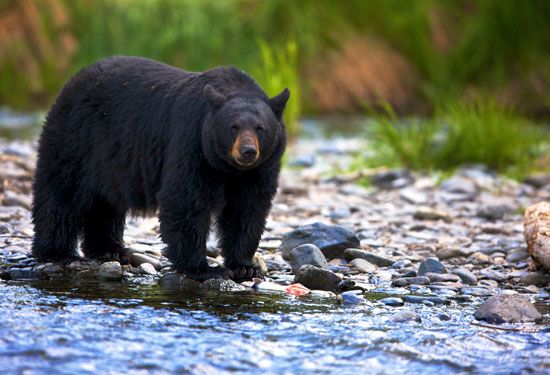
The American black bear (Ursus americanus) is a large, stocky animal characterized by a short tail, a small head supported by a strong neck, and small…
What are the physical characteristics of black bears?
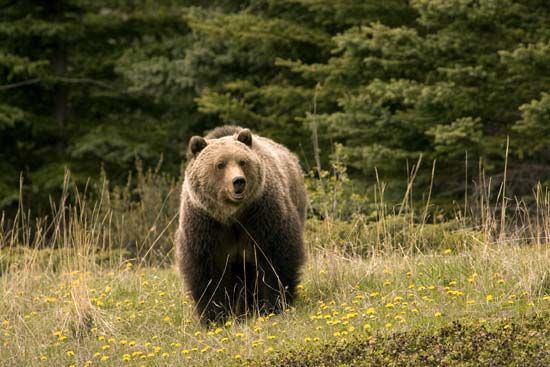
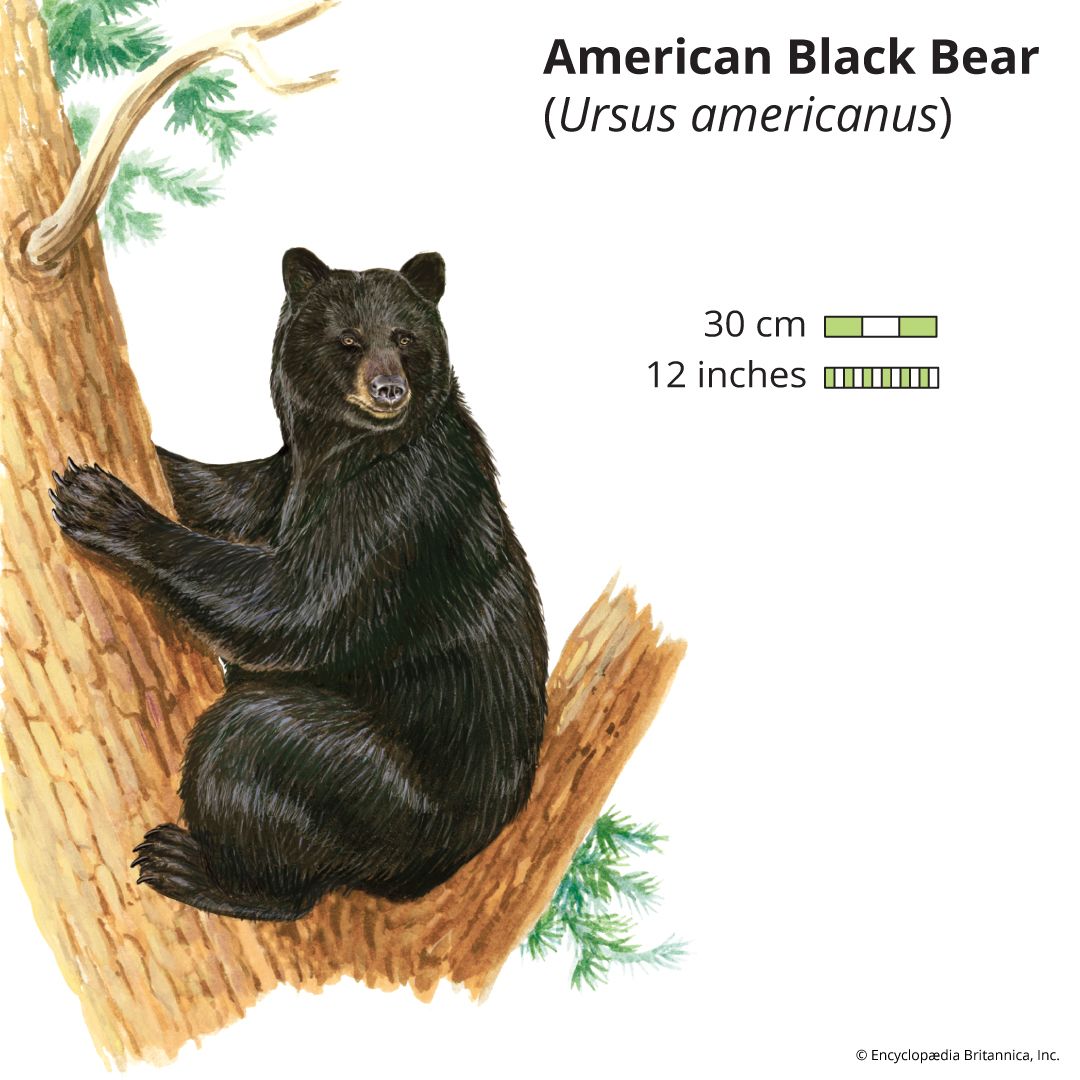
The American black bear (Ursus americanus) is a large, stocky animal characterized by a short tail, a small head supported by a strong neck, and small, rounded ears. Adults typically range from 1.3 to 1.9 metres (4.3 to 6.2 feet) in length and weigh between 60 and 300 kg (132 to 661 pounds), though large males can reach 2 metres (6.6 feet) and 409 kg (902 pounds). Males are significantly larger than females, often weighing up to 70 percent more.1
Their coat color is highly variable—even within a single litter—ranging from black to brown, cinnamon, or blue-gray. Some individuals possess white chest markings, occasionally in a V-shape. Physically, they are adapted for movement with nonretractile, curved claws and utilize plantigrade locomotion, meaning they walk on the soles of their feet. While their sight and hearing are relatively poorly developed, they possess a strong sense of smell and are capable of climbing trees and swimming effectively.12
How long do black bears live, and what is their lifecycle like?
American black bears (Ursus americanus) can live more than 20 years in the wild, though their lifespan is often shortened in areas near human habitation due to factors such as hunting, poaching, and vehicle collisions.1
The lifecycle of the black bear is marked by several distinct stages:
- Breeding: Mating occurs in the spring, peaking in June and July. Black bears are promiscuous, and females typically breed every second or third year.1
- Gestation and Birth: Through a process called delayed implantation, the fertilized egg does not implant until November or December. Actual gestation lasts 60–70 days, with one to four cubs born in the winter den during January or February.12
- Development: Cubs are born blind, toothless, and fully furred. They remain with the mother for approximately 16 months. While the mother is highly protective, young cubs are vulnerable to predation by other animals, including wolves, coyotes, and other black bears.12
- Dormancy: To survive winter, bears accumulate significant body fat during the fall. They spend the winter in dens, a period of dormancy that is critical for their survival and reproductive success.1
What is the diet of a black bear, and how does it change seasonally?
Although classified as carnivores, black bears are omnivorous animals with a diet that shifts significantly throughout the seasons to meet their nutritional needs.1
Their seasonal dietary habits are as follows:
- Spring: As they emerge from winter dormancy, bears consume emerging plants and the carcasses of animals that died during the winter. In some regions, they also act as strong predators, frequently hunting moose calves and deer fawns.1
- Summer: Fruits become the dominant food source.1
- Fall: The diet consists primarily of fruit and mast, particularly acorns and beechnuts. This period is critical, as bears must accumulate large quantities of body fat to survive winter fasting.1
As opportunistic feeders, they also consume roots, pine cones, ants, and honey. Near human settlements, they readily adapt to alternate sources like garbage or food handouts.1
Where do black bears typically live, and what is their habitat like?
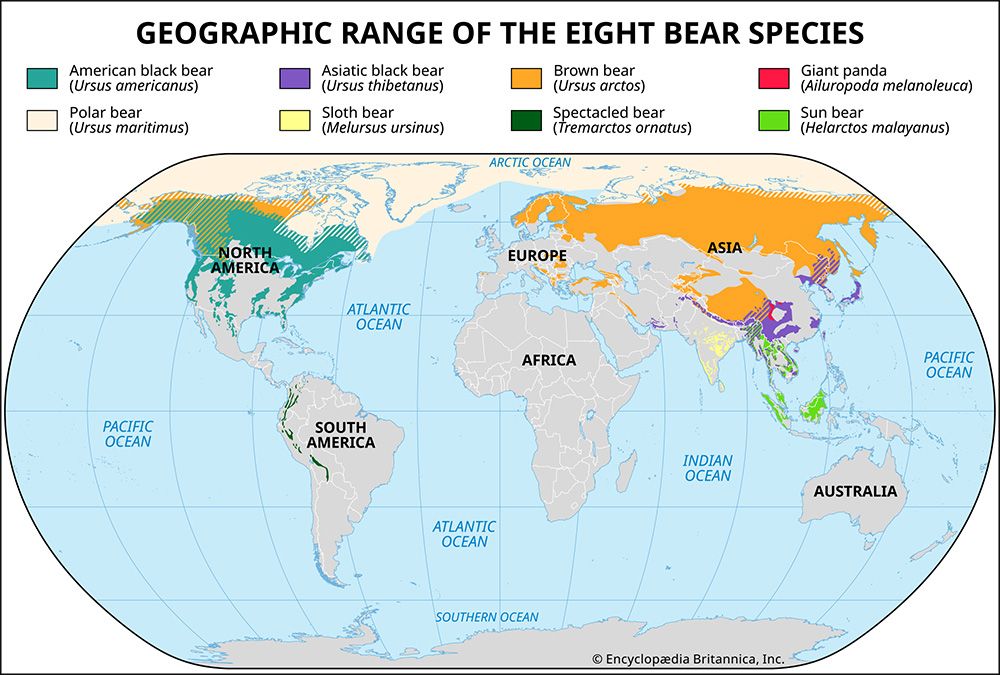
American black bears (Ursus americanus) are primarily found in the forests of North America, with their range extending into parts of northern Mexico.1
Habitat Characteristics
Black bears are highly adaptable and thrive in diverse environments, though they are most commonly associated with forested regions. Their habitat requirements are largely dictated by the availability of food, which influences the size of their home ranges. In areas where food is plentiful, home ranges are smaller, while in regions where resources are scarce, bears must roam over much larger areas—typically between 40 and 200 square km (15 to 77 square miles).12
During the winter, these bears seek out specific denning sites to enter a state of dormancy. These dens can be located in:
- Rock crevices or underground burrows1
- Hollow trees or under tree roots1
- Brush piles or open-ground beds1
While they are naturally active during the day, black bears living near human activity—such as campsites or dumps—may shift to a nocturnal schedule to avoid human contact.1
Sources
- black bear — Encyclopædia Britannica
- Asiatic black bear — Encyclopædia Britannica
- 9 of the World’s Deadliest Mammals - Bears (Family Ursidae) — Encyclopædia Britannica
- bear: Top Questions — Encyclopædia Britannica
- bear - Natural history — Encyclopædia Britannica
Published on · 3 min read