Bateleur
The bateleur (Terathopius ecaudatus) is a small eagle native to Africa and Arabia, measuring approximately 60 cm (2 feet) in length. Its physical appearance…
What are the distinctive physical characteristics of the bateleur?
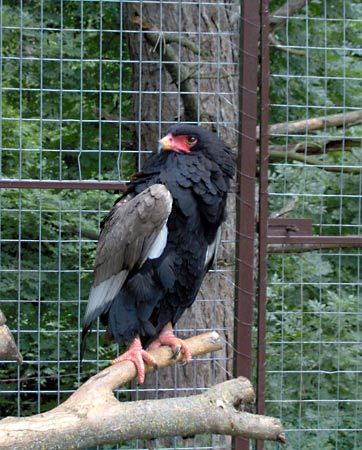
The bateleur (Terathopius ecaudatus) is a small eagle native to Africa and Arabia, measuring approximately 60 cm (2 feet) in length. Its physical appearance is characterized by several distinct features:
- Plumage: It possesses a glossy black head, neck, and underparts, contrasted by a reddish-brown back and shoulders that range from whitish to red-brown. Its wings are black on top and white underneath, noted for being long, pointed, and exceptionally wide.
- Head and Face: The bird has a bare red face and a short, full crest that gives its head a large appearance.
- Tail and Limbs: The tail is notably short, measuring only 10 cm (4 inches) in adults, while its feet are a powerful red-orange color.
The name “bateleur,” meaning “tumbler” in French, reflects the bird’s habit of performing aerial acrobatics, such as somersaults and loud wing-clapping, while in flight.1
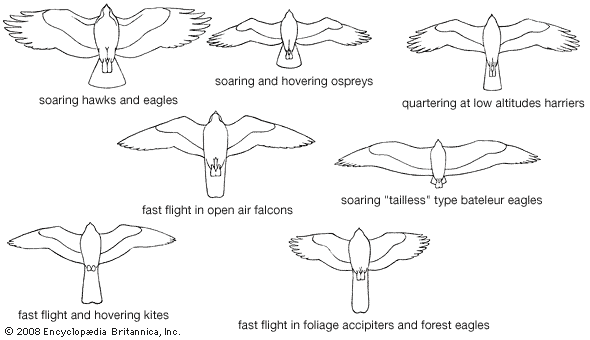
How does the bateleur’s unique flying style contribute to its name?
The name “bateleur,” which is French for “tumbler” or “juggler,” is derived directly from the bird’s distinctive and highly active aerial behavior.12
While many raptors rely on flapping flight, the bateleur is specialized for near-constant gliding, often remaining on the wing for much of the day without the need for flapping. Its unique flying style involves performing impressive aerial acrobatics, such as turning somersaults in the air, diving with a screaming sound, and clapping its wings loudly.13
Because of its exceptionally short tail, the bird steers by sideways tilting or “canting,” a maneuver that contributes to its agile and tumbling appearance in the sky. This combination of constant, buoyant gliding and frequent, dramatic mid-air maneuvers earned the species its evocative name.31
What is a bateleur and where can it be found in the wild?
The bateleur (Terathopius ecaudatus) is a small eagle belonging to the serpent eagle subfamily (Circaetinae) within the family Accipitridae. Measuring approximately 60 cm (2 feet) in length, it is easily recognized by its glossy black plumage, reddish-brown back, and distinctive bare red face. Its name, which is French for “tumbler,” refers to the bird’s habit of performing aerial acrobatics, such as somersaults and loud wing-clapping, while in flight.1
In the wild, the bateleur is found across Africa and parts of Arabia. It is one of the most familiar raptors in the African skies, where it spends much of its time on the wing hunting over open country for small mammals, reptiles, grasshoppers, carrion, and snakes.12
What is the lifespan of a bateleur in the wild versus in captivity?
The lifespan of a bateleur (Terathopius ecaudatus) varies significantly between wild populations and those kept in captivity.4
- In the Wild: Estimating the lifespan of wild raptors is complex and relies on statistical methods, such as analyzing population age structures and mortality rates. Based on these models, the mean adult lifespan for a bateleur is estimated to be approximately 23 years.4
- In Captivity: Large raptors generally live much longer in protected environments than they do in the wild. While many large raptors live over 30 years in captivity, and some eagles or vultures reach 40 to 50 years, the bateleur is particularly long-lived. The oldest acceptable record for a captive bateleur is 55 years, though reports of individuals reaching 60 or more years exist but remain poorly documented.4
It is important to note that these figures represent estimates and potential longevity rather than guaranteed outcomes, as wild individuals rarely reach their maximum biological potential due to environmental pressures.4
Sources
- Bateleur — Encyclopædia Britannica
- bateleur — Merriam-Webster
- Falconiform - Flapping, soaring , and diving — Encyclopædia Britannica
- Falconiform - The breeding adult — Encyclopædia Britannica
Published on · 3 min read