Bay of Campeche
The Bay of Campeche is a large inlet of the Gulf of Mexico located in southern Mexico. It is geographically bounded by the Yucatán Peninsula to the east, the…
Where is the Bay of Campeche located, and what are its geographical features?
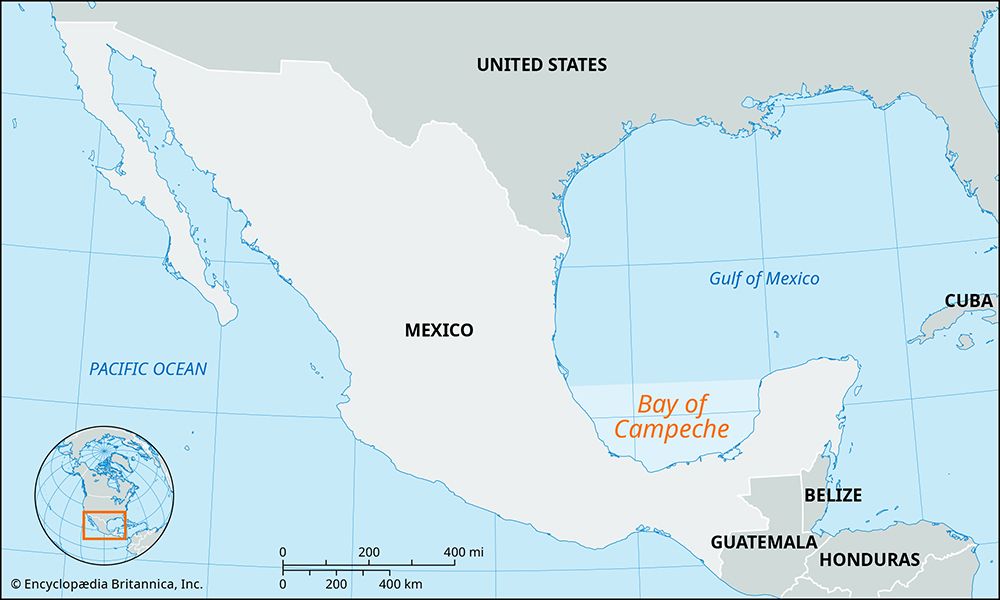
The Bay of Campeche is a large inlet of the Gulf of Mexico located in southern Mexico. It is geographically bounded by the Yucatán Peninsula to the east, the Isthmus of Tehuantepec to the south, and the state of Veracruz to the west.1
The bay covers approximately 6,000 square miles (15,540 square km) and is characterized by low-lying shores dotted with swamps and lagoons, such as the Términos Lagoon. Several rivers, including the Papaloápan, Coatzacoalcos, Grijalva, Usumacinta, and Candelaria, flow into the bay. Due to its shallow depth, it is generally inaccessible to vessels drawing more than 9 feet (3 meters) of water.1
Economically, the region is significant for its offshore oil production, which began in the 1970s. Major port cities along the coast include Veracruz, Coatzacoalcos, Ciudad del Carmen, and Campeche.1
How does the Bay of Campeche contribute to Mexico’s oil industry?
The Bay of Campeche became a cornerstone of Mexico’s petroleum industry following the discovery of massive offshore reserves in the 1970s. By the early 1980s, it had become the country’s highest oil-producing region, playing a critical role in tripling Mexico’s crude oil production between 1976 and 1982 and helping the nation achieve self-sufficiency.13
The region’s infrastructure supports this output through extensive extraction and processing facilities, including an oil pipeline that connects the bay to a tanker terminal near Minatitlán. Additionally, port cities like Campeche provide essential logistical support for these offshore operations.12
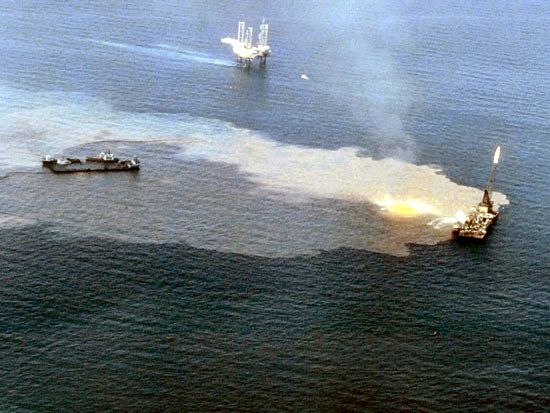
However, the bay has also been the site of significant environmental challenges. In 1979, the Ixtoc 1 well suffered a catastrophic blowout, releasing millions of gallons of crude oil into the Gulf of Mexico and causing widespread ecological and economic damage. In the 21st century, the bay’s production entered a period of decline, prompting major energy reforms to address infrastructure and investment needs.143
How has the Bay of Campeche been affected by environmental issues, such as oil spills?
The Bay of Campeche has faced significant environmental challenges due to its role as a major hub for offshore oil production. The most notable incident was the 1979 Ixtoc 1 blowout, which is considered one of the largest oil spills in history.15
- The Ixtoc 1 Disaster: Beginning in June 1979, an explosion on the Ixtoc 1 platform caused a massive release of crude oil that lasted for nine months. Estimates suggest that between 126 million and 140 million gallons of oil entered the southern Gulf of Mexico.5
- Ecological and Economic Impact: The spill contaminated shorelines stretching from the Yucatán Peninsula to southern Texas. This resulted in severe economic losses, particularly in tourism and commercial fishing, with impacts on the latter persisting for up to five years.15
- Environmental Responsibility: The Mexican government invested approximately $132,000,000 to contain the spill, which was finally capped in early 1980.1
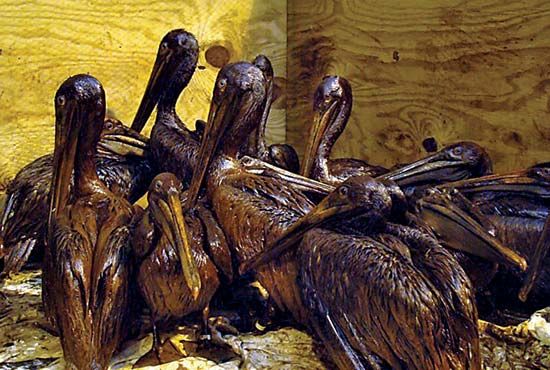
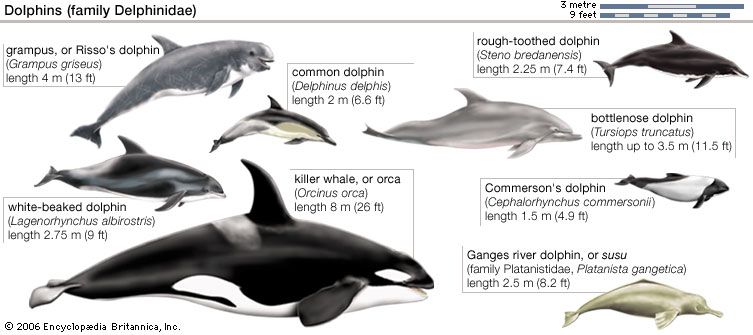
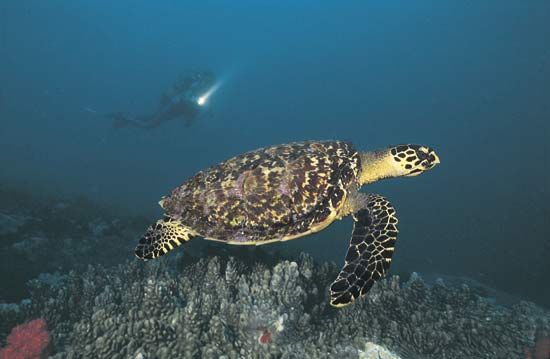
While the Ixtoc 1 event remains the defining environmental crisis for the Bay of Campeche, the broader Gulf of Mexico has also been impacted by other major disasters, such as the Deepwater Horizon spill, which caused widespread harm to marine life, including dolphins, sea turtles, and birds.4
What are the major cities and ports located along the Bay of Campeche?
The Bay of Campeche is bordered by several significant cities and ports that serve as vital hubs for transportation, commerce, and the petroleum industry. These locations are connected by an extensive network of highways, railroads, and air routes.1627
Key cities and ports include:
- Veracruz: A major port city located on the western edge of the bay, serving as a critical node for regional trade and logistics.1
- Coatzacoalcos: Situated at the mouth of the Coatzacoalcos River, this city is a primary transportation center and port. It serves as the northern terminus for the trans-isthmian railway and acts as a key point for the export of petroleum products refined in nearby Minatitlán.16
- Campeche: The capital of the state of Campeche, this historic port city is a UNESCO World Heritage site. Its economy relies on services, tourism, and providing logistical support for offshore oil operations.27
- Ciudad del Carmen: Located at the entrance to the Términos Lagoon, this city functions as the area’s chief port and a major petroleum depot.17
Sources
- Bay of Campeche — Encyclopædia Britannica
- Campeche — Encyclopædia Britannica
- Petróleos Mexicanos — Encyclopædia Britannica
- 9 of the Biggest Oil Spills in History - The Ixtoc 1 Oil Spill (1979) — Encyclopædia Britannica
- Deepwater Horizon oil spill - Environmental costs — Encyclopædia Britannica
- Coatzacoalcos — Encyclopædia Britannica
- Campeche — Encyclopædia Britannica
Published on · 3 min read