9 of the Biggest Oil Spills in History
The history of oil spills includes several catastrophic events that have caused significant environmental and economic damage. While the largest tanker…
What are 9 of the Biggest Oil Spills in History?
The history of oil spills includes several catastrophic events that have caused significant environmental and economic damage. While the largest tanker spills are often measured by the amount of cargo lost, other incidents, such as well blowouts and intentional releases, have resulted in even greater volumes of oil entering the environment.
Here are nine of the most significant oil spills in history:
- Persian Gulf War Oil Spill (1991): Considered the world’s largest, this was an intentional act by Iraqi forces who released hundreds of millions of gallons of oil into the Persian Gulf to deter coalition troops.1
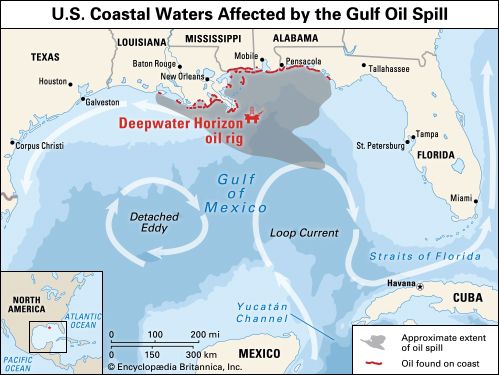
- Ixtoc 1 (1979): An offshore oil well blowout in the Bay of Campeche released approximately 3,000,000 barrels of crude oil into the Gulf of Mexico.2
- Atlantic Empress (1979): Following a collision off the coast of Tobago, this tanker lost its entire cargo of 287,000 metric tons of crude oil.3
- ABT Summer (1991): This tanker caught fire and sank off the coast of Angola, resulting in the loss of 260,000 metric tons of crude oil.3
- Castillo de Bellver (1983): After catching fire and breaking in two off the coast of South Africa, this vessel spilled 252,000 metric tons of crude oil.3
- Amoco Cadiz (1978): Grounding off the coast of Brittany, France, this disaster released 223,000 metric tons of oil, severely contaminating the coastline.3
- Haven (1991): This tanker caught fire and broke apart near Genoa, Italy, spilling 144,000 metric tons of oil.3
- Odyssey (1988): While en route to Canada, this tanker broke in two and sank in the Atlantic, releasing 132,000 metric tons of crude oil.3
- Torrey Canyon (1967): Running aground off the Isles of Scilly, this spill of 119,000 metric tons of crude oil became a landmark event that spurred changes in international shipping regulations.3
How do scientists clean up oil spills in the ocean?
Cleaning up oil spills is a complex challenge, as no single method is entirely satisfactory. Response strategies generally focus on containing the oil and removing it to allow for natural recovery.7
Common cleanup techniques include:
- Containment and Removal: Floating booms are used to corral oil slicks, preventing them from spreading. Once contained, the oil can be skimmed from the surface or siphoned into collection tanks.78
- Sorbents: Materials like straw, volcanic ash, or polyester-derived plastics are used to absorb oil from the water.7
- Chemical Dispersion: Dispersants are applied to break oil into smaller droplets, accelerating its natural dispersion and making it easier for bacteria to metabolize.78
- In-situ Burning: Contained oil can be burned directly on the water’s surface.8
- Bioremediation: This process introduces or encourages microorganisms that consume oil, degrading contaminants into safer levels.9
- Manual Cleanup: On shorelines, workers often use hand tools or heavy equipment to scrape up contaminated debris from beaches and marshes.78
For well blowouts, engineers may use capping stacks or pump drilling mud and cement to permanently seal the source.10
What are the long-term effects of oil spills on marine ecosystems?
The long-term effects of oil spills on marine ecosystems are profound and often persist for years or even decades after the initial event. While immediate damage—such as the coating of birds and mammals in oil—is highly visible, the lasting ecological consequences are complex and difficult to fully assess.11
Biological and Reproductive Impacts
Oil exposure can have devastating effects on wildlife populations long after a spill occurs. Studies have linked oil contaminants to:
- Chronic Health Issues: Marine mammals, such as dolphins, have exhibited lung and adrenal disorders, as well as increased vulnerability to infections, years after exposure.12
- Reproductive Decline: Contaminants can lead to reduced fertility in marine mammals and interfere with the reproductive success of species like coral and sea turtles.12
- Developmental Defects: Exposure to polycyclic aromatic hydrocarbons (PAHs) has been shown to cause heart defects in the larvae of commercially important fish species.12
Habitat and Population Shifts
The environmental footprint of a spill often remains embedded in the ecosystem:
- Persistent Contamination: Oil can remain in sediment cores for years, and evidence of PAH contamination has been detected in fish populations long after a disaster.1213
- Reduced Abundance: Large-scale pollution events can trigger significant, long-term declines in animal abundance across deep-water and open-ocean habitats, with some areas remaining well below pre-spill levels for over a decade.13
- Ecosystem Stress: Sensitive environments like saltwater marshes, mangroves, and coral reefs often suffer from long-term degradation, as cleanup efforts themselves can sometimes inflict further harm on these fragile areas.1113
How has the regulation of oil tankers changed since the Torrey Canyon disaster?
The 1967 Torrey Canyon disaster served as a major catalyst for international maritime reform, highlighting the inadequacy of existing regulations regarding tanker safety and pollution prevention. In response to this and subsequent high-profile accidents, the International Maritime Organization (IMO) significantly tightened rules governing the construction and operation of oil tankers.1516
The most significant regulatory shift was the adoption of the International Convention for the Prevention of Pollution from Ships (MARPOL) in 1973. Through a series of subsequent amendments, the IMO established stringent requirements for ship design to minimize the risk of oil discharge during accidents.15
Key regulatory changes include:
- Double Hull Requirement: Amendments to MARPOL mandated that all but the smallest tankers be constructed with double hulls—two layers separated by a space—to reduce the likelihood that a breach of the outer layer will result in a cargo spill.15
- Phase-out of Single Hulls: Regulations were implemented to ensure that all single-hulled tankers were either rebuilt to a double-hull configuration or retired from service by 2026.15
- Operational Standards: Beyond construction, the IMO has continuously updated treaties to improve maritime safety, navigation, and emergency response protocols to prevent disasters before they occur.116
Sources
- oil spill - Largest oil-tanker spills in history — Encyclopædia Britannica
- 9 of the Biggest Oil Spills in History - The Persian Gulf War Oil Spill (1991) — Encyclopædia Britannica
- Deepwater Horizon oil spill - The explosion — Encyclopædia Britannica
- 9 of the Biggest Oil Spills in History — Encyclopædia Britannica
- Bay of Campeche — Encyclopædia Britannica
- oil spill — Encyclopædia Britannica
- oil spill - Oil-spill cleanup — Encyclopædia Britannica
- Deepwater Horizon oil spill - Leaking oil — Encyclopædia Britannica
- toxic waste - Cleaning up toxic waste — Encyclopædia Britannica
- Deepwater Horizon oil spill - Cleanup efforts — Encyclopædia Britannica
- oil spill - Oil-spill damage — Encyclopædia Britannica
- Deepwater Horizon oil spill - Environmental costs — Encyclopædia Britannica
- Deepwater Horizon oil spill - Aftermath and impact — Encyclopædia Britannica
- Gulf of Mexico / Gulf of America - Study and the impact of human activity — Encyclopædia Britannica
- International Maritime Organization — Encyclopædia Britannica
- tanker — Encyclopædia Britannica
Published on · 4 min read